


Aquaculture is the practice of raising fish and other seafood. It’s a fast-growing industry that gives us nearly half of the world’s seafood. But, this growth brings big environmental problems like water pollution and habitat destruction.
Let’s explore how to adopt sustainable aquaculture practices. It’s key to lessen these impacts. Eco-friendly methods help protect wild fish and make our environment healthier.
The need for sustainable practices in aquaculture is urgent. The industry plays a big role in global seafood production.
Key Takeaways
- Aquaculture provides nearly half of the world’s seafood.
- Sustainable practices can mitigate environmental impacts.
- Eco-friendly techniques promote healthier environments.
- Adopting sustainable aquaculture practices is key for the industry’s future.
- The industry’s growth poses significant environmental challenges.
Understanding Aquaculture and its Environmental Challenges
Aquaculture is a big way to get food around the world. But, it also has big environmental problems. As more people rely on aquaculture, we must tackle its environmental effects.
Definition of Aquaculture
Aquaculture means raising aquatic plants and animals in places like ponds and tanks. It has been important for food and jobs for a long time. It helps millions of people make a living.
Overview of Environmental Issues
Aquaculture faces many environmental challenges. These include pollution, habitat loss, and invasive species. For example, using chemicals and antibiotics can make bacteria resistant. This is bad for both water life and people.
Some major environmental problems are:
- Water pollution from waste and chemicals
- Habitat destruction from building aquaculture sites
- Introducing non-native species that harm local wildlife
Importance of Sustainable Practices
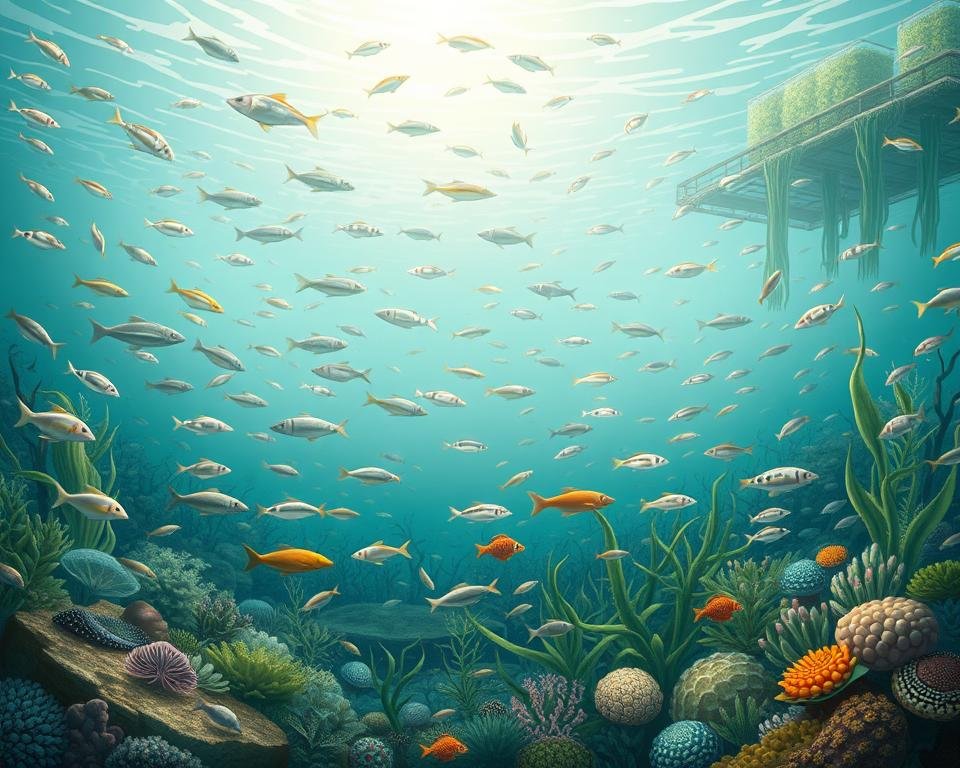
Using sustainable methods in aquaculture is key to reducing harm. Techniques like eco-friendly aquaculture help a lot. These methods, like IMTA, where different species are raised together, cut down waste. Sustainable practices help lessen pollution and protect the environment.
“Sustainable aquaculture practices are essential for ensuring the long-term health of our oceans and the communities that depend on them.”
By focusing on sustainability, aquaculture can keep providing food and jobs. It can do this while also caring for the environment.
The Role of Sustainable Practices in Aquaculture
Sustainable practices are key for aquaculture’s future. They help operations reduce their environmental impact. These practices are good for the planet and help aquaculture businesses thrive in the long run.
Benefits of Sustainability
Sustainability in aquaculture brings many benefits. It improves water quality and reduces disease. It also boosts biodiversity and the health of farmed species.
By using sustainable methods, aquaculture can also cut down waste and save water. This makes the food production system more eco-friendly. It supports the health of ecosystems and helps the industry grow.
Long-Term Impact on Ecosystems
Sustainable aquaculture has a big impact on ecosystems. It keeps ecosystems healthy, providing vital services like water filtration. This is good for both the environment and the industry’s success.
It also helps restore damaged habitats and increases biodiversity. This makes ecosystems more resilient. It supports the health and productivity of aquaculture operations, creating a positive cycle for the environment and the industry.
Eco-Friendly Species Selection
Choosing the right species is key to reducing the ecological footprint of aquaculture. Responsible aquaculture management depends on making smart choices about the species we cultivate.
Native Species
Choosing native species is a smart move for sustainable aquaculture practices. They are more resilient and need less care because they fit well in their local environment. This means less need for outside help like feed and medicine, which helps the environment.
Native species also have a lower chance of becoming invasive if they get out. This helps keep the local ecosystem in balance.
Polyculture Benefits
Polyculture, or growing multiple species together, is another good strategy. It boosts biodiversity and can make water cleaner by using different parts of the water column and reducing waste.
Polyculture helps use resources better and makes the farm ecosystem stronger. It also lowers the risk of relying on just one species, which can increase productivity.
But, polyculture needs careful planning to make sure all species get along and do well together. Despite this, its benefits make it a great choice for sustainable aquaculture practices.
In summary, choosing eco-friendly species like native ones and using polyculture is vital for responsible aquaculture management. These methods help reduce environmental impact and make food production more sustainable.
Innovations in Aquaculture Technology
Technology is key in making aquaculture better for the environment. As more people want sustainable seafood, new tech in aquaculture is vital.
Recirculating Aquaculture Systems (RAS)
Recirculating Aquaculture Systems (RAS) are a big step forward. They use a closed-loop system to recycle water. This cuts down on water waste and lessens the harm to the environment.
RAS offers many benefits:
- It saves water.
- It reduces waste.
- It helps control diseases better.
- It boosts biosecurity.
| Feature | RAS | Traditional Systems |
|---|---|---|
| Water Usage | Up to 99% less | High |
| Waste Output | Significantly reduced | High |
| Disease Control | Improved | Limited |
Use of Renewable Energy Sources
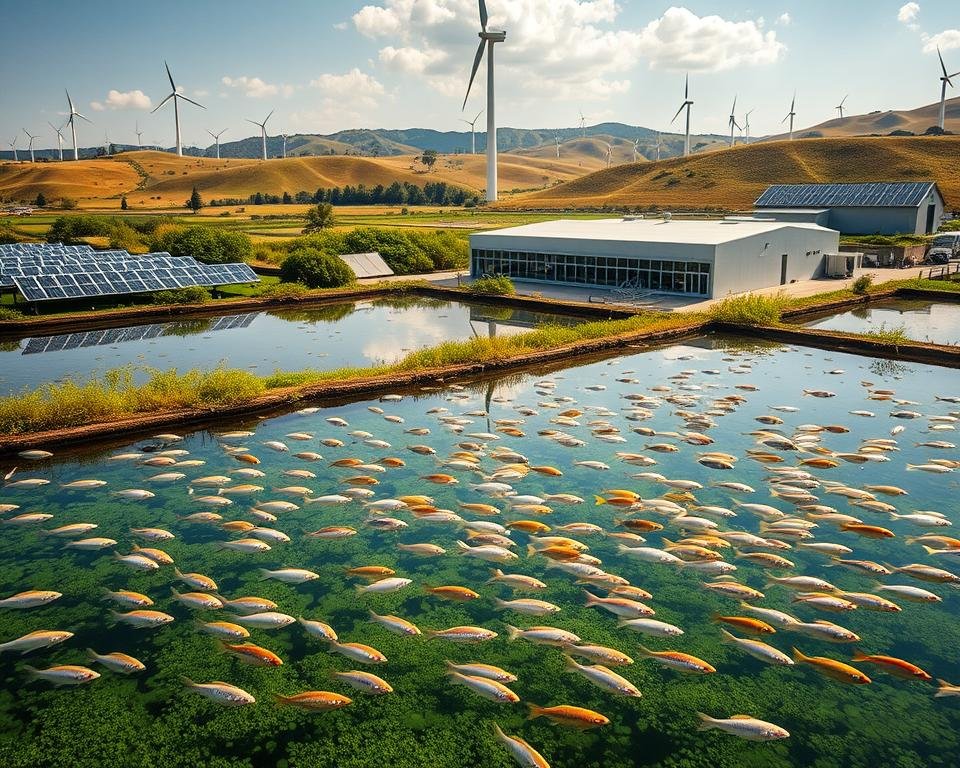
Using renewable energy sources is another big leap. Aquaculture farms can now use solar, wind, or hydroelectric power. This cuts down on fossil fuel use and lowers carbon emissions.
Renewable energy makes aquaculture more sustainable. It also saves money in the long run. As tech keeps improving, we’ll see even more new ideas in aquaculture.
Water Quality Management
Water quality management is key to reducing the environmental impact of aquaculture. As the industry grows, keeping both farmed species and ecosystems healthy is essential.
Best Practices for Water Treatment
Good water treatment is vital for maintaining quality. Using recirculating aquaculture systems (RAS) helps. These systems recycle and treat water, cutting down on new water intake and waste discharge.
- Regularly check water parameters like pH, ammonia, and nitrite levels.
- Use mechanical and biological filters to remove waste.
- Apply UV sterilization or ozone treatment to fight pathogens.
These methods help reduce environmental harm while keeping farmed species healthy.
Reducing Chemical Usage
It’s important to cut down on chemicals in aquaculture. Chemicals can harm aquatic life and pollute water, so using less is a big step towards sustainability.
Here are some ways to use fewer chemicals:
- Use integrated pest management (IPM) to control pests and diseases.
- Apply probiotics and biological treatments to boost species health.
- Choose disease-resistant species or strains that need fewer chemicals.
“The goal of sustainable aquaculture is to produce food in a way that is environmentally responsible, socially acceptable, and economically viable.” –
By focusing on water quality and cutting chemical use, aquaculture can become more sustainable. This benefits the environment and the industry.
Waste Management Solutions
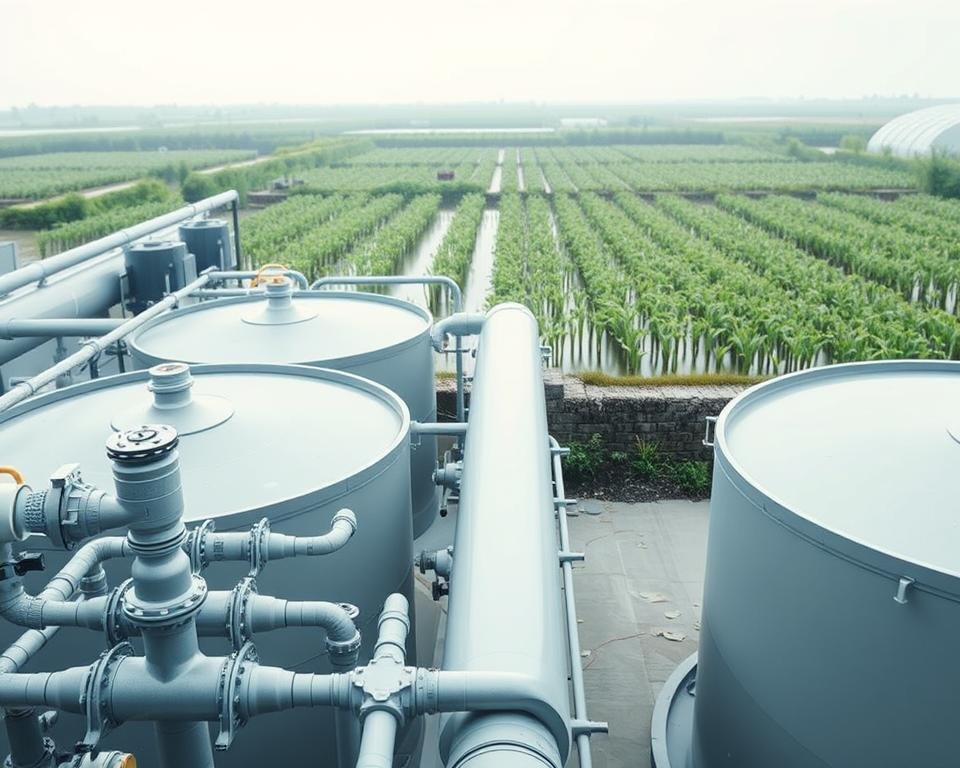
The aquaculture industry is growing fast. This means we need new ways to manage waste. Good waste management helps make aquaculture more efficient and sustainable.
Effective Waste Recycling Techniques
Recycling waste is a key strategy. It turns waste into useful things like organic fertilizers or animal feed. For example, fish waste can be made into protein-rich feed for other animals. This cuts down on the need for outside feed and reduces waste.
Recycling also helps the environment. It lowers the amount of waste that goes into water. Methods like biofiltration and constructed wetlands clean wastewater. This makes it safe to discharge or reuse.
Utilizing By-Products
Using by-products is also important in waste management. Materials like fish bones, scales, and more can be turned into valuable items. These include collagen, gelatin, and bioactive compounds for health and beauty products.
For more on waste management in aquaculture, check out Worldwide Aquaculture. They share sustainable practices and their advantages.
By using these methods, aquaculture can lessen its environmental impact. It can also make more money by selling waste products.
Reducing Fish Meal Dependency
It’s key to cut down on fish meal in aquaculture for sustainable aquaculture practices. Fish meal comes from wild fish and is high in protein. But, it hurts wild fish populations and adds to aquaculture pollution.
Finding new protein sources is urgent as aquaculture demand grows. By changing feed ingredients, the industry can lessen its environmental impact. This supports more sustainable practices.
Alternative Protein Sources
Many new protein sources are being looked at to replace fish meal. These include soybean meal, pea protein, and canola meal from plants. Also, insect and microbial proteins from fermentation are being explored.
- Plant-based proteins are sustainable but their use is limited by cost and nutritional content.
- Insect-based proteins, like black soldier flies, are nutritious and promising for aquaculture.
- Microbial proteins from fermentation offer a reliable and high-quality protein option.
Impact on Fish Health
Switching to new protein sources must consider fish health. Different fish species have different nutritional needs. New feed ingredients must meet these needs to keep farmed fish healthy.
Studies show some alternative proteins support fish growth and health. But, careful mixing is needed to avoid nutritional gaps. For example, plant-based diets might need extra amino acids to match fish meal’s nutritional value.
By choosing alternative proteins that meet fish nutritional needs, aquaculture can become more sustainable. This helps keep farmed fish healthy and productive.
Habitat Protection and Restoration
Effective environmental stewardship in aquaculture means more than just using sustainable practices. It also means protecting and restoring habitats. As we work on eco-friendly aquaculture techniques, we must think about how our actions affect the ecosystems around us.
Preserving Natural Ecosystems
Keeping natural ecosystems healthy is key for biodiversity and aquatic environment health. We need to understand the balance in these ecosystems and lessen our impact. By using eco-friendly aquaculture techniques, we can help protect habitats and support a better environment for all species.
Some important steps for preserving ecosystems include:
- Doing detailed environmental impact assessments before starting aquaculture.
- Putting in place measures to stop habitat destruction and pollution.
- Supporting biodiversity by creating artificial reefs or restoring wetlands.
Strategic Site Selection
Strategic site selection is key to reducing aquaculture’s environmental impact. By choosing the right location, we can avoid harming sensitive habitats and reduce environmental damage. We look at water quality, endangered species, and conflicts with other marine users.
When picking a site, we also think about the operation’s long-term success. We check if the site can grow, if resources are available, and if the ecosystem can handle it. A strategic approach to site selection helps make aquaculture both green and profitable.
Community Involvement in Aquaculture
Effective aquaculture management is closely tied to community support. As we explore sustainable aquaculture, it’s clear that community involvement is key.
Local Engagement Strategies
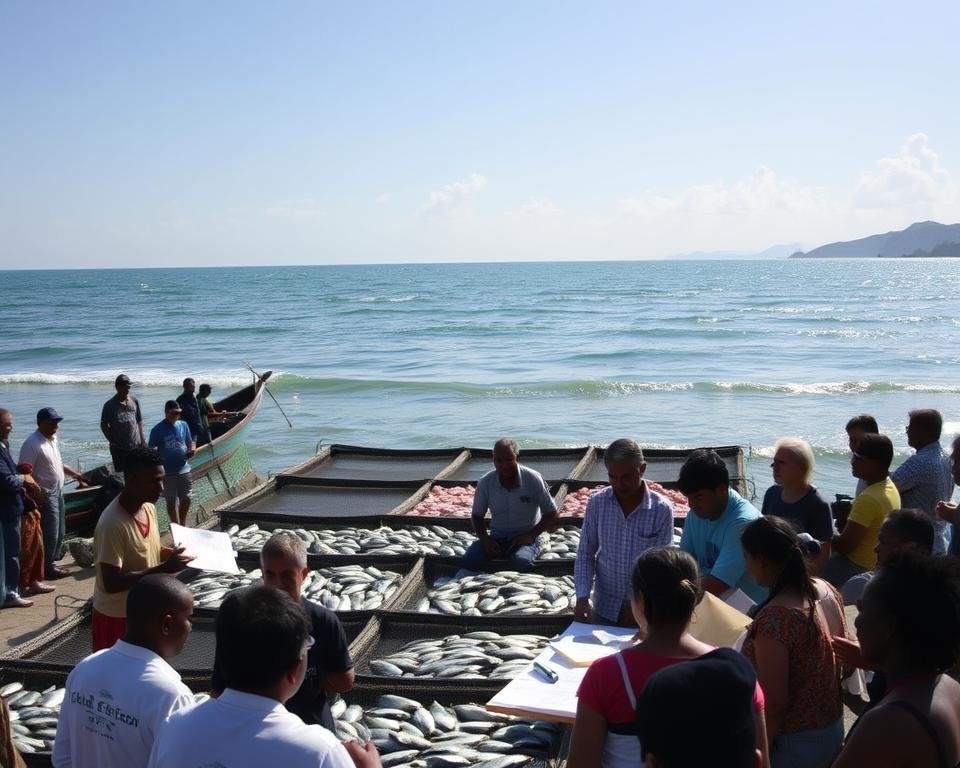
Engaging with local communities is more than just sharing information. It’s about working together and building trust. Responsible aquaculture management means hosting events, workshops, and being open to the community.
Some effective strategies include:
- Regular community meetings to discuss ongoing and future projects
- Collaborative research initiatives with local universities or research centers
- Supporting local businesses by sourcing materials and services from them
These actions help ensure aquaculture is both environmentally and socially responsible.
Supporting Sustainable Livelihoods
Aquaculture sustainability initiatives go beyond the environment. They also focus on social and economic aspects. It’s about making sure the local community benefits from aquaculture.
This can be done by:
- Providing training and employment opportunities for local residents
- Promoting fair labor practices and safe working conditions
- Investing in community development projects that improve overall quality of life
“Sustainable aquaculture is not just about the environment; it’s also about the people and their livelihoods.”
By focusing on community involvement and supporting sustainable livelihoods, aquaculture can positively impact both the environment and local populations.
Regulatory Frameworks and Environmental Standards
Effective rules are key to reducing the environmental impact of aquaculture. As the industry grows, strong environmental standards are more important than ever. I will talk about why these frameworks matter and why following them is vital for sustainable aquaculture.
National Regulations Overview
Every country has its own rules for aquaculture. For example, in the United States, the Aquaculture Standards by the USDA guide sustainable practices. These rules cover water quality, waste, and chemical use. Knowing these regulations helps us understand how aquaculture is managed worldwide.
| Country | Regulatory Body | Key Regulations |
|---|---|---|
| United States | USDA | Aquaculture Standards, Water Quality Management |
| Canada | Fisheries and Oceans Canada | Aquaculture Regulations, Environmental Assessment |
| Australia | Australian Fisheries Management Authority | Aquaculture Code of Practice, Environmental Guidelines |
Importance of Compliance
Following rules is essential to lessen aquaculture’s environmental harm. By sticking to these standards, farms can lower their ecological impact. This helps the industry stay sustainable for the long run. I believe following rules is not just legal but also a moral duty to protect the environment.
Environmental stewardship in aquaculture means using practices that harm the environment less. This includes managing waste, using green feeds, and making sure farms don’t hurt local ecosystems.
In summary, rules and environmental standards are the foundation of sustainable aquaculture. By following these, the industry can reduce its environmental impact and work towards a sustainable future.
Educating Consumers on Sustainable Choices
It’s important to teach consumers about sustainable aquaculture. As seafood demand grows, knowing how to choose eco-friendly options is key. This knowledge helps make better choices for our planet.
Awareness Campaigns
Awareness campaigns are vital for teaching consumers about sustainable aquaculture. They can be on social media, educational programs, or community events. These efforts show the benefits of sustainable seafood, like better environmental outcomes and quality.
Some good ways to run awareness campaigns include:
- Working with influencers and industry leaders to promote sustainable seafood
- Creating educational materials, like guides on sustainable seafood choices
- Hosting community events and workshops to teach about sustainable aquaculture
Eco-Labels and Certifications
Eco-labels and certifications help promote sustainable aquaculture. They tell consumers if a seafood product meets high environmental and social standards. By choosing products with these labels, consumers support sustainable practices and encourage the industry to follow suit.
The table below shows some well-known eco-labels and certifications in aquaculture:
| Eco-Label/Certification | Description | Standards |
|---|---|---|
| ASC (Aquaculture Stewardship Council) | Promotes responsible aquaculture practices | Environmental sustainability, social responsibility |
| MSC (Marine Stewardship Council) | Certifies sustainable fishing and aquaculture practices | Ecosystem-based management, sustainable fishing practices |
| BAP (Best Aquaculture Practices) | Certifies farms that meet rigorous standards for sustainability | Environmental sustainability, social responsibility, food safety |
Supporting eco-labels and certifications helps promote sustainable aquaculture. It plays a big role in driving change in the industry.
Future Trends in Eco-Friendly Aquaculture
The aquaculture industry is always changing. It’s key to know about the latest ways to cut down pollution and manage aquaculture responsibly. The future of eco-friendly aquaculture relies on new research and global best practices.
Advancements in Research and Development
Research teams and companies are teaming up to find new ways to make aquaculture greener. For example, they’re working on better recirculating systems and using renewable energy. These steps help reduce pollution.
Global Best Practices to Watch
Norway and Chile are setting the standard for responsible aquaculture. They focus on managing waste, protecting habitats, and using eco-friendly feed. Following these practices can make the aquaculture industry more sustainable.
By keeping up with these advancements and supporting responsible aquaculture, we help the environment. We also work towards a more sustainable food system.

 Integrated Multi-Trophic Aquaculture (IMTA): A Sustainable Approach
  Antibiotic Use in Aquaculture: Navigating the Challenges
  Responsible Sourcing of Seafood: A Guide to Sustainable Choices
  Biodiversity Protection in Fish Farming
  Aquaculture Certification and Standards: Ensuring Quality and Sustainability
  Sustainable Aquaculture Practices: Balancing Productivity and Sustainability