


Did you know the global seafood industry is worth over $150 billion a year? Yet, 30% of the world’s fish stocks are overfished. As a consumer, it’s hard to make good choices about seafood. I’ll help you understand the importance of sustainable seafood practices and how to make eco-friendly choices.
The seafood industry has a big impact on the environment. Sustainable practices are key for its future. In this guide, we’ll look at sustainable seafood, certifications to look for, and how consumers can help.
Key Takeaways
- Understanding the importance of sustainable seafood practices.
- Identifying eco-friendly certifications for seafood.
- The role of consumers in promoting sustainable fishing methods.
- Principles of sustainable seafood and its impact on the environment.
- How to make informed choices when buying seafood.
What is Responsible Sourcing of Seafood?
Responsible seafood sourcing is about more than just food. It’s about caring for our oceans and the people who depend on them. It means making choices that are good for us and for the planet.
Definition and Importance
Getting seafood responsibly means we don’t harm the environment or exploit workers. Efficient supply chains help keep things clear and honest. This is key for the health of marine ecosystems and the fishing community’s future.
Brief Overview of Sustainability in Seafood
Sustainability in seafood means fishing and farming can keep going without harming the planet. It’s about reducing bycatch and using eco-labeling and certification programs to keep things right.
Knowing where our seafood comes from is important. It lets us choose seafood that’s good for us and the planet. This means tracking seafood from where it’s caught to our plates.
The Impact of Overfishing
Overfishing is harming our oceans greatly. It happens when more fish are caught than can be replaced. This hurts the marine ecosystem and has big economic and social effects.
Statistics and Trends
The numbers on overfishing are scary. The Food and Agriculture Organization (FAO) says 34% of fish stocks are overfished. Also, 60% are fished at their maximum sustainable level. Using eco-friendly fishing methods can help by reducing bycatch and protecting habitats.
Also, the world’s growing demand for seafood is putting more pressure on fishing. With the population expected to hit 9.7 billion by 2050, the demand will only grow. It’s key to use sustainable seafood sourcing practices to keep our oceans healthy.
Consequences for Marine Ecosystems
Overfishing’s effects go beyond just fewer fish. It can cause a chain reaction in the marine ecosystem. For example, losing key predators can lead to more prey, which can harm biodiversity.
It also affects communities that rely on fishing. When fish stocks collapse, jobs are lost and economies suffer. So, it’s vital to support seafood sustainability certifications that promote responsible fishing and help local economies.
In summary, overfishing has big impacts on both marine ecosystems and human societies. By choosing sustainable practices and backing eco-friendly fishing, we can help our oceans thrive for the future.
Key Principles of Sustainable Seafood
Sustainable seafood focuses on keeping our oceans healthy and supporting communities that rely on them. As we learn more about our food’s impact, knowing these principles is key.
Environmental Standards
Environmental standards are at the heart of sustainable seafood. They make sure seafood is caught or farmed without harming the sea. This means avoiding too much fishing, protecting homes for sea creatures, and not catching unwanted fish. Seafood traceability systems help keep these standards by tracking seafood from where it’s caught to when we eat it, ensuring it’s caught right.
Social Responsibility and Fair Trade
Social responsibility is also vital, focusing on treating workers fairly in the seafood industry. This means paying them well, keeping them safe, and respecting their rights. Ethical aquaculture practices are key here, caring for both the sea and the people making seafood. Fair trade helps achieve these goals by promoting fair trade.
Following these principles helps the seafood industry become more sustainable. It’s a big challenge, but it’s vital for our oceans and the people who depend on them.
Certifications to Look For
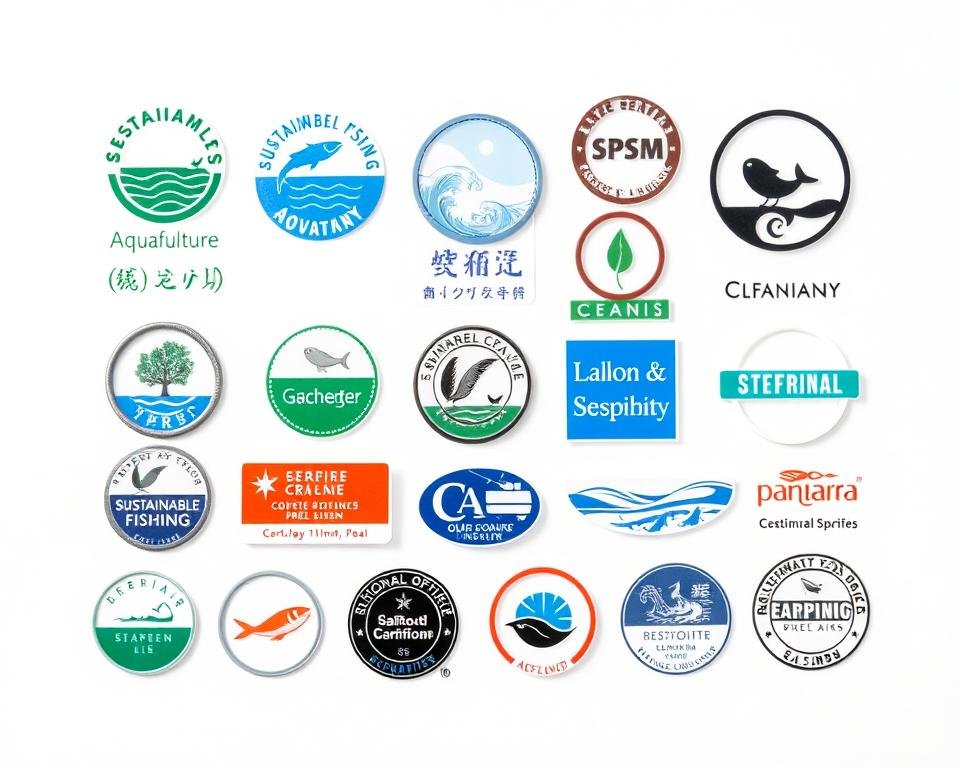
To help the ocean, we need to know about seafood certifications. These signs show if seafood is caught or farmed right. They help the seafood industry follow strict rules for being green and fair.
Marine Stewardship Council (MSC)
The Marine Stewardship Council (MSC) is a global group that makes sure fishing is done right. They give a special mark to fishing that doesn’t hurt the sea too much. This mark means the seafood is good for the ocean.
Getting the MSC mark is hard. Fishers must show they care about the sea and follow all the rules. When you buy MSC seafood, you help the sea and support fair trade.
Aquaculture Stewardship Council (ASC)
The Aquaculture Stewardship Council (ASC) focuses on farmed seafood. They set rules for farms to be green and treat workers well. This means the seafood comes from places that care about the planet and people.
ASC farms must meet high standards for the environment and workers. Buying ASC seafood helps farms be better and supports fair trade. It’s a way to make the seafood world better.
In short, MSC and ASC are key for fair seafood and a better industry. Knowing about these marks helps us choose the right seafood. It makes the market more green and fair for everyone.
How to Identify Responsible Seafood
To support sustainable seafood practices, it’s key to know how to spot responsible seafood. Making smart choices begins with grasping the labels and certifications on seafood products.
Reading Labels
When you’re shopping for seafood, labels give you important info about the product’s origin and sourcing. Look for the Marine Stewardship Council (MSC) or Aquaculture Stewardship Council (ASC) logos. These show the seafood meets high standards for sustainability.
Labels also share details on fishing or aquaculture methods. Knowing these practices helps you choose seafood that fits your values on responsible sourcing.
Understanding Supply Chains
Knowing the supply chain is also vital for ensuring your seafood choices support responsible sourcing practices. This means understanding where the seafood comes from, how it’s processed, and how it ends up on your plate.
Many companies now share details about their supply chains. This lets consumers make better choices. By picking seafood from companies that focus on sustainability, you help the sustainable seafood industry grow.
In summary, finding responsible seafood requires reading labels well and knowing the supply chain. By doing this, consumers can greatly help promote sustainable seafood practices.
The Role of Consumers in Sustainable Choices
Consumers can push for sustainable seafood by making smart choices. We can shape the seafood industry by picking products that are responsibly sourced.
Informed Decision-Making
To make good choices, we need clear info on our seafood. We should know where it comes from, how it was caught, and if it’s certified. Learning about sustainable seafood helps us support ethical seafood sourcing.
Look for MSC or ASC certifications when buying seafood. These ensure the seafood is sustainable and responsibly caught.

Supporting Local Fishermen
Backing local fishermen who fish sustainably is key. Buying from them means our seafood is fresh and comes from a responsible source. It also helps local economies thrive.
Local seafood is often better quality and supports our communities. Talking to local fishermen gives us a peek into their fishing methods. It helps make the supply chain more open.
In summary, consumers are essential in making the seafood industry more sustainable. By choosing wisely and supporting local fishermen, we can help make a difference. This drives demand for responsibly sourced seafood and supports a greener industry.
Benefits of Responsible Seafood Sourcing
Choosing responsibly sourced seafood helps our oceans and supports local jobs. It’s good for the planet and for people’s lives. It’s a win-win for everyone.
Environmental Conservation
Responsible seafood helps keep our oceans healthy. Eco-friendly fishing methods keep fish populations steady. This is thanks to groups like the Marine Stewardship Council (MSC).
“Sustainable seafood is not just about the environment; it’s also about the people and communities that depend on it.”
Certifications like MSC and Aquaculture Stewardship Council (ASC) make sure seafood is caught or farmed right. They focus on both the planet and people.
Economic Advantages for Communities
Buying local and sustainable seafood helps communities thrive. It keeps jobs for fishermen and supports fair trade. This boosts local economies and encourages better fishing.
| Economic Benefits | Environmental Benefits | Social Benefits |
|---|---|---|
| Supports local economies | Promotes sustainable fishing practices | Encourages fair trade practices |
| Maintains livelihoods for fishermen | Protects marine biodiversity | Enhances community resilience |
In short, choosing sustainable seafood is good for the planet, for jobs, and for people. By picking seafood with the right certifications, we help make the seafood industry better.
Case Studies of Successful Responsible Sourcing
Many brands are making big steps towards sustainability by using seafood traceability systems and ethical aquaculture practices. These stories show what these companies have achieved. They also teach important lessons to the whole industry.
Notable Brands Leading the Way
Some brands stand out for their responsible seafood sourcing. For example, Wildlife Friendly and OceanWise lead in seafood traceability. They show the industry what it means to be transparent and sustainable.
Skuna Bay Salmon is another example. They focus on ethical aquaculture practices. They show that you can make money and protect the environment at the same time.
Lessons Learned from Their Practices
These brands teach us a lot. One key lesson is the value of supply chain transparency. Companies that make their supply chains clear can avoid harming the environment or overfishing.
Another important lesson is the need for sustainable aquaculture practices. This means reducing waste, using fewer antibiotics, and protecting local ecosystems.
- Implementing robust monitoring systems to track seafood from origin to consumer.
- Engaging with local communities to promote fair labor practices and support local economies.
- Investing in research and development to improve the sustainability of aquaculture practices.
By adopting these practices, companies can help make the seafood industry more sustainable. They also improve their reputation and attract customers who care about the environment.
Challenges to Responsible Seafood Sourcing
The path to fully responsible seafood sourcing is filled with hurdles. These include economic and regulatory challenges. As more people want sustainable and fair trade seafood, the industry must find ways to meet these demands.
Economic Pressures
Economic challenges are a big obstacle. The cost of sustainable practices can be too high for small fishermen and producers. This could force them out of business. The global seafood market is also very competitive, making it hard for suppliers to stay profitable while following fair trade rules.
To tackle these economic issues, supporting fair trade seafood is key. This ensures producers get a fair price for their products. It helps keep their livelihoods going and promotes sustainable fishing and farming.
Regulatory Hurdles
Regulatory challenges also affect responsible seafood sourcing. Different countries have different rules, causing confusion for suppliers. Also, weak rules in some places let unsustainable practices go on, hurting global sustainability efforts.
Improving international cooperation and making rules more consistent can help. Clear and consistent standards for fair trade seafood are needed. This support from governments and regulatory bodies can help sustainable seafood practices grow worldwide.
In summary, while there are big challenges, we can overcome them. By addressing economic and regulatory hurdles, we can move towards a sustainable future. Supporting fair trade seafood and pushing for consistent rules can help us achieve a healthier ocean and a fairer seafood industry.
Future of Responsible Seafood Sourcing
The seafood industry is set to make big strides in responsible sourcing. People are now more aware of the need for sustainability. New ideas and trends are coming up to help reach this goal.
Innovative Approaches
New tech and methods are being created to better seafood sourcing. For example, better aquaculture practices are being developed. These innovations will help make the seafood industry more accountable.
Promoting Sustainable Practices
It’s key to support sustainable practices in the seafood supply chain. This means backing groups like the Marine Stewardship Council (MSC) and Aquaculture Stewardship Council (ASC). They focus on responsible seafood sourcing.
By adopting these changes and focusing on sustainability, we can make the seafood industry greener. I’m hopeful that together, we can achieve a sustainable future for seafood.

 Integrated Multi-Trophic Aquaculture (IMTA): A Sustainable Approach
  Antibiotic Use in Aquaculture: Navigating the Challenges
 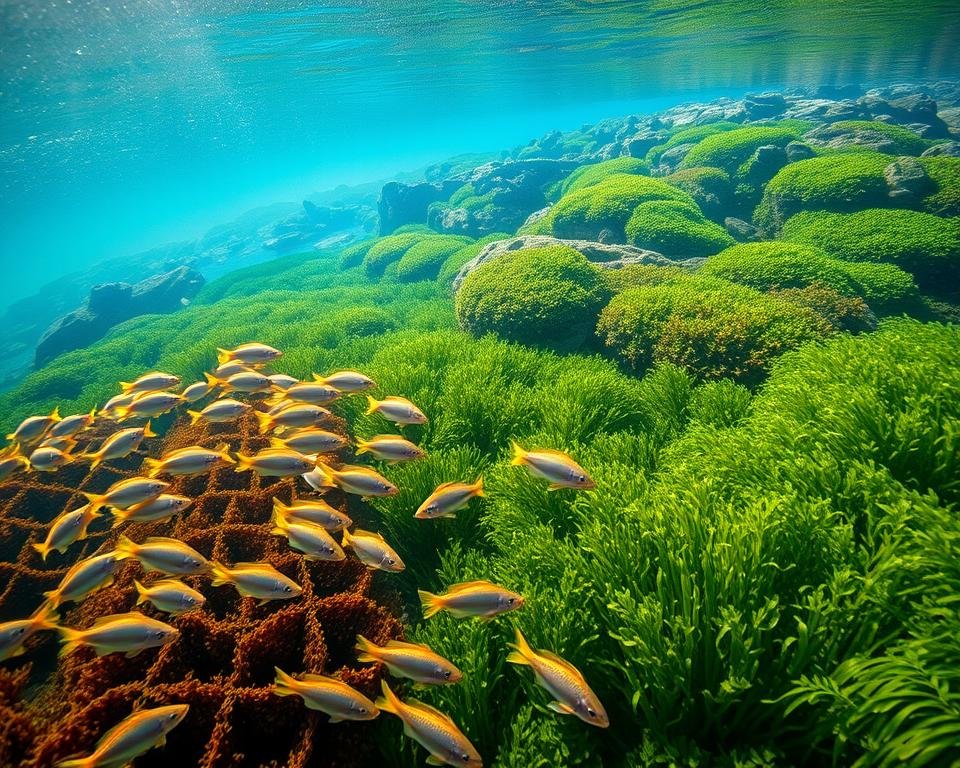 Biodiversity Protection in Fish Farming
  Aquaculture Certification and Standards: Ensuring Quality and Sustainability
 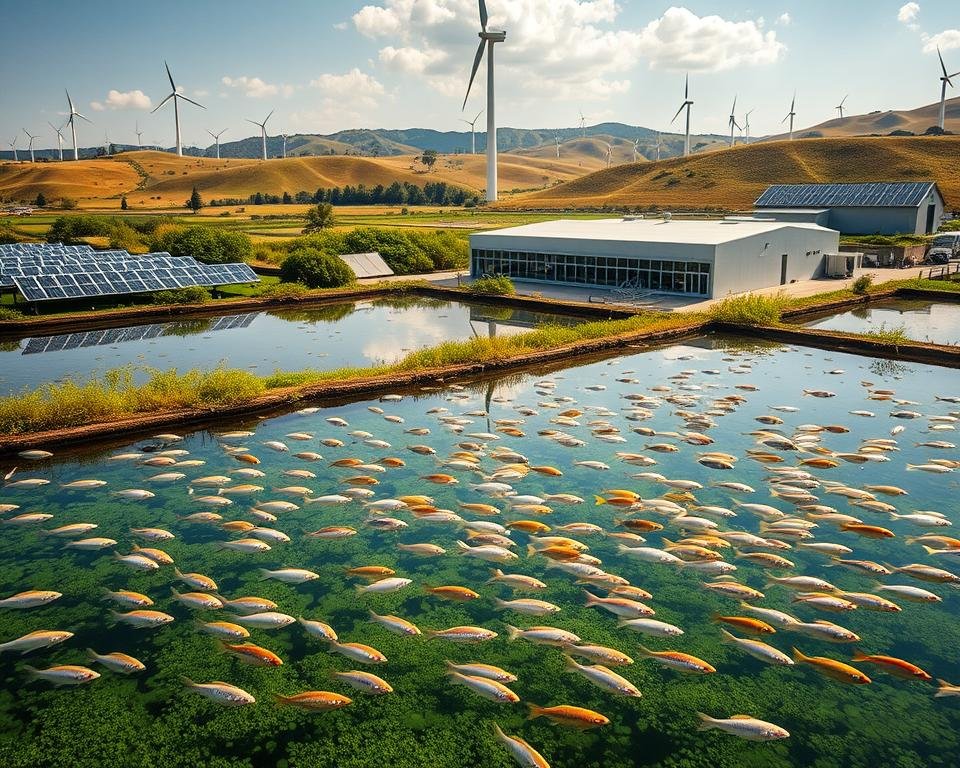 Sustainable Aquaculture Practices: Balancing Productivity and Sustainability
  Fish Farm Site Selection: Maximize Your Aquaculture Success