


Did you know the global aquaculture industry is set to hit $240 billion by 2030? With seafood demand on the rise, we need sustainable aquaculture practices to reduce environmental harm. I’m thrilled to introduce you to Integrated Multi-Trophic Aquaculture (IMTA), a game-changer in farming aquatic life.
IMTA is a whole new way to farm aquatic life. It brings different species together, just like in nature. This method makes aquaculture more sustainable and helps the environment thrive.
Key Takeaways
- IMTA is a sustainable approach to aquaculture.
- It involves cultivating different species together.
- This approach mimics natural ecosystems.
- IMTA promotes a healthier environment.
- It’s a game-changer for the future of aquaculture.
What is Integrated Multi-Trophic Aquaculture?
IMTA is a new way to farm fish and other sea creatures. It combines different levels of life in the sea to create a balanced system. This method uses fish, shellfish, and seaweeds to work together like in nature.
Definition and Key Concepts
IMTA systems help keep the sea clean by moving nutrients and waste around. They use seaweeds, shellfish, and fish to do this. This way, IMTA makes the sea healthier, adds more life, and makes farming more sustainable.
Historical Context
IMTA has roots in old farming ways where many species were raised together. But today, it’s more about understanding how life in the sea works together. For a long time, people in Asia and Europe farmed this way to grow more food and waste less.
Benefits of IMTA
IMTA brings many good things. Some of the main benefits are:
- Improved Water Quality: IMTA systems clean the water by recycling nutrients and cutting down on waste.
- Increased Biodiversity: By having many species, IMTA makes the sea more diverse and strong.
- Enhanced Economic Viability: IMTA makes farming more profitable by growing different products and using less waste.
| Benefits | Description | Impact |
|---|---|---|
| Improved Water Quality | Recycling nutrients and reducing waste | Healthier ecosystem |
| Increased Biodiversity | Integrating multiple species | More resilient ecosystem |
| Enhanced Economic Viability | Diversifying products and reducing waste | Increased profitability |
Learning about IMTA helps us see how it can change the sea farming world. It makes farming more green and better for the planet.
The Components of IMTA Systems
An IMTA system works best when all parts work together. It has primary, secondary, and tertiary producers. Each one is important for a healthy ecosystem.
Primary Producers: Seaweeds and Macroalgae
At the base of IMTA systems are seaweeds and macroalgae. They take in nutrients, make oxygen, and home other creatures. Seaweed cultivation is key for keeping water clean and supporting life.
Secondary Producers: Shellfish
Shellfish like mussels and oysters come next. They eat tiny plants and particles, making the water clearer. They’re vital for IMTA, helping to keep the water clean and providing food.
Tertiary Producers: Fish
The last part is fish. They live in better water thanks to the first two groups. Fish farming techniques in IMTA aim for a healthy place for fish to grow.
Together, these parts help with nutrient cycling in aquaculture. This means less waste and more food from the system. IMTA systems support many marine species by mixing different kinds of life.
Environmental Benefits of IMTA
IMTA helps the aquaculture sector cut down its environmental harm. It promotes ecological balance and reduces waste.
Nutrient Recycling
Nutrient recycling is key in IMTA. It uses different species to turn waste into nutrients, cutting down on the need for extra feed. For example, seaweeds and macroalgae soak up extra nutrients, while shellfish clean the water.
Nutrient cycling in IMTA makes production more efficient and green. It greatly lowers the environmental harm of traditional aquaculture.
Biodiversity Enhancement
IMTA boosts biodiversity. It creates a complex ecosystem that supports many species. This makes the aquaculture industry more resilient and adaptable.
- IMTA systems promote ecological balance.
- They support a diverse range of species.
- Biodiversity enhancement contributes to a more sustainable aquaculture industry.
Reduced Environmental Impact
IMTA’s reduced environmental impact comes from less waste and more nutrient recycling. It cuts down organic waste, keeping water quality high and ecosystems healthy.
| Environmental Benefit | Description | Impact |
|---|---|---|
| Nutrient Recycling | Utilization of waste products as nutrients | Reduced waste and improved water quality |
| Biodiversity Enhancement | Creation of complex ecosystems supporting various species | Increased ecological resilience and adaptability |
| Reduced Environmental Impact | Minimization of organic waste release | Improved ecosystem health and water quality |
In conclusion, IMTA is a valuable method for sustainable aquaculture. It promotes nutrient recycling, biodiversity, and reduces environmental harm. This makes IMTA a key player in a greener, more balanced aquaculture industry.
Economic Advantages of IMTA
IMTA’s economic benefits come from its diverse farming method. This approach can make farming more cost-effective and open up new markets. By farming different species together, IMTA lowers the risks of growing just one type of crop.
Cost-Effectiveness
One big plus of IMTA is how it saves money. It uses waste from one species to help another, cutting down on the need for expensive feed and fertilizers. This makes the farming process more efficient and cheaper.
For example, successful IMTA projects have seen big drops in costs. This can lead to better profits for farmers.
Value-Added Products
IMTA also lets farmers make a range of valuable products. By growing different species, they can offer organic or sustainably certified seafood. This can mean higher prices and more money for farmers.
With IMTA, farmers can reach different markets. For instance, seaweed and shellfish can be sold as premium, eco-friendly options. This appeals to customers who care about the environment.
Market Opportunities
IMTA’s diverse products open up new market chances for farmers. By focusing on sustainable seafood, they can get better prices. Also, the eco-friendly aspect of IMTA attracts customers willing to pay more for green products.
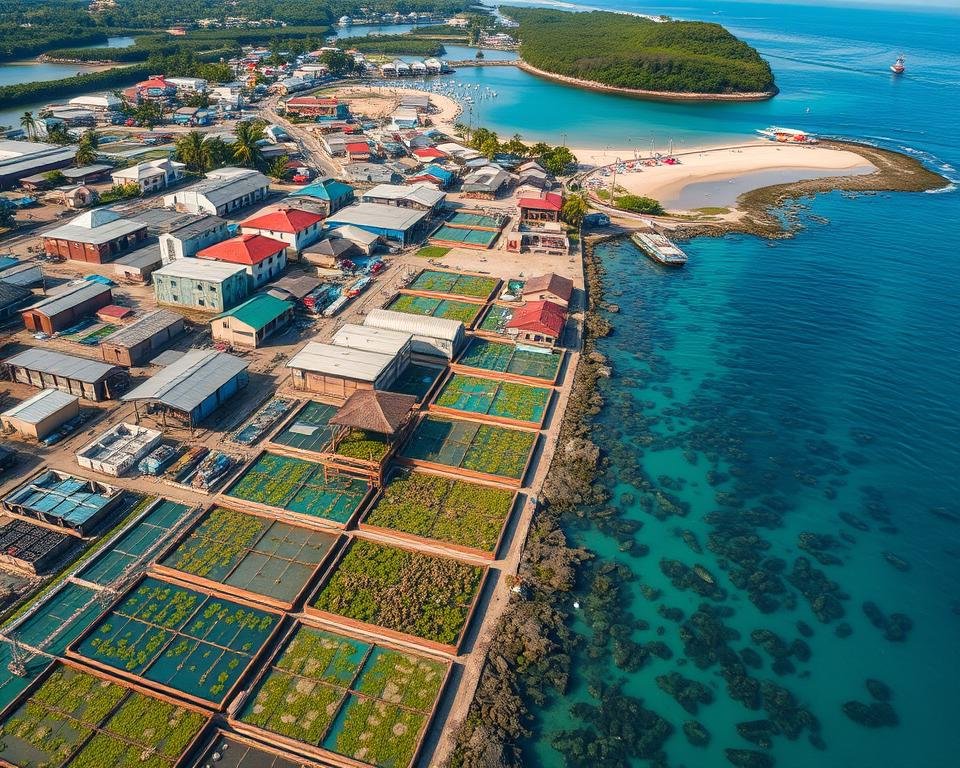
A detailed analysis of the market opportunities for IMTA products is presented in the following table:
| Product | Market Segment | Potential Revenue |
|---|---|---|
| Seaweed | Premium, sustainably sourced | High |
| Shellfish | Niche, eco-friendly | Medium to High |
| Fish | Conventional and sustainable | Medium |
In conclusion, IMTA offers big economic benefits for aquaculture. It makes farming cheaper, creates valuable products, and opens up new markets. This makes IMTA a strong choice for improving the financial health of aquaculture operations.
Challenges in Implementing IMTA
Implementing IMTA comes with many challenges. These can be split into technical, economic, and regulatory issues. Understanding these challenges is key to making IMTA more common.
Technical Challenges
Managing different species in IMTA is a big technical challenge. It’s important to make sure waste from one species helps another. Effective management strategies keep the ecosystem balanced and healthy.
IMTA systems need advanced monitoring and management tools. Farmers must have the latest tech to check water quality and species health in real-time.
Economic Barriers
Starting an IMTA system costs a lot, which is a big economic hurdle. The expenses for infrastructure, choosing species, and monitoring can be high. But, IMTA can bring long-term economic benefits by selling more products and reducing waste.
To overcome these costs, financial incentives and support are needed. Governments and groups can help with subsidies, grants, or low-interest loans for farmers switching to IMTA.
Regulatory Issues
Rules for aquaculture vary a lot and often don’t cover IMTA. This lack of clear rules can slow down IMTA adoption. Clear and supportive regulations are needed to help IMTA grow.
Talking to policymakers and regulatory bodies is key. Working together can lead to IMTA-specific regulations. This helps create a better environment for IMTA by tackling its unique challenges.
Success Stories of IMTA Around the World
IMTA has been adopted globally, showing its success in aquaculture. Farmers and researchers have joined forces. Together, they’ve seen big wins for the environment and their wallets.
Canada’s IMTA Success
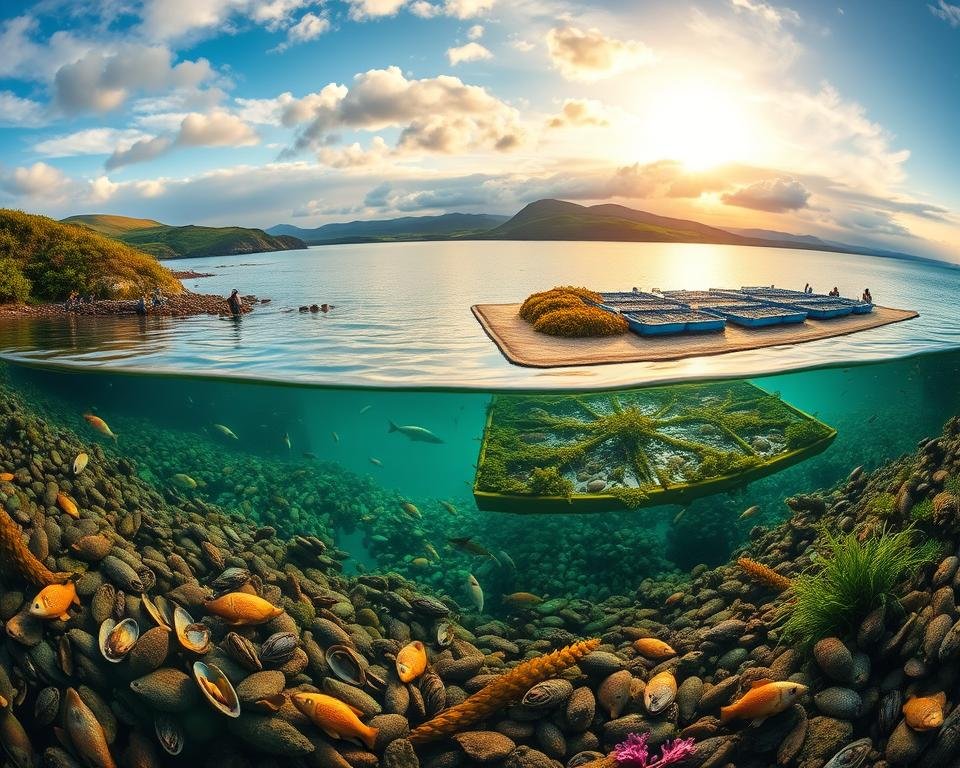
In Canada, IMTA has made waves by mixing salmon farming with seaweed and shellfish. This combo has cleaned up the water and brought in more money for farmers. They now sell a variety of seafood.
Key benefits: Cleaner water, more seafood options, more money for farmers.
Scotland’s Innovative IMTA Practices
Scotland leads in IMTA innovation, blending fish farming with seaweed and other sea life. This method cuts down on pollution and boosts biodiversity. It’s a win-win for the environment and farmers’ pockets.
- Less pollution
- More sea life
- Stronger economy for farmers
China’s Large-Scale IMTA Adoption
China has taken IMTA to a big level, using many species in their farms. This has boosted their aquaculture output while keeping environmental harm low.
| Country | IMTA Components | Benefits |
|---|---|---|
| Canada | Salmon, seaweed, shellfish | Improved water quality, diversified products |
| Scotland | Fish, seaweed, other marine species | Reduced pollution, enhanced biodiversity |
| China | Variety of fish and shellfish, seaweed | Significant aquaculture production, minimized environmental impacts |
These stories show IMTA’s power to change the aquaculture game. It’s all about being green and making money. As more places use IMTA, we’ll see even more cool stuff happening.
The Role of Technology in IMTA
Technology is changing how we do sustainable aquaculture in Integrated Multi-Trophic Aquaculture (IMTA). It makes IMTA systems more efficient, productive, and good for the environment.
Monitoring and Management Tools
Technology is key in monitoring and managing IMTA systems. Advanced sensors and IoT devices track water quality in real-time. This lets farmers make quick, informed decisions.
Real-time monitoring keeps the conditions right for all species. This boosts overall productivity.
Data analytics and machine learning help predict and prevent problems. This includes diseases and nutrient imbalances. It keeps the aquatic life healthy and reduces environmental impact.
Innovative Practices
New practices are making IMTA more sustainable and efficient. For example, recirculating aquaculture systems (RAS) cut down water waste. They recycle water, saving this precious resource.
Artificial intelligence (AI) is used to improve feeding strategies. AI analyzes data to find the best feeding times and amounts. This reduces waste and boosts growth rates.
Future Technological Advancements
Future tech will make IMTA systems even better. Genomics and genetic engineering could improve disease resistance and growth. They help create species that thrive in IMTA.
Also, renewable energy technologies will reduce fossil fuel use. Solar, wind, and hydroelectric power can power IMTA. This cuts down carbon emissions.
Policy Framework and Support for IMTA
Policy backing is key for IMTA’s wide adoption. As aquaculture grows, a supportive policy framework is more critical.
Government Initiatives
Governments worldwide see IMTA’s value and are starting initiatives to support it. In the United States, the Aquaculture Innovation Act promotes IMTA with funding for research.
They also offer subsidies and technical help to farmers switching to IMTA. This helps cover the costs of new technologies and practices.
Non-Governmental Organizations
NGOs are vital in promoting IMTA. Groups like the World Wildlife Fund (WWF) work with governments and the industry to set up best practices.
They also teach consumers about IMTA’s benefits. This creates demand for seafood from sustainable sources.
International Collaboration
Global cooperation is key for IMTA’s success worldwide. Bodies like the Food and Agriculture Organization (FAO) of the United Nations share knowledge and technologies.
This collaboration standardizes practices and tackles common challenges. It helps the IMTA community grow and succeed.
Through teamwork among governments, NGOs, and international groups, we can make IMTA grow. This will help make our food system more sustainable.
Best Practices for IMTA Implementation
Best practices are key for IMTA success. They help farmers and operators get the most out of IMTA. This includes better sustainability and more productivity.
Site Selection Criteria
Choosing the right site is vital for IMTA success. Water quality, depth, and currents are important. For example, seaweed cultivation needs nutrient-rich water. Fish farming needs good water exchange to keep fish healthy.
The site should also be easy to check and maintain. A well-chosen site boosts the IMTA operation’s efficiency and productivity.
Species Compatibility
Choosing the right species is another key part of IMTA. Different species levels should work well together. For instance, seaweeds and shellfish can live together well. They use different resources and improve water quality.
It’s also important to pick species that fit the local environment and have a market. This makes the IMTA system both eco-friendly and economically sound.
Management Strategies
Good management is essential for IMTA success. This means keeping an eye on water quality, organism health, and system performance. Using adaptive management strategies helps manage risks and boost production.
Keeping detailed records and talking to stakeholders also helps. A proactive and informed management style makes IMTA systems more resilient and productive.
By following these best practices, IMTA practitioners can increase their chances of success. They help grow sustainable aquaculture practices.
Future Prospects for IMTA
As the aquaculture industry grows, Integrated Multi-Trophic Aquaculture (IMTA) is becoming more important. It’s a key part of sustainable aquaculture practices. IMTA systems are seen as a hopeful solution to environmental issues in marine aquaculture.
Research and Development Trends
Research and development are key for IMTA’s growth. There’s a focus on creating better monitoring and management tools. These tools help farmers keep an eye on water quality, species health, and system performance in real-time.
There’s also interest in finding new species to add to IMTA systems. This increases biodiversity and makes aquaculture operations more resilient.
Expanding into New Markets
IMTA has big chances to enter new markets. With more people caring about the environment, there’s a growing need for sustainable seafood. IMTA can meet this demand with value-added products that appeal to eco-conscious consumers.
IMTA can also find new markets in areas where traditional aquaculture can’t work because of environmental issues.
The Role in Sustainable Food Security
IMTA is set to be a big player in ensuring global food security. It offers a sustainable way to get protein, helping meet the world’s seafood needs without harming the environment.
By using multiple species in IMTA systems, aquaculture becomes more efficient and diverse. This makes the food system more resilient.
Getting Involved in IMTA
If you’re interested in IMTA, there are many ways to get involved. Whether you’re a farmer, researcher, or supporter, there’s a place for you. IMTA has aquaculture systems for all kinds of needs and environments.
Opportunities for Farmers
Farmers can find IMTA a sustainable and profitable choice. By adding multiple species, farmers can offer more products and lessen environmental harm. This way, they get the IMTA benefits.
Educational Resources
There are many educational resources for learning about IMTA. You can find workshops, online courses, and publications. These tools offer insights into IMTA’s best practices and new developments.
Community Engagement
Joining the IMTA community is key to spreading its sustainable aquaculture approach. By joining forums, going to conferences, and working with others, you help IMTA grow. This builds community engagement.

 Antibiotic Use in Aquaculture: Navigating the Challenges
  Responsible Sourcing of Seafood: A Guide to Sustainable Choices
  Biodiversity Protection in Fish Farming
  Aquaculture Certification and Standards: Ensuring Quality and Sustainability
  Sustainable Aquaculture Practices: Balancing Productivity and Sustainability
  Fish Farm Site Selection: Maximize Your Aquaculture Success