


Did you know that not enough Dissolved Oxygen can cause big problems in aquaculture? Some studies show that up to 50% of fish deaths are due to bad water quality.
As someone who works in aquaculture, I know how key good water quality is for fish to grow well. Dissolved Oxygen (DO) levels are a big part of that. In this article, I’ll talk about why monitoring DO levels is so important and how to keep them healthy.
Keeping DO levels just right is essential for your fish’s health. By understanding the need for DO monitoring, you can create a better environment for your fish to flourish.
Key Takeaways
- Understanding the importance of Dissolved Oxygen levels in aquaculture.
- Learning how to monitor DO levels effectively.
- Implementing strategies to maintain optimal DO levels.
- Recognizing the impact of poor DO levels on fish health.
- Improving fish growth and survival rates through proper DO monitoring.
Understanding Dissolved Oxygen in Aquaculture
Dissolved Oxygen (DO) is key in aquaculture for fish health. It’s vital for keeping water quality right. Knowing about DO is essential for aquaculture success.
Importance of Dissolved Oxygen
Dissolved Oxygen is essential for fish breathing. It helps them grow and stay healthy. Without enough DO, fish can get stressed, sick, or even die.
DO is important in many ways:
- It helps fish grow faster and stronger.
- Fish with enough oxygen fight off diseases better.
- Good oxygen levels mean fish use food more efficiently.
Factors Affecting DO Levels
Many things can change DO levels in aquaculture:
- Water temperature affects how much oxygen it can hold.
- Changes in salt levels also impact DO.
- Decomposing organic matter uses up oxygen.
- Plants and tiny organisms change DO through photosynthesis and respiration.
Measurement Techniques
Getting accurate DO readings is critical for managing aquaculture. There are a few ways to do this:
- DO meters give direct readings of oxygen levels.
- The Winkler titration method uses chemicals to measure DO.
- Optical sensors use light to measure DO levels.
Understanding DO helps aquaculture operators keep their fish healthy and thriving.
The Role of Dissolved Oxygen in Fish Health
Dissolved oxygen is key in aquaculture, affecting fish health directly. It’s clear that keeping oxygen levels right is essential for the industry’s success.
Optimal DO levels help fish grow well, improve feed use, and fight off diseases. But, too little oxygen can stress fish, make them sick, and even kill them.
Effects of Low Oxygen on Fish
Low oxygen can harm fish a lot. It can stress them out, weakening their immune system. This makes them more likely to get sick. Long-term, it can slow down growth, make feed less effective, and increase death rates.
Experts say, “Fish stressed by low oxygen are more likely to get sick and grow slower.”
“Low oxygen levels can significantly impact the overall health and productivity of aquaculture operations.”
Benefits of Optimal DO Levels
Keeping oxygen levels just right is vital for healthy fish growth and better aquaculture. It boosts feed use, fights off diseases, and keeps fish well.
- Improved growth rates
- Enhanced feed conversion
- Reduced disease susceptibility
- Better overall fish health
By keeping DO levels optimal, farmers can greatly improve fish health and productivity. This leads to more profit and sustainable farming.
Monitoring Equipment for DO Levels
To keep water quality high, you need the right DO monitoring gear. The right tools are key to your fish’s health and success.
Types of DO Sensors
There are many DO sensors out there, each with its own strengths. Here are a few:
- Optical DO Sensors: These use light to measure oxygen. They’re accurate and easy to care for.
- Electrochemical DO Sensors: Known as Clark-type sensors, they’re reliable and affordable.
For more info on DO sensors, check out this resource.
Manual vs. Automated Monitoring
Choosing between manual and automated systems depends on your setup and needs.
| Feature | Manual Monitoring | Automated Monitoring |
|---|---|---|
| Cost | Lower initial cost | Higher initial investment |
| Accuracy | Prone to human error | High accuracy and reliability |
| Maintenance | Regular manual checks required | Automated systems require less frequent manual intervention |
Automated systems give you real-time data and can save money over time, even if they cost more upfront.
By picking the right DO monitoring tools and following best practices, you can keep your aquaculture thriving.
Best Practices for Maintaining DO Levels
Keeping DO levels right is key to good aquaculture. It needs the right methods and plans. Here, we’ll talk about how to keep DO levels up, focusing on aeration and managing water temperature.
Aeration Techniques
Aeration is vital for boosting DO levels in aquaculture. There are a few ways to do it:
- Surface Aerators: These devices stir the water surface, making more oxygen get into the water.
- Diffused Aeration: This method adds air bubbles into the water through diffusers, raising DO levels.
- Mechanical Aerators: These mix and aerate the water, improving oxygen transfer.
Using Aquaculture DO Measurement Equipment with these methods helps keep DO levels in check.
Water Temperature Management
Water temperature greatly affects oxygen solubility. So, managing it is key for good DO levels.
- Monitoring Water Temperature: Regular checks help understand its effect on DO levels.
- Temperature Control Measures: Steps like shading, water circulation, and insulation can manage water temperature.
By mixing good aeration with the right water temperature, aquaculture farms can keep DO levels up. This supports healthy fish growth and productivity. Advanced Aquaculture DO Measurement Equipment helps by accurately monitoring DO levels.
Regular DO Testing and Its Frequency
Regular DO testing is key for keeping fish healthy in aquaculture. How often you test DO levels affects fish health and farm success.
Seasonal changes affect DO levels a lot. For example, warmer water in summer lowers DO levels. An expert says, “The warmer the water, the less oxygen it can hold.”
“Water temperature is inversely related to DO levels; as temperature increases, DO levels decrease.”
Seasonal Changes in DO
Knowing how DO levels change with the seasons is important. In spring and summer, fish are more active and water is warmer, so DO levels are lower. But in fall and winter, DO levels are higher because the water is cooler.
Recommended Testing Schedules
To keep DO levels right, I suggest these testing times:
- Test DO levels at least twice a day in summer.
- Test DO once a day in spring and fall.
- Test DO every other day in winter when it’s cooler.
By following these schedules and watching DO levels closely, aquaculture farms can keep their fish healthy and thriving.
Troubleshooting Low DO Levels
Low DO levels can harm fish health, making quick action necessary. In aquaculture, keeping dissolved oxygen levels right is key for fish well-being.
Identifying Symptoms of Low Oxygen
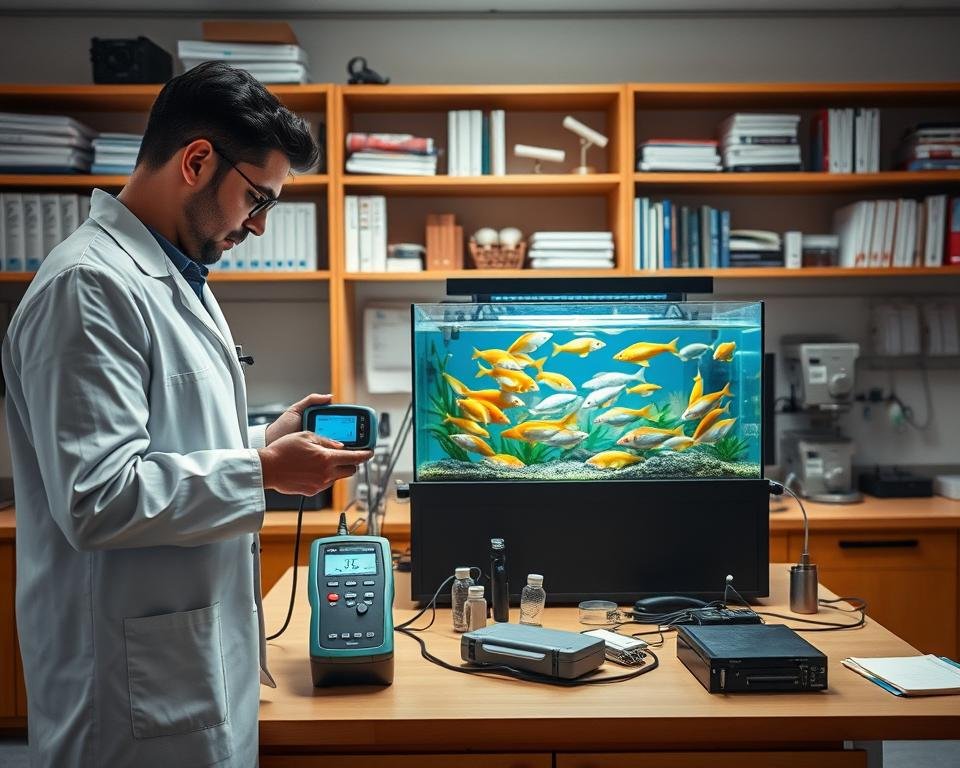
Spotting signs of low DO levels is the first step. Fish stressed by low oxygen may breathe fast, act tired, or swim to the surface. Watching for these signs helps catch low DO early.
Experts say, “Fish change their behavior when stressed, like with low DO levels.”
“Watching fish behavior is a simple yet effective way to monitor water quality.”
Quick Fixes and Solutions
When low DO levels are found, quick fixes can help. Aeration techniques, like aerators or diffusers, boost oxygen. Also, managing water temperature and lowering stocking density can help.
- Use aeration systems to increase oxygen levels.
- Keep an eye on and manage water temperature.
- Adjust stocking densities to lower oxygen demand.
Understanding low DO causes and using these fixes can greatly improve fish health. Regular checks and keeping DO levels right are vital for aquaculture success.
Case Studies in Aquaculture DO Monitoring
Case studies from around the world show how important DO monitoring is in aquaculture. They lead to better fish health and more productivity. By looking at real-life examples, we learn the best ways and challenges of keeping DO levels right in tanks.
Successful Experiences
Many aquaculture farms have seen big improvements after using DO monitoring systems. For example, a large shrimp farm in Southeast Asia saw a 25% increase in yield and lower death rates. This was thanks to constant DO monitoring.
A catfish farm in the United States also did well. They used an automated DO system. This helped them improve their aeration and keep the fish healthier. They also saved on energy and improved fish welfare.
Lessons Learned
DO monitoring has many benefits, but there are also lessons from challenges. One key thing is to keep DO sensors calibrated and maintained for accurate readings.
Case studies also show that monitoring DO with other water quality factors like pH and temperature is key. This gives a full picture of the tank’s health. Farmers can then make better decisions and handle water quality changes well.
By learning from these experiences, aquaculture farms can improve their DO monitoring. This helps them keep their tanks in the best condition for their fish.
Regulation and Standards for DO Levels
Knowing the rules for dissolved oxygen (DO) levels is key for healthy fish farming. Following these rules helps keep fish farms sustainable and reduces harm to the environment.
Compliance with Environmental Guidelines
Fish farms must follow environmental rules about DO levels in water. These rules change by area and are set by local or national agencies. For example, in the U.S., the Environmental Protection Agency (EPA) sets water quality standards, including DO levels.
“The health of our waterways is directly tied to the health of our aquaculture operations. Maintaining optimal DO levels is critical for both.” – EPA Water Quality Guidelines
To follow these rules, farms must check and report DO levels often. They need to use approved tools and follow set testing methods for accurate results.
Recommended DO Levels for Various Species
Each fish type needs different DO levels. For instance, trout need more DO than carp. Knowing these needs is important for keeping fish healthy and productive.
| Fish Species | Recommended DO Level (mg/L) |
|---|---|
| Trout | 6-8 |
| Salmon | 7-9 |
| Carp | 3-5 |
Keeping DO levels right not only meets rules but also boosts fish farm health and output. By following these standards, farms help make the industry more sustainable and eco-friendly.
Innovations in DO Monitoring Technology
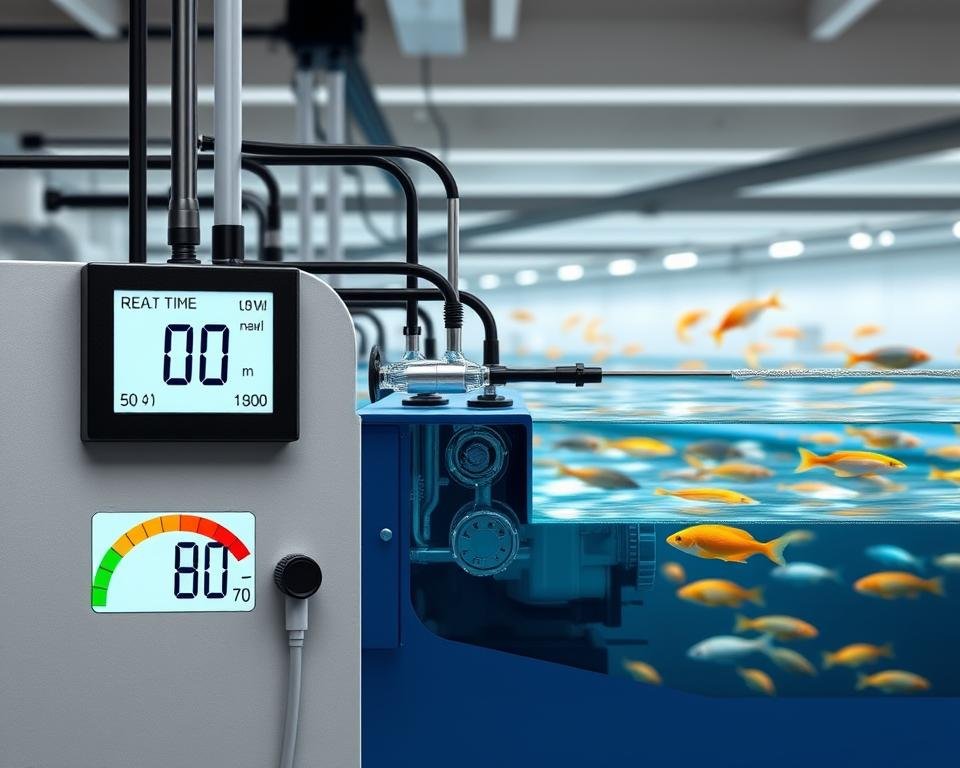
Recently, the aquaculture industry has seen big changes in DO monitoring tech. This is because people want more sustainable ways to farm fish. New DO monitoring systems are helping fish farms stay healthy and productive, making the industry more sustainable.
Emerging Trends in Sensors
New DO sensors for aquaculture are getting better. They are more accurate, last longer, and are easier on the wallet. This means more farms can use them.
Another big change is adding wireless connectivity to DO systems. This lets farmers check DO levels online and make quick decisions. Experts say this change is a big deal for fish farms, helping them keep fish healthy and productive.
Data Analytics for Enhanced Monitoring
Data analytics is key in DO monitoring now. It helps farms understand trends and patterns they might miss. This can help prevent problems and keep fish alive.
Using data analytics tools also helps farms improve their aeration systems. For example, they can find the best aeration plans for different times or weather. A study found that using data analytics in DO monitoring is a big win for the aquaculture industry, leading to better fish health.
“The future of DO monitoring in aquaculture lies in the integration of cutting-edge sensor technology with advanced data analytics. This combination will enable farms to achieve unprecedented levels of efficiency and sustainability.”
In short, new DO monitoring tech is changing the aquaculture industry. By using these new tools, farms can keep fish healthier, save money, and help make food production more sustainable.
The Economic Impact of DO Monitoring
Monitoring dissolved oxygen (DO) levels is key for aquaculture farms’ success. It helps operators make smart choices that boost their farm’s health and profits.
Cost-Benefit Analysis for Aquaculture Farms
Doing a cost-benefit analysis is vital. It shows the financial gains of using DO monitoring systems. The cost of the equipment is high at first, but the long-term benefits are worth it.
- Lower fish death rates
- Faster fish growth with better DO levels
- Less money spent on keeping water and air right
- Possible higher prices for healthier fish
By following best practices for DO monitoring, farms can see a big return on their investment. This includes the initial setup and regular upkeep of the equipment.
Long-term Sustainability and Profitability
Keeping DO levels right is key for long-term success in aquaculture. It keeps the fish healthy and helps the farm be more eco-friendly.
Key strategies for long-term sustainability include:
- Regular checks and adjustments of DO levels
- Using the latest DO monitoring tech
- Training staff on DO monitoring and how to handle changes
By focusing on DO monitoring and managing DO levels well, farms can grow their profits. They also help make the aquaculture industry more sustainable.
Conclusion: The Future of DO Monitoring in Aquaculture
The aquaculture industry is growing, and keeping an eye on dissolved oxygen levels is key. Using the right Aquaculture DO Measurement Equipment is essential. It helps keep fish healthy and makes sure aquaculture can keep going strong.
Emerging Trends
New sensor tech and data analysis are changing DO monitoring. These advancements mean we can watch DO levels more closely and quickly. This helps aquaculture experts use their equipment better.
Best Practices for a Sustainable Future
To keep aquaculture healthy and productive, following best practices is vital. This means testing regularly, keeping equipment in good shape, and staying up-to-date with new info. By following these steps, aquaculture can grow in a sustainable and profitable way.

 Ammonia and Nitrite Control in Aquaculture
  TSS Removal: Keeping Your Water Clean and Clear
  Boost Aquaculture Yields with Effective Water Exchange
  Achieve Ideal Water pH for Aquaculture Farming
  Optimize Your Biofiltration System with the Right Media
  Water Recirculation Best Practices in Aquaculture