


As a fish farmer, I’ve learned how key it is to keep the water perfect for fish health. Did you know bad water can cause a 30% loss in fish production? This shows how vital it is to check and keep the water right.
Aquaculture water testing is essential. The right tools help your fish farm thrive. In this article, I’ll show you why water testing is important and the kits you can use to get better results.
Key Takeaways
- Understand the importance of water quality in fish farming
- Learn about the different types of water testing kits available
- Discover how to use water testing kits effectively
- Optimize your fish farming operations with the right water testing kit
- Achieve better yields by maintaining optimal water conditions
Understanding the Importance of Water Quality in Fish Farming
In fish farming, water quality is super important. It affects the health, growth, and survival of fish. As a fish farmer, knowing how to keep water quality good is key to your farm’s success.
Poor water quality can stress, disease, and even kill fish. This can hurt your farm’s productivity and profits. Testing the water regularly helps spot problems early. This way, you can fix issues before they get worse.
Impact on Fish Health
The health of your fish depends on the water they live in. Poor water quality can stress fish, making them more likely to get sick. For example, too much ammonia or nitrite can harm their gills and other important organs.
“The quality of the water in which fish are cultured is perhaps the most critical factor determining their health and productivity.”
Effects on Growth Rates
Water quality also affects how fast fish grow. Good water conditions help fish grow well, but bad conditions can slow them down. Things like pH, oxygen levels, and temperature are very important for fish growth.
| Water Parameter | Optimal Range | Impact on Growth |
|---|---|---|
| pH | 6.5-8.5 | Affects metabolic processes |
| Dissolved Oxygen | 5-8 mg/L | Critical for respiration |
| Temperature | Species-dependent | Influences metabolic rate |
Relationship Between Water Quality and Yield
The quality of the water affects your fish farm’s yield. Good water quality means healthier fish that grow better, leading to more fish to sell. Keeping an eye on water parameters and making adjustments as needed is important for success.
Understanding how water quality impacts fish health, growth, and yield is vital. By testing the water regularly and managing it well, you can run a successful fish farm. This approach ensures a healthy and productive environment for your fish.
Types of Water Testing Kits Available
The market has many water testing kits for aquaculture. You can find simple chemical tests or advanced electronic meters. These tools help fish farmers monitor water quality, ensuring the health of their fish.
Chemical Test Kits
Chemical test kits are popular among fish farmers. They are affordable and easy to use. You add a chemical reagent to the water, and it changes color based on the water’s quality.
Advantages: They are cheap and simple to use.
Limitations: Their accuracy depends on the user’s skill. They might not be as precise as other methods.
Electronic Test Meters
Electronic test meters are quick and accurate. They measure water parameters fast and precisely. These devices are more precise than chemical kits.
Benefits: They are easy to use, give fast results, and are great for regular checks.
Considerations: You need to calibrate them and they cost more than chemical kits.
Multi-parameter Test Kits
Multi-parameter test kits measure many water quality parameters at once. They give a detailed view of the water conditions.
Advantages: They offer a wide view of water quality, are efficient, and can save money in the long run.
Limitations: They cost more upfront, and using them might need more training.
In conclusion, choosing the right water testing kit depends on the fish farm’s needs. It’s about the parameters to test, the accuracy needed, and the budget. By picking the best water testing solutions for aquaculture, fish farmers can keep their fish healthy. This leads to better yields and sustainable farming.
Key Parameters to Test in Fish Farming
To keep a fish farm healthy, it’s key to check several water parameters often. These parameters help keep fish healthy and growing well. I’ll explain why each parameter is important and how to test them.
Testing water regularly means checking several key factors. These include pH levels, ammonia, nitrite and nitrate, and dissolved oxygen. Let’s look at each one and why they matter.
pH Levels
The pH level shows if water is acidic or alkaline. Most fish do best in a pH between 6.5 and 9. Regular pH testing is vital to keep the water right. Use a good pH test kit for accurate readings.
Ammonia Concentration
Ammonia is harmful to fish, even in small amounts. It comes from fish waste and organic matter. Regular monitoring of ammonia is key to avoid poisoning. An ammonia test kit can spot any spikes.
Nitrite and Nitrate Levels
Nitrite and nitrate are also important to watch. Nitrite is toxic and can stress fish. Nitrate, while less harmful, can cause problems at high levels. Nitrite and nitrate test kits help you keep these in check.
Dissolved Oxygen
Dissolved oxygen is vital for fish to survive. Low oxygen can stress, disease, and even kill fish. A dissolved oxygen test kit is needed to check oxygen levels. Knowing how temperature and salinity affect oxygen is also important.
Here are some key parameters to test and their optimal ranges:
- pH: 6.5 – 9
- Ammonia: 0 – 0.02 ppm
- Nitrite: 0 – 0.1 ppm
- Nitrate: 0 – 50 ppm
- Dissolved Oxygen: 5 – 10 ppm
By testing these parameters regularly and keeping water quality high, you can have a healthy fish farm. The right fish farming supplies and fish farm equipment are key for accurate testing.
How to Choose the Right Testing Kit
As a fish farmer, picking the right water testing kit is key. I’m here to guide you in making a smart choice. With many options out there, it’s vital to know what you need before buying.
Assessing Your Specific Needs
To pick the right kit, you must know what matters for your fish farm. Think about the fish you’re raising, your farm’s size, and any water quality problems. For example, if you have sensitive fish, you’ll need a kit that spots small changes in water chemistry.
Key considerations include:
- The type of fish or aquatic life you’re farming
- The size and complexity of your operation
- Any specific water quality challenges you’re facing
Factors to Consider
When picking a water testing kit, several things matter. Accuracy and reliability are top, as you need to trust the results. Also, think about how easy it is to use. A hard process can waste time and lead to mistakes.
Other key points are the kit’s cost, availability of parts or reagents, and customer support. By looking at these, you can find a kit that fits your needs and budget.
Brands to Trust
Many trusted brands offer top-notch water testing kits for fish farming. Hach, API, and LaMotte are known for their quality, support, and reliability. When picking a brand, look at their reputation, reviews, and support level.
By understanding your needs, considering important factors, and choosing a reliable brand, you can get the best water testing kit for your farm. This ensures your fish stay healthy and thrive.
Step-by-Step Guide to Using Water Testing Kits
Using a water testing kit involves three main steps: collecting a sample, performing tests, and interpreting results. By following these steps, you can get accurate data on your fish farm’s water quality.
Sample Collection
Collecting a water sample is the first step. To do this well, you should:
- Choose a spot where your fish are most active for sampling.
- Use a clean container to avoid contamination.
- Collect the sample at the same time every day for consistency.
Tip: Always follow the manufacturer’s instructions for specific guidance on sample collection.
Performing Tests
After getting your water sample, it’s time to do the tests. Here’s how:
- Prepare the testing kit as the manufacturer says.
- Add the required reagents to the sample, if needed.
- Wait for the specified reaction time before taking readings.
Interpreting Results
After doing the tests, you need to understand the results. Here’s a simple table to help:
| Parameter | Ideal Range | Action Required |
|---|---|---|
| pH | 6.5-8.5 | Adjust pH if outside this range |
| Ammonia | 0-0.25 ppm | Perform water change if too high |
| Nitrite | 0-0.5 ppm | Monitor and perform water change if necessary |
By following these steps and understanding the results, you can make informed decisions about your fish farm’s water quality management.
Best Practices for Regular Water Testing
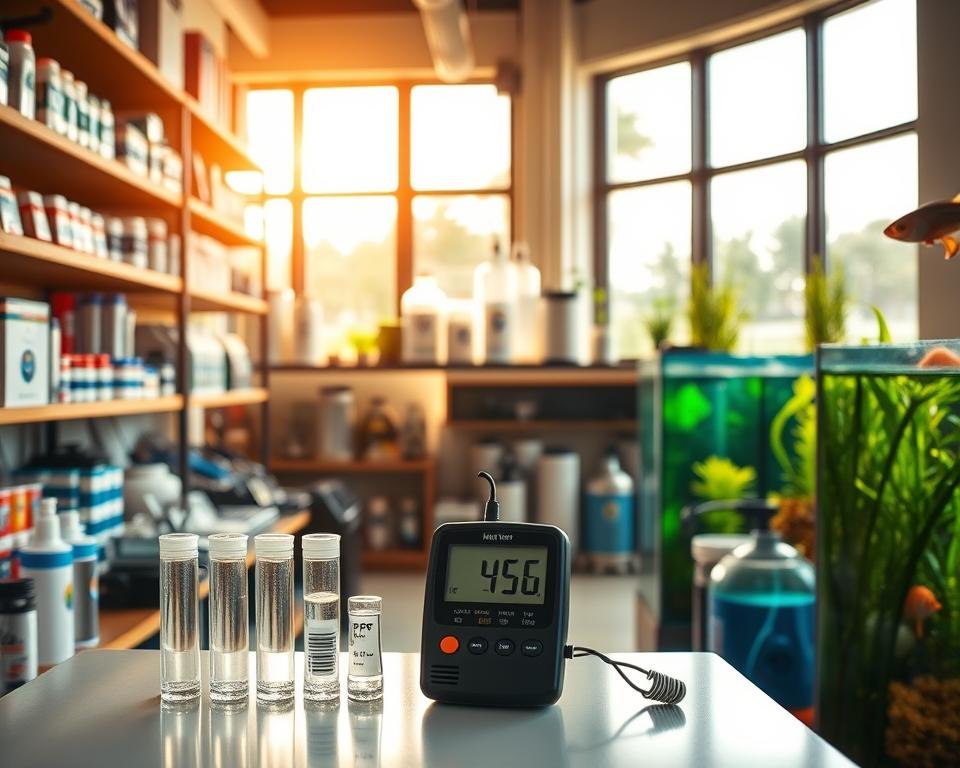
Effective fish farming needs regular water testing to keep the environment healthy. As a fish farmer, knowing the importance of constant water quality checks is key. This ensures your fish stay healthy and your farm thrives.
Establishing a Testing Schedule
Setting up a regular testing schedule is essential. You need to decide how often to test based on your farm’s size, the fish type, and weather. For example, extreme weather might mean more tests.
Here are some key considerations for setting up a testing schedule:
- Know which parameters to test, like pH, ammonia, nitrite, and dissolved oxygen.
- Choose the right fish farm equipment for your needs, considering accuracy, ease of use, and maintenance.
- Plan a testing routine, whether daily, weekly, or monthly, based on your farm’s needs.
Seasonal Considerations
Seasonal changes can greatly affect water quality. Warmer temperatures can cause algae growth, changing pH and oxygen levels. It’s important to understand these changes to adjust your testing and water management.
Some key seasonal considerations include:
- Watch for algae blooms in warmer months.
- Adjust feeding rates and fish density based on water temperature.
- Be ready for flooding or drought that can change water quality.
Troubleshooting Common Issues
Water quality problems can happen despite your best efforts. Being able to solve these problems quickly is vital. This means finding the cause, whether it’s fish farming supplies, equipment, or environment, and fixing it.
Common issues and their solutions include:
| Issue | Possible Cause | Solution |
|---|---|---|
| Low dissolved oxygen | High fish density, algae bloom | Increase aeration, reduce fish density |
| High ammonia levels | Overfeeding, inadequate biological filtration | Reduce feeding rates, improve filtration |
By following these best practices for regular water testing, fish farmers can keep their environment healthy. This leads to a successful and sustainable fish farming operation.
How to Adjust Water Parameters Post-Testing
Water testing is just the first step; adjusting your water parameters is key to successful aquaculture. After you’ve conducted water tests, you may need to make adjustments to optimize the parameters for your fish. In this section, I’ll provide guidance on how to adjust water parameters post-testing, including techniques for adjusting pH, remediating ammonia and nitrite, and enriching dissolved oxygen.
pH Adjustment Techniques
Adjusting the pH of your water is critical for a healthy environment for your fish. If the pH is too high or too low, it can stress your fish, leading to disease or even death. To adjust the pH, you can use various methods, including adding pH-adjusting chemicals or using natural methods like adding crushed limestone to raise the pH or peat moss to lower it.
pH Adjustment Methods:
- pH-adjusting chemicals
- Crushed limestone to raise pH
- Peat moss to lower pH
It’s essential to make gradual adjustments to avoid shocking your fish. Monitor the pH levels closely after making adjustments to ensure they are within the optimal range for your fish species.
Ammonia and Nitrite Remediation
Ammonia and nitrite are toxic to fish and can cause significant harm if not addressed. To remediate ammonia and nitrite, you can perform a partial water change, add beneficial bacteria to your system, or use products designed to neutralize these toxins.
| Remediation Method | Description | Effectiveness |
|---|---|---|
| Partial Water Change | Replacing a portion of the water with fresh, dechlorinated water | High |
| Beneficial Bacteria | Adding bacteria that convert ammonia and nitrite into harmless compounds | High |
| Ammonia-Neutralizing Products | Using chemical products designed to neutralize ammonia and nitrite | Moderate |
Enhancing Dissolved Oxygen
Dissolved oxygen is critical for the survival of your fish. To enhance dissolved oxygen levels, you can increase aeration in your tanks or ponds, perform regular water changes, or add oxygen-supplementing products.
By implementing these strategies, you can ensure that your water quality is optimal for your fish, promoting healthy growth and maximizing yields. Regular monitoring and adjustments are key to maintaining a thriving aquaculture system.
Benefits of Using Water Testing Kits in Fish Farming
Water testing kits are key to keeping fish farms healthy and productive. They help farmers check water quality regularly. This way, they can make smart choices to improve their operations.
Increased Fish Survival Rates
Water testing kits help fish farms by boosting fish survival. Keeping water quality right reduces stress on fish. For example, checking ammonia levels is vital because too much can harm fish.
Testing water often helps spot problems early. This quick action prevents diseases and deaths in fish. It makes fish farming more sustainable.
Maximized Growth Potentials
Water testing kits also help fish grow better. By keeping water just right, fish grow faster and healthier. For instance, the right pH levels and dissolved oxygen are key for fish well-being.
A well-checked water environment meets fish nutritional needs. This leads to quicker growth and better quality fish. It also makes fish farming more profitable.
Better Resource Management
Testing water helps manage resources better. Farmers learn what their water needs are. This means they use feed and water more efficiently.
Water testing data helps farmers decide on stocking, feeding, and other practices. This smart use of data makes fish farming more efficient.
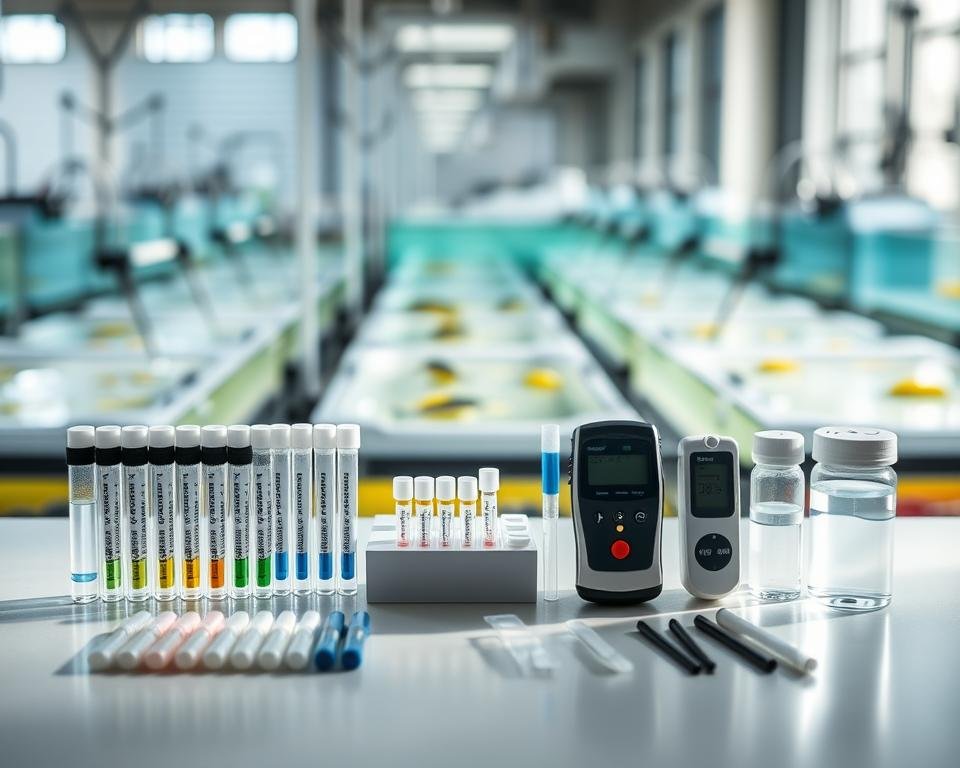
Water testing kits offer many benefits for fish farming. They improve fish survival and resource use. By using reliable kits, farmers can keep their operations sustainable and profitable.
| Benefits | Description | Impact |
|---|---|---|
| Increased Fish Survival Rates | Regular monitoring and maintenance of optimal water parameters | Reduced fish mortality and healthier stock |
| Maximized Growth Potentials | Ensuring optimal water quality for fish growth | Faster growth rates and better quality produce |
| Better Resource Management | Data-driven decisions on resource allocation | Reduced waste and lower operational costs |
Success Stories from Fish Farmers
Water testing kits have changed fish farming for the better. They help farmers keep water quality right, leading to healthier fish and more food. This has made a big difference in the industry.
Small-Scale Fish Farming
For small fish farmers, water testing kits are a big help. A farmer in United States saw more fish survive thanks to these kits. They found and fixed water problems quickly, making their fish healthier and more productive.
Commercial Aquaculture
Big fish farms also see big benefits from these kits. A large farm said using water testing solutions for aquaculture helped them grow more fish. They kept an eye on water quality, making smart choices that boosted fish growth and saved resources.
Lessons Learned
These stories teach us a few important things. First, testing water often is key. Second, using good water testing kits is essential for smart choices. Lastly, changing water conditions based on tests is critical for the best fish health and growth.
| Farm Type | Water Parameter Monitored | Outcome |
|---|---|---|
| Small-Scale | pH, Ammonia | Increased Fish Survival |
| Commercial | Dissolved Oxygen, Nitrite | Maximized Growth |
By following best practices and using the best water testing kits, fish farmers everywhere can do great things. They help make aquaculture more sustainable and productive.
Where to Buy Water Testing Kits
Now that you’ve picked the right water testing kit for your fish farm, it’s time to buy. You can find these kits at local aquaculture stores or online. Online stores specialize in fish farming supplies and equipment.
Local Options and Online Retailers
Local stores let you talk to experts who can help you choose the best kit. If you like shopping online, many sites have a variety of kits. Check out Aquatic Control for a wide range of solutions.
Pricing and Customer Feedback
When shopping online, compare prices to get the best deal. Reading reviews can also help. It shows how well the kits work and if they’re reliable. This ensures you get a kit that fits your fish farm’s needs.

 Ammonia and Nitrite Control in Aquaculture
  TSS Removal: Keeping Your Water Clean and Clear
  Boost Aquaculture Yields with Effective Water Exchange
  Achieve Ideal Water pH for Aquaculture Farming
  Optimize Your Biofiltration System with the Right Media
  Water Recirculation Best Practices in Aquaculture