


Aquaculture farming is a big deal worldwide, providing over 50% of seafood. But, it needs the right water conditions, like the perfect pH level, to succeed.
As a farmer, keeping the pH just right is key for your fish and other sea creatures. Changes in pH can stress, make sick, or even kill them. Here, I’ll show you why pH control matters and how to keep it perfect.
Key Takeaways
- Understanding the importance of pH management in aquaculture.
- Methods for adjusting and maintaining ideal pH levels.
- The impact of pH fluctuations on aquatic species.
- Best practices for a thriving aquaculture environment.
- Modern technologies for effective pH management.
Importance of pH in Aquaculture
pH levels are key in aquaculture. They affect the health and growth of fish and other sea creatures. Keeping the water pH right is vital for a healthy environment.
Understanding pH Levels
The pH of water shows if it’s acidic or alkaline. Different sea creatures need different pH levels to thrive. For example, some fish do best in slightly acidic to neutral water (around 6.5-7.5).
Consequences of Improper pH
Wrong pH levels can stress sea creatures. This makes them more likely to get sick and grow slower. In bad cases, it can even kill them.
For example, too low pH (acidic) can release harmful metals from the bottom. This is very dangerous for sea life.
Key Species Affected by pH
Some sea creatures are more sensitive to pH changes. Shellfish and crustaceans need a very specific pH range. This is because they need it for things like shell growth.
Knowing what pH your farmed species need is very important. You need to check and adjust the pH often. This keeps the water perfect for your sea creatures.
Ideal pH Levels for Various Aquaculture Species
Knowing the right pH levels for different aquaculture species is key to success. Each species has its own needs for growth and health.
Freshwater Fish Requirements
Freshwater fish can handle pH changes better than saltwater fish. They do best in a pH of 6.5 to 8.5. For example, tilapia can handle a pH of 6.0 to 9.0. Trout, on the other hand, prefer a pH of 6.5 to 7.5.
Saltwater Fish Preferences
Saltwater fish are more sensitive to pH changes. They need a stable environment. The best pH for them is between 8.0 and 8.3. Some, like clownfish, can handle a bit wider range, but keeping the pH stable is key.
Shellfish and Crustaceans
Shellfish and crustaceans also need specific pH levels. Oysters and clams do well in a pH of 7.9 to 8.4. Crustaceans like lobsters and crabs prefer a pH of 7.8 to 8.2.
It’s important to adjust the pH in aquaculture systems to meet these needs. Aquaculture water quality control is essential for maintaining the right pH levels.
| Species | Ideal pH Range |
|---|---|
| Freshwater Fish (e.g., Tilapia) | 6.0 – 9.0 |
| Saltwater Fish (e.g., Clownfish) | 8.0 – 8.3 |
| Shellfish (e.g., Oysters) | 7.9 – 8.4 |
| Crustaceans (e.g., Lobsters) | 7.8 – 8.2 |
Aquaculture experts say, “Keeping water quality, including pH, right is vital for species health and productivity.” Proper adjusting pH in aquaculture systems creates a healthy environment for all species.
“The pH level of water affects the metabolic rate, growth, and survival of aquatic organisms. Maintaining optimal pH levels is essential for successful aquaculture.”
How to Measure Water pH in Aquaculture
To keep aquatic life healthy, it’s key to measure water pH. Getting the pH right is vital for a good home for fish and other sea creatures.
Using pH Test Strips
pH test strips are easy and cheap to use. They change color based on pH levels, showing if the water is too acidic or alkaline.
- Easy to use and interpret
- Quick results
- Portable
Digital pH Meters
Digital pH meters are better for precise readings. They give accurate results and can be set to be more reliable.
Benefits of Digital pH Meters:
- High accuracy
- Calibration options for reliability
- Easy to read digital display
Benefits of Regular Monitoring
Checking pH regularly is key to keeping water perfect for sea life. It spots pH changes early, so you can fix them fast.
| Monitoring Frequency | Benefits |
|---|---|
| Daily | Early detection of pH changes |
| Weekly | Consistency in water conditions |
| Monthly | Long-term trend analysis |
Regular checks and the right tools help farmers keep pH optimization for aquaculture on track. This leads to healthier fish and better farming.
Methods for Water pH Adjustment
Keeping the water pH right is key for aquaculture species to thrive. Adjusting the pH is a big part of managing an aquaculture setup. There are many ways to get the pH just right.
Natural Methods
Natural ways to adjust pH use organic stuff or processes. Peat moss or other organic stuff can lower pH by adding acids. On the other hand, crushed limestone or dolomite can increase pH.
Benefits of Natural Methods: These methods save money and are better for the environment. They help create a more natural setting in the aquaculture area.
Chemical Solutions
Chemical methods use acids or bases to change pH. For example, hydrochloric acid lowers pH, while sodium hydroxide raises it. Always follow the instructions when using these chemicals to avoid mistakes.
Precautions with Chemical Solutions: Watch the pH closely when using chemicals. Sudden changes can stress or harm the fish and other sea creatures.
Benefits of Each Method
Natural and chemical methods both have their good points. Natural methods are better for the planet and last longer. Chemicals work faster and more accurately, but need careful use.
Knowing the different ways to adjust pH helps aquaculture farmers make the best choices. This ensures a healthy and productive place for fish and other sea life.
Modern Technologies for pH Management
Technology has changed how we manage pH in aquaculture. Now, we have new tools that make keeping pH levels right easier and better.
Automated pH Control Systems
Automated pH control systems are a big step forward. They watch the water’s pH and adjust it as needed. This means less work for us and fewer mistakes.
These systems offer many benefits:
- They keep pH levels just right all the time.
- They save money by doing the work for us.
- They are very accurate in keeping pH perfect.
Innovative Water Treatment Solutions
New water treatments are key for pH management today. They include advanced filters and water conditioners. These help keep the water’s pH steady.
These solutions have important features:
- They filter out things that can change pH.
- They help keep pH levels stable.
- They work with automated systems for quick changes.
Real-time Monitoring Tools
Real-time monitoring tools are vital for managing pH. They give us constant updates on pH levels. This lets us make quick changes when needed.
Real-time monitoring offers big advantages:
- It spots pH changes right away.
- It helps us make smart choices for pH adjustments.
- It helps us keep pH levels perfect.
Using these modern technologies, aquaculture can do a better job of managing pH. This leads to healthier water and more sustainable farming.
Challenges in Maintaining Optimal pH
Keeping water pH right is a big deal in aquaculture. It’s key for the health of fish and other sea creatures. But, many things can make it hard.
Environmental Factors Affecting pH
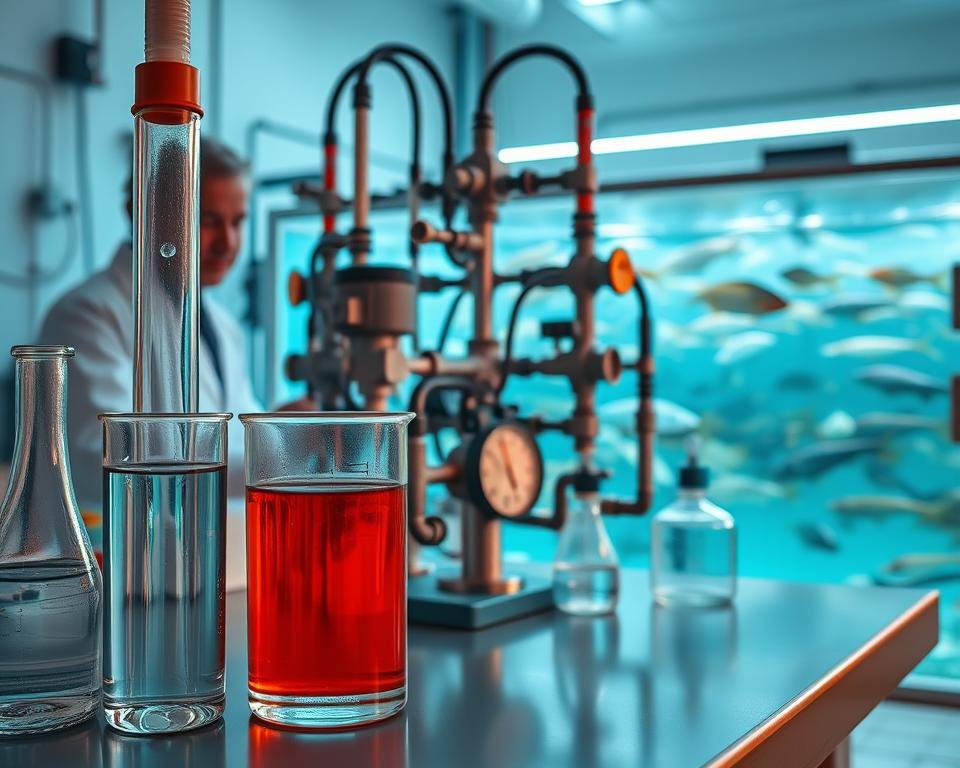
Things around us can change water pH. For example, when organic matter breaks down, it can add acids or bases. Respiration and photosynthesis by plants also play a part. They use up CO2 in the day and release it at night, causing pH to shift.
Seasonal Variations
Seasons can really mess with water pH. In rainy seasons, lots of freshwater can come in, making the pH drop if the rain is acidic. On the other hand, in dry seasons, water can get saltier, making the pH go up.
- Changes in temperature and weather patterns
- Variations in water flow and volume
- Increased runoff from land during heavy rains
Knowing how seasons change is key to keeping pH levels right.
Human Error in Management
Mistakes by people are a big problem too. Wrong pH measurement or adjustment can harm fish. For instance, fixing pH too much can stress or even kill fish.
“The key to successful pH management lies in understanding the complex interplay between environmental factors and human intervention.”
Training and good tools can help avoid mistakes. By knowing how to avoid errors, aquaculture farmers can keep pH levels just right.
Common pH Adjustment Mistakes
Managing pH levels in aquaculture is key. Small mistakes can harm the health and growth of aquatic life. It’s important to avoid common errors when adjusting pH.
Over-correction Issues
One big mistake is over-correcting the pH. This can make the water too acidic, harming fish and plants. To fix this, make adjustments slowly and watch the pH closely.
Ignoring Water Source Properties
Another error is not considering the water source’s properties. Different waters change pH levels differently. Knowing these properties helps manage pH better.
Not Considering Other Water Parameters
Ignoring other water factors when adjusting pH is also a mistake. Things like alkalinity, hardness, and temperature affect pH. They all play a role in the health of the water. Adjusting pH without considering these can upset the balance.
Knowing these mistakes helps aquaculture farmers improve their pH management. This leads to healthier fish and more successful farming.
Role of Buffering Agents in pH Stability
Buffering agents are key in keeping pH levels stable in aquaculture. They help maintain a stable environment for aquatic life. These agents neutralize excess hydrogen or hydroxide ions.
Understanding Buffering Agents
Buffering agents adjust pH levels by releasing or absorbing hydrogen ions. This is vital in aquaculture, where pH changes can harm or kill aquatic life. Buffering capacity shows how well a solution resists pH changes when acids or bases are added.
Popular Buffering Agents in Aquaculture
Several buffering agents are used in aquaculture, including:
- Limestone (calcium carbonate)
- Dolomitic limestone
- Sodium bicarbonate
- Tris buffer
These agents stabilize pH and provide essential minerals. For example, limestone is a natural source of calcium. It’s vital for the growth of shellfish and other calcium-dependent species.
How Buffering Agents Improve pH Stability
Adding buffering agents to aquaculture systems reduces pH-related stress. For instance, sodium bicarbonate stabilizes pH in intensive recirculating aquaculture systems (RAS). To learn more, visit this resource on optimizing pH levels in aquaculture.
The benefits of buffering agents include:
- Reduced pH fluctuations
- Improved health and growth rates of aquatic organisms
- Enhanced stability of the aquaculture system
In conclusion, buffering agents are essential for maintaining pH stability in aquaculture. They contribute to a healthier and more productive aquatic environment.
Best Practices for pH Management
To keep your aquaculture thriving, managing pH is key. It’s not just about monitoring; it’s about a whole approach. This includes regular checks, teaching staff, and planning ahead.
Regular Testing Routines
Testing pH regularly is essential. It lets you catch any pH issues early and fix them. Use both pH test strips and digital meters for the best results.
A study on keeping pH right in aquaculture shows how important it is. Regular checks stop big pH swings.
- Use pH test strips for quick checks.
- Get precise readings with digital pH meters.
- Keep a record of pH levels to spot trends.
Educating Staff and Stakeholders
Teaching staff and others about pH is critical. Knowing how pH affects fish helps everyone make better choices. Training should cover pH basics, its effects, and how to keep it right.
“The key to successful aquaculture is not just in the technology, but in the people who manage it. Educating staff on pH management is essential for long-term success.”
Creating Action Plans
Having plans for pH management is important. These plans should say what to do if pH changes. They should include using buffers or other fixes.
| pH Range | Action Required |
|---|---|
| 6.5 – 8.5 | Monitor regularly, adjust as necessary |
| Below 6.5 | Implement corrective measures to raise pH |
| Above 8.5 | Implement corrective measures to lower pH |
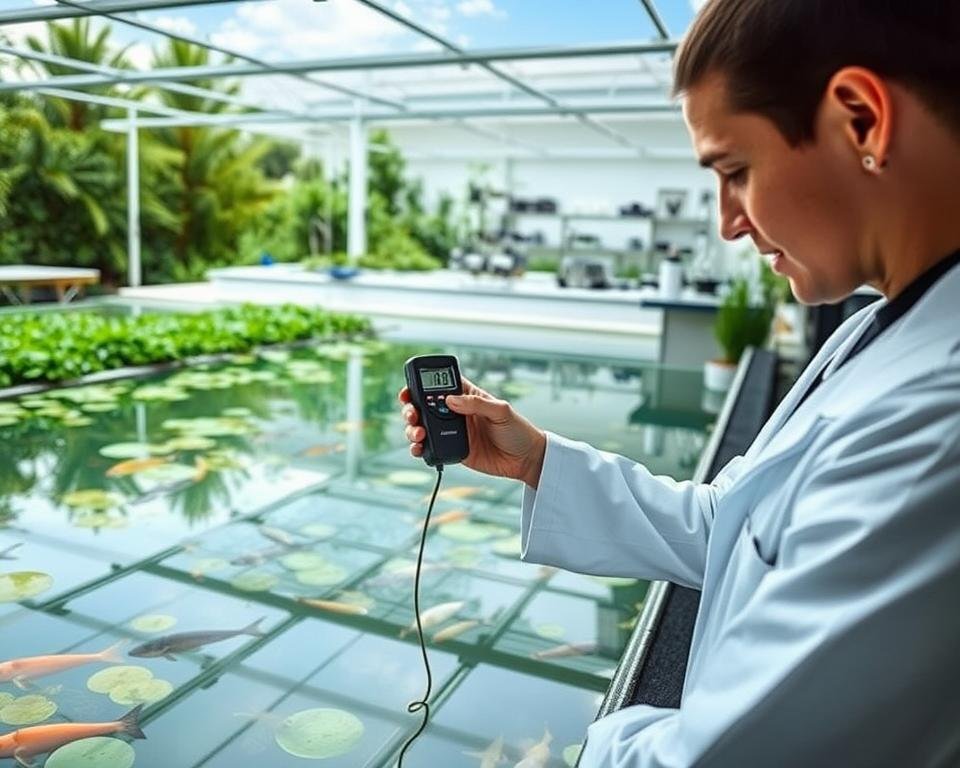
By following these best practices, aquaculture can keep its pH levels just right. This creates a healthy space for fish and helps the whole operation succeed.
Case Studies: Successful pH Management in Aquaculture
Studies from the aquaculture world show how good pH management boosts water quality and farm output. By looking at real examples, we learn what works and what doesn’t.
Success Stories from the Industry
Many aquaculture farms have seen big wins thanks to smart pH management. For example, a shrimp farm in Southeast Asia started checking pH regularly. This move led to a 25% increase in yield over two cycles.
In the United States, a trout farm used an automated pH system. This cut 15% off mortality rates and made the water better.
| Farm Type | pH Management Strategy | Outcome |
|---|---|---|
| Shrimp Farm | Regular pH Monitoring | 25% Increase in Yield |
| Trout Farm | Automated pH Control | 15% Reduction in Mortality |
Lessons Learned from Failed Attempts
Not every pH management try succeeds. A tilapia farm faced big losses because of bad pH adjustment. They didn’t consider water source properties and had unstable pH. This caused a big crop loss.
This story shows how key it is to know your farm’s and water’s needs well.
Innovations Leading to Better Practices
The aquaculture field keeps getting better, thanks to new tech and methods. Using buffering agents helps keep pH stable, cutting down on adjustments.
Also, real-time monitoring systems are a big help. They spot pH changes fast, so you can act quickly.
Future of pH Adjustment in Aquaculture
New technologies are changing aquaculture, making it more productive and sustainable. The future looks bright with new tech and research leading the way in pH management.
Emerging Technologies
Advanced tech is changing how we manage pH in aquaculture. Automated pH control systems are now common. They monitor and adjust pH levels in real-time, keeping fish healthy.
Sensor technology is getting better, giving more accurate pH readings. This helps farmers make better water quality decisions. IoT devices also let farmers check on their systems from anywhere.
Research and Development Trends
Scientists are working hard to make aquaculture better. They’re looking for new buffering agents to keep pH stable. They’re also interested in biological methods for adjusting pH, like using special microorganisms.
The industry is moving towards greener practices. This means finding ways to use less water and waste less. It’s all about reducing the environmental impact of fish farming.
Improving Sustainability Practices
Improving sustainability in aquaculture means being better for the planet. Eco-friendly pH adjustment methods are being developed. There’s also a push for recirculating aquaculture systems (RAS) that save water and cut down on waste.
By adopting these new trends and tech, aquaculture can become more sustainable and productive. Good pH management is key to keeping fish healthy and thriving.
Conclusion: Creating a Balanced Aquaculture Environment
Keeping the water pH just right is key for a healthy aquaculture setup. We’ve looked at why pH matters, the best pH levels for different fish, and how to check and change it.
Key Takeaways
To make your aquaculture system the best, know what pH your fish need. You must check and tweak the pH often. By following the best ways to manage pH, you’ll help your fish thrive in a balanced environment.
Immediate Action for Farmers
Farmers should first check how they manage pH now and see where they can do better. Start regular tests and teach your team about the importance of pH. These actions will help keep your fish healthy and improve your farm’s sustainability.
Adopting Best Practices for pH Optimization
Managing pH well is more than just adjusting levels. It’s about understanding how all water factors work together. By using the best methods for adjusting pH and focusing on optimization, you’ll have a successful and sustainable aquaculture setup.

 Ammonia and Nitrite Control in Aquaculture
  TSS Removal: Keeping Your Water Clean and Clear
  Boost Aquaculture Yields with Effective Water Exchange
  Optimize Your Biofiltration System with the Right Media
  Water Recirculation Best Practices in Aquaculture
  Mastering Salinity Management in Aquaculture