


Did you know millions of people worldwide face water pollution? Total Suspended Solids is a big part of this problem. I’m excited to talk about how TSS Removal helps keep our water clean and clear.
Suspended solids in water can harm the environment and our health. It’s key to remove them effectively. This ensures the water we release is safe and clean.
Key Takeaways
- Understanding the significance of TSS Removal in water treatment.
- Exploring methods for effective Total Suspended Solids Removal.
- Recognizing the impact of TSS on environmental and public health.
- Best practices for TSS Removal in wastewater treatment.
- The role of TSS Removal in maintaining clean and clear water.
Understanding Total Suspended Solids (TSS)
Learning about Total Suspended Solids (TSS) is key to protecting our water and health. TSS are particles floating in water. They can be dirt, dead plants and animals, or pollutants.
What Are Total Suspended Solids?
Total Suspended Solids (TSS) are many kinds of particles in water. They can be from living things or not, like dirt and algae. High TSS levels can make water cloudy and dirty.
To learn more about TSS, check out this resource. It explains how TSS affects our water.
Importance of Measuring TSS
It’s important to measure TSS because high levels harm water quality. This affects both people and animals living in the water. High TSS can block sunlight, hurting plants and animals.
Monitoring TSS regularly helps keep our water clean. It ensures the health of our water and its creatures. Knowing TSS levels helps us protect our water better.
Common Sources of TSS in Water
Many things can cause TSS in water, like construction runoff and farm activities. These can dump a lot of dirt and particles into our water.
It’s vital to tackle these sources to lower TSS. Using good practices, like controlling erosion and treating wastewater, can help. This keeps our water cleaner.
The Impact of TSS on Water Quality
It’s key to know how TSS affects water quality. This is for keeping water bodies healthy and ensuring our drinking water is safe. Total Suspended Solids (TSS) changes the physical, chemical, and biological aspects of water.
Effects on Aquatic Life
Too much TSS can block light in water, harming photosynthesis and the food chain. This can lower oxygen levels, making it hard for aquatic life to survive.
- Less light means fewer plants can grow in water.
- High TSS levels can destroy habitats for fish and other water creatures.
- TSS can also carry pollutants and nutrients, causing algal blooms.
Implications for Human Health
Drinking water with high TSS levels can cause stomach problems. TSS can also carry harmful substances, risking our health.
Key health implications include:
- Stomach issues from drinking contaminated water.
- Higher risk of waterborne diseases.
Role in Water Treatment Processes
TSS is vital in water treatment as it impacts treatment efficiency. Effective TSS control and TSS monitoring are key for water treatment plants to work well.
By managing TSS well, water treatment plants can work better. This means safer drinking water for everyone.
Methods for TSS Removal
Removing TSS is key to keeping water clean and clear. Different methods are used, depending on the wastewater and TSS levels.
Mechanical Separation Techniques
Mechanical methods are popular for TSS removal. Sedimentation uses gravity to settle solids. Filtration passes wastewater through filters to catch particles.
Sedimentation works well for big particles. Filtration catches smaller ones. Together, they help remove TSS effectively.
Biological Treatment Approaches
Biological treatments use microorganisms to break down wastewater’s organic matter. This process lowers TSS and biochemical oxygen demand (BOD), improving water quality.
These treatments can be aerobic or anaerobic, depending on oxygen levels. They’re great for wastewater with lots of organic content.
Chemical Treatment Options
Chemical treatments use coagulants and flocculants to remove solids. Coagulants make particles stick together. Flocculants help form bigger clumps that are easier to remove.
Chemical treatments work well when TSS is finely dispersed or biological treatments can’t be used.
Best Practices for TSS Removal in Wastewater Treatment
To get the best TSS removal, wastewater treatment places need to follow some key steps. They should keep their systems in top shape and use the latest tech. This is key for keeping water clean and safe for everyone.
Regular Maintenance of Treatment Facilities
Keeping things running smoothly is the first step in removing TSS. It makes sure all the gear works well. This means checking the machines, cleaning filters, and looking over tanks and pipes.
Key maintenance activities include:
- Daily checks on equipment and facilities
- Regular cleaning and replacing of filters
- Checking and fixing mechanical gear now and then
Monitoring and Testing Techniques
It’s important to keep an eye on how well TSS is being removed. This means taking water samples and testing them for TSS levels.
Effective monitoring techniques include:
- Gravimetric analysis
- Turbidity measurement
- Sampling at different treatment stages
| Monitoring Technique | Description | Frequency |
|---|---|---|
| Gravimetric Analysis | Measures solids in water by weight | Daily/Weekly |
| Turbidity Measurement | Checks water clarity due to solids | Continuous |
| Sampling | Takes water samples at treatment stages | Regular intervals |
Utilizing Modern Technologies
New tech is a big help in getting rid of TSS. For example, advanced filters can cut down TSS levels a lot.
Some modern tech used includes:
- Advanced filtration systems
- Membrane bioreactors (MBRs)
- Coagulation and flocculation tech
By doing regular maintenance, monitoring closely, and using new tech, treatment facilities can remove a lot of TSS. This makes water cleaner and safer for everyone.
The Role of Filtration in TSS Removal
Filtration is key in removing Total Suspended Solids (TSS) from water. It’s a vital step in water treatment. It makes water safe for different uses.
Types of Filtration Systems
There are many filtration systems for TSS removal. Each has its own features and uses. Here are a few:
- Granular media filters, which are good at removing suspended solids.
- Membrane bioreactors, known for their high efficiency in TSS removal.
- Advanced oxidation processes, which can handle a wide range of influent conditions.
Advantages of Advanced Filtration
Advanced filtration systems have key advantages. They remove more solids and work well under different conditions. These systems are important for high water quality.
Using advanced filtration technologies boosts TSS removal. It’s a smart choice for water treatment facilities.
Case Studies: Filtration Success Stories
Many case studies show how filtration works well. For example, a water treatment plant used a membrane bioreactor. It led to a big drop in TSS levels.
These stories show how filtration can improve water quality. They help meet regulatory standards.
Environmental Regulations and TSS Standards
The EPA’s rules on TSS aim to protect our water and promote green wastewater treatment. It’s key for industries that dump wastewater into our waterways to follow these rules.
EPA Regulations Overview
The Environmental Protection Agency (EPA) has set TSS standards to keep our water clean. These rules help protect fish and keep our water safe for us to use.
TSS limits vary based on the water body and its use. For example, water meant for drinking or swimming has tighter limits.
Importance of Compliance
Following EPA’s TSS rules is more than just a law; it’s good for your reputation and saves money. If you don’t meet TSS standards, you could face big fines and have to upgrade your treatment plants.
Regular monitoring and reporting are key to staying in line. You need to control TSS levels well and report them to the authorities.
Consequences of Non-compliance
Not following TSS rules can cause a lot of harm. It can hurt our water’s ecosystem and lead to legal and financial troubles for companies.
| Regulatory Aspect | Description | Impact of Non-compliance |
|---|---|---|
| TSS Limits | Set based on water type and use | Too much TSS can harm fish and plants |
| Monitoring Requirements | Need to check and report TSS levels often | Not checking can hide TSS problems |
| Penalties for Non-compliance | Can include fines and plant upgrades | Can hurt your wallet and reputation |
In short, sticking to EPA’s TSS rules is critical for our environment and for businesses to avoid big problems. Good TSS control is key for treating wastewater in a way that’s good for our planet.
Implementing Effective TSS Management Plans
Creating a solid TSS management plan is key for our environment. Managing Total Suspended Solids (TSS) is vital for keeping water clean. Now, let’s look at what makes a good TSS management plan.
Key Components of a TSS Management Strategy
A good TSS plan has several important parts. First, setting clear goals is a must. This means having specific, measurable targets for lowering TSS in water. Second, regular checks and tests are needed to see how well the plan works. Gravimetric analysis is often used for these tests.
Stakeholder Involvement and Education
Getting people involved is also key in TSS management. Teaching stakeholders about TSS’s importance and getting them to help can make the plan work better. This includes community outreach and working with local businesses.
Innovations in TSS Management
New ideas in TSS management are always coming up. New tech, like advanced filters and real-time monitors, is being made to help manage TSS better. For example, membrane bioreactors are showing great results in cleaning wastewater.
By using these new ideas and staying active in TSS management, we can really improve water quality. It’s a team effort that needs everyone’s help and the latest technology.
Challenges in TSS Removal
Removing Total Suspended Solids (TSS) from wastewater is a tough task. It involves many challenges that can affect how well and efficiently treatment works.
Technical Difficulties in Treatment
One big challenge is the technical side of TSS removal. New technologies like membrane bioreactors and advanced filters help remove more TSS. But, they also bring their own set of problems.
For example, membrane fouling can lower efficiency and raise maintenance costs. This shows how technical issues can be a big problem.
Technical difficulties come from many places. This includes the type of wastewater, the design of the facility, and how it’s run. Solving these problems often needs special knowledge and tools, which is a big deal for treatment plants.
Variability in TSS Levels
Another big challenge is the variability in TSS levels in wastewater. TSS levels can change a lot due to different reasons like changes in industrial activities, rain, and seasons. This makes it hard to design systems that always meet standards.
To deal with this, treatment plants might use flexible strategies. They might use advanced monitoring to keep track of TSS levels in real-time. Then, they can adjust their treatment processes as needed.
Balancing Cost and Effectiveness
It’s also a challenge to balance the cost and effectiveness of TSS removal. New technologies can remove a lot of TSS but are often expensive. Facilities have to think about whether the cost is worth it.
One way to find a balance is to use a mix of technologies. For example, starting with a treatment step to catch big particles can make later steps cheaper. This can help lower costs without sacrificing effectiveness.
New Technologies in TSS Removal
New technologies are changing how we remove TSS. We’re seeing better filtration, automation, and smart systems. These advancements aim to make removal more efficient and cut costs.
Innovative Filtration Techniques
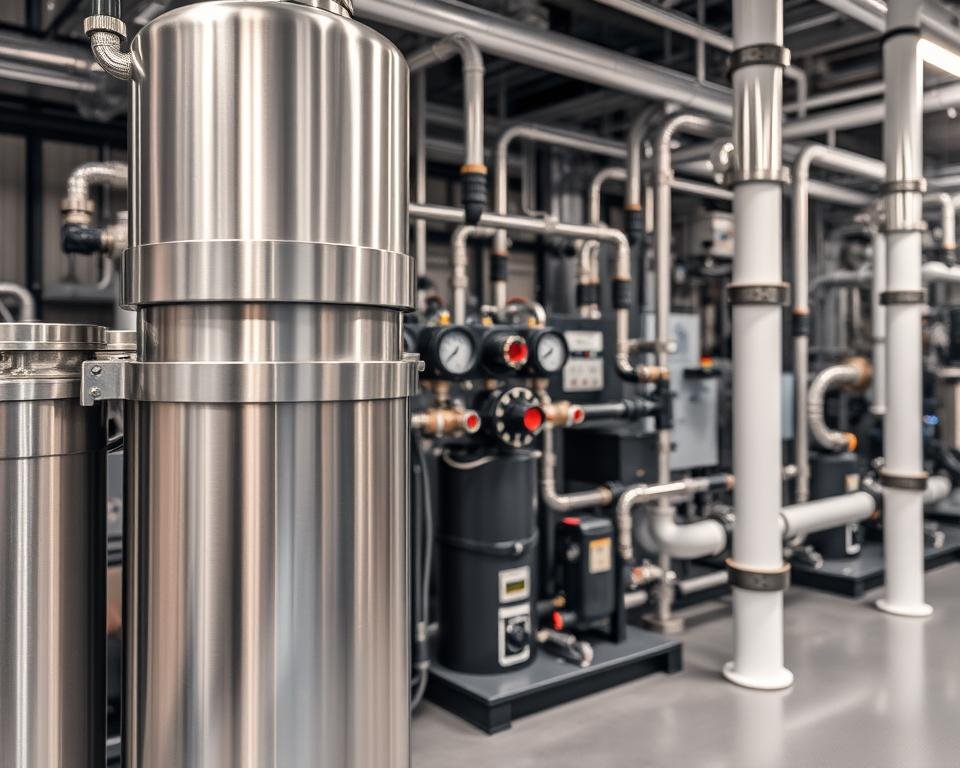
Filtration tech is getting a big boost. Advanced filtration systems can catch tiny particles, making water cleaner. For example, membrane bioreactors (MBRs) mix biological treatment with membrane filtration. This combo is efficient and compact for removing TSS.
| Filtration Technique | Efficiency | Cost |
|---|---|---|
| Conventional Filtration | 80% | Low |
| Advanced Filtration | 95% | Moderate |
| Membrane Bioreactors (MBRs) | 99% | High |
Automation and Smart Monitoring
Automation and smart monitoring are big changes in TSS removal. Real-time monitoring systems let operators check TSS levels constantly. This means they can adjust treatments right away.
A study found that using real-time monitoring with automated systems can cut TSS levels by 30%. Automation makes processes more efficient and reduces the chance of mistakes.
“The future of TSS removal lies in the integration of advanced technologies with traditional treatment methods, creating more efficient and sustainable solutions.”
Research Trends and Future Directions
Research is looking into sustainable and energy-saving TSS removal tech. Trends include using nano-technology in filters and artificial intelligence (AI) to improve treatments. As these techs improve, they’ll be key in the future of TSS removal.
Looking ahead, combining new filtration, automation, and monitoring will be key. These technologies will help us get cleaner water and more sustainable treatment methods.
Case Studies in Successful TSS Removal
Across the globe, various methods have shown to be effective in removing TSS. These examples highlight the challenges and successes in both municipal and commercial settings.
Examples from Municipal Treatment Plants
Municipal treatment plants have made great strides in TSS removal. For example, a plant in the United States used advanced filtration systems. This led to a significant reduction in TSS levels.
Regular maintenance and monitoring were key to their success. By using modern technologies, they improved their treatment processes and outcomes.
Commercial Sector Success Stories
In the commercial sector, companies have also seen great improvements in TSS removal. A manufacturing facility successfully reduced its TSS output through biological treatment.
The facility’s management stressed the role of stakeholder involvement and education. By engaging employees and the community, they raised awareness and drove change.
Lessons Learned and Best Practices
The case studies offer valuable lessons and best practices for TSS removal. Regular monitoring and testing are critical for understanding TSS levels and adjusting strategies.
Using modern technologies and innovative approaches can greatly improve TSS removal. By adopting these practices, both municipal and commercial entities can enhance their wastewater treatment and contribute to cleaner water.
- Implement advanced filtration systems to improve TSS removal.
- Regularly monitor and test TSS levels to adjust treatment strategies.
- Engage stakeholders through education and awareness programs.
Cost Considerations for TSS Removal Solutions
Understanding the cost of TSS removal is key for good water management. As places work to follow environmental rules and clean their water, the money needed for TSS removal matters a lot.
Budgeting for TSS Management
Good budgeting for TSS management means looking at the costs of different ways to remove it. This includes mechanical, biological, and chemical methods. It’s important to think about both the upfront costs and the ongoing expenses.
Key budgeting considerations include the cost of equipment, upkeep, energy use, and workers. Also, don’t forget the cost of checking and testing TSS levels in your budget.
ROI of Effective TSS Removal Methods
Looking at the return on investment (ROI) of TSS removal methods is important. Good TSS removal can save a lot of money. This is because it reduces waste disposal costs, lowers energy use, and makes equipment last longer.
Also, following environmental rules can avoid expensive fines and legal problems. By choosing good TSS removal solutions, companies can also improve their image and help the environment.
Funding Opportunities for Improved Practices
There are many ways to get money to improve TSS removal practices. Government grants, environmental projects, and green financing can help pay for new treatment systems and technologies.
- Exploring government programs and subsidies
- Utilizing green bonds and environmental funds
- Collaborating with environmental organizations
By using these funding options, industries and cities can get past financial hurdles. They can then use effective TSS removal solutions that help their work and the planet.
Conclusion: The Future of TSS Removal
Looking ahead, Total Suspended Solids Removal will keep being key to clean water. It’s vital for our water’s health and the well-being of all living things in it.
Ongoing Research and Development
More research and new tech in TSS Removal are needed. This will make treatments better and cheaper. With new ideas, we can tackle the challenges of different TSS levels more effectively.
Community Involvement in Water Quality
Getting people involved in water quality is also important. By teaching everyone about TSS Removal, we can work together to protect our water.
Together, we can keep our water clean for the future. This is thanks to the progress in TSS Removal tech.

 Ammonia and Nitrite Control in Aquaculture
  Boost Aquaculture Yields with Effective Water Exchange
  Achieve Ideal Water pH for Aquaculture Farming
  Optimize Your Biofiltration System with the Right Media
  Water Recirculation Best Practices in Aquaculture
  Mastering Salinity Management in Aquaculture