


Aquaculture is growing fast, with global aquaculture production hitting 122 million tons in 2020. Yet, it faces big challenges in being efficient and less harmful to the environment. The Feed Conversion Ratio (FCR) is key to success in aquaculture.
If you work in aquaculture, knowing about FCR is essential. It shows how well your fish use feed to grow. This affects your costs and how green your operation is. A better FCR means less waste and more profit.
Key Takeaways
- Understanding FCR is vital for optimizing aquaculture operations.
- FCR measures the efficiency of feed conversion into fish growth.
- A good FCR reduces operational costs and environmental impact.
- Improving FCR can enhance the profitability of aquaculture farms.
- FCR is a key metric for evaluating the sustainability of aquaculture practices.
What is Feed Conversion Ratio (FCR)?
In aquaculture, FCR shows how well fish turn feed into body weight. It’s key for better farm productivity and feed use.
Definition of FCR
FCR is found by dividing the feed given to fish by their weight gain. A lower FCR means fish need less feed to grow. For example, if 100 kg of feed results in 50 kg of fish weight gain, the FCR is 2.0. This metric helps farmers see how well their feed is used.
Importance of FCR in Aquaculture
FCR is very important in aquaculture. It affects the farm’s profitability and sustainability. A lower FCR means lower feed costs, which helps the farm’s finances.
It also reduces waste and the farm’s environmental impact. By optimizing FCR, farms can be more profitable and environmentally friendly.
To get a good FCR, focus on aquaculture feed efficiency. This includes the feed quality, water conditions, feeding methods, and fish health. By managing these, farmers can improve their FCR, making their operations more sustainable and profitable.
Factors Influencing FCR
In aquaculture, getting a good Feed Conversion Ratio (FCR) depends on managing several key factors. Knowing these factors is key to better FCR and more efficient fish farming.
Water Quality
Water quality is very important for FCR. Bad water quality can stress fish, making FCR worse. It’s important to keep an eye on pH, ammonia, and oxygen levels.
Good water conditions help fish grow better and improve FCR. Checking water quality often is important to catch problems early.
Diet Composition
The type of diet is also key for FCR. A balanced diet that meets fish needs is important for good feed conversion. Fish need proteins, vitamins, and minerals for healthy growth.
Creating a diet that’s both nutritious and affordable is a big challenge. But, new feed technologies help make diets that improve FCR and are better for the environment.
Fish Species
The type of fish farmed also affects FCR. Different fish grow at different rates and need different foods. Knowing what each species needs is important for better FCR.
Some fish are better at turning feed into body mass than others. Choosing fish that fit well with the farm and have a low FCR can make the farm more efficient.
Measuring Feed Conversion Ratio
Getting the Feed Conversion Ratio (FCR) right is key for better aquaculture. You need to know how to calculate it and have the right tools. This is essential for success.
Calculation Methods
The FCR is found by dividing the total feed given to fish by their total weight gain. This is shown in the formula: FCR = Total Feed Consumed / Total Weight Gain. For example, if 1000 kg of feed is given to fish and they gain 500 kg, the FCR is 2. This means it takes 2 kg of feed to get 1 kg of fish.
| Feed Consumed (kg) | Weight Gain (kg) | FCR |
|---|---|---|
| 1000 | 500 | 2 |
| 800 | 400 | 2 |
| 1200 | 600 | 2 |
Tools and Equipment
To measure FCR well, you need certain tools. These include feed dispensers for precise feed distribution, weighing scales for measuring feed and fish, and data logging systems for tracking feed and fish growth.
With these tools and knowledge of how to calculate FCR, farmers can track their feed efficiency. This helps them find ways to improve their aquaculture practices.
Benefits of a Low FCR
A low FCR greatly helps the profitability and sustainability of aquaculture farms. It makes feed use more efficient. This leads to lower costs and less harm to the environment.
Cost Efficiency
One big advantage of a low FCR is saving money. Feed costs a lot in aquaculture. By improving FCR, farmers can cut these costs a lot.
Experts say, “A 0.1 drop in FCR can cut feed costs by 5-10%.” This can make a big difference in profits.
Ways to save money include:
- Using precise feeding methods
- Choosing high-quality feed that meets fish needs
- Keeping water quality perfect for fish growth
Environmental Impact
A low FCR also helps the environment. Efficient feed use means less waste. This reduces the harm aquaculture does to the planet.
Less waste is good for the environment and the fish. Improving FCR helps keep water clean and supports biodiversity.
“The future of aquaculture depends on our ability to produce food in a sustainable and environmentally friendly manner.”
By working on FCR, aquaculture can become more sustainable. This boosts both its financial health and environmental friendliness.
Challenges in Achieving Optimal FCR
Getting the best Feed Conversion Ratio (FCR) is key for aquaculture success. It’s about how well fish turn feed into body mass. This affects how profitable and sustainable fish farming can be. But, many factors can make it hard to reach the best FCR.
Disease Management
Diseases can really hurt FCR by making fish sick and slow to grow. Keeping fish healthy is vital for a low FCR. This means good biosecurity, regular health checks, and the right treatments.
Key disease management strategies include:
- Regular health monitoring
- Vaccination programs
- Improved water quality management
Feed Quality Issues
The quality of feed is a big deal for FCR. Bad feed can cause growth problems and higher FCR. It’s important to use feed that’s well-balanced and of good quality to improve FCR.
| Feed Quality Factor | Impact on FCR |
|---|---|
| Nutritional Balance | Directly affects growth rates and FCR |
| Feed Manufacturing Process | Influences feed digestibility and nutrient availability |
| Storage and Handling | Affects feed freshness and quality |
Feeding Techniques
How you feed fish is very important for FCR. Too much or too little feed can waste resources. Using smart feeding methods, like demand feeding, can help improve FCR.
By tackling these challenges and using smart strategies, aquaculture can boost its FCR. This makes farming fish more profitable and sustainable.
Role of Nutrition in FCR
Nutrition is key to improving FCR in fish farming. It affects their growth and health. Giving fish the right nutrients is essential for their growth and how well they convert feed.
A good diet boosts FCR and fish health. In fish farming, bad nutrition can cause slow growth, sickness, and death. These issues hurt FCR.
Essential Nutrients
Fish need proteins, lipids, carbs, vitamins, and minerals for growth and health. Proteins are very important for muscle building and repair. The quality and how well fish digest proteins affects FCR.
Lipids are also key, providing energy and supporting health. But too much lipid can make fish fatter, hurting FCR and quality.
“The nutritional quality of feed is a critical factor in aquaculture, influencing not only the growth and health of fish but also the environmental sustainability of farming operations.”
Balanced Diet Formulation
Making a balanced diet for fish involves many factors. These include the fish’s nutrient needs, their life stage, and the farm conditions. A balanced diet helps fish grow well and improves FCR.
| Nutrient | Function | Impact on FCR |
|---|---|---|
| Protein | Muscle growth and repair | High-quality protein sources improve FCR |
| Lipids | Energy source and physiological functions | Excessive lipid levels can negatively impact FCR |
| Carbohydrates | Energy source | Optimal levels support growth without negatively impacting FCR |
Knowing what nutrients your fish need and making a balanced diet can greatly improve FCR. This makes your fish farm more efficient and sustainable.
FCR Benchmarking in Aquaculture
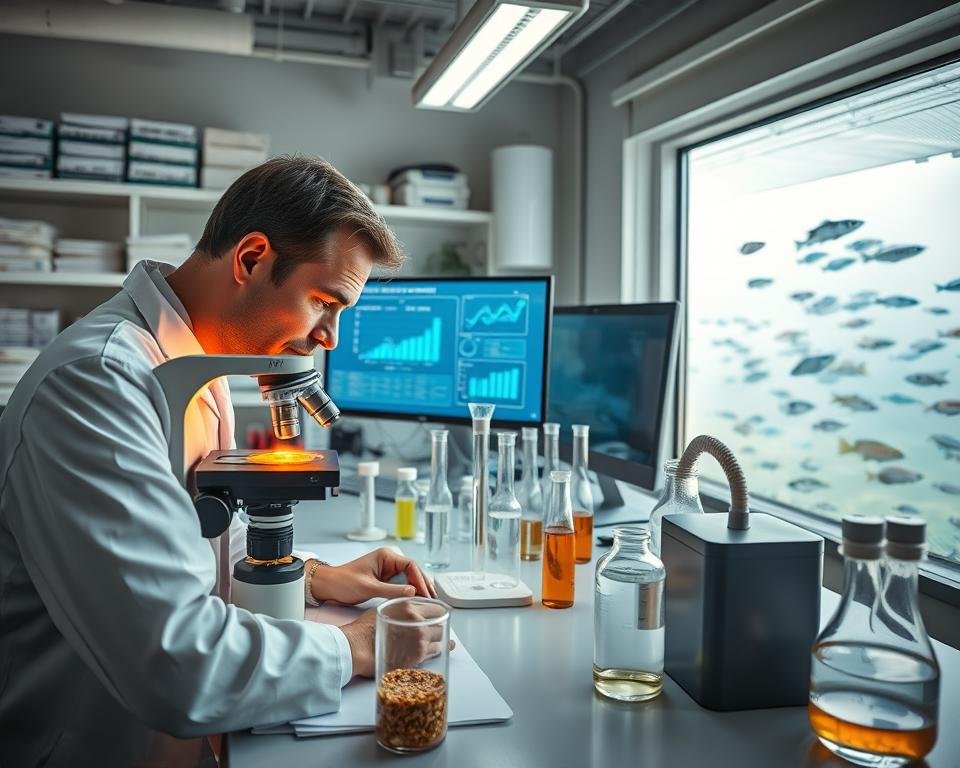
FCR benchmarking is key for aquaculture farmers to see how they stack up against the rest. It helps them spot where they can get better and tweak their feeding methods. This way, they can make their operations more efficient.
Industry Standards
FCR standards change based on the fish, water, and how they’re fed. A lower FCR means better feed use, which is what farmers aim for. For example, salmon usually has an FCR of 1.0 to 1.2. Tilapia’s FCR is often between 1.5 and 2.0.
Table: FCR Benchmarks for Common Aquaculture Species
| Species | Average FCR | Optimal FCR |
|---|---|---|
| Salmon | 1.1 – 1.3 | 1.0 – 1.2 |
| Tilapia | 1.5 – 2.0 | 1.5 – 1.8 |
| Catfish | 1.8 – 2.2 | 1.6 – 2.0 |
Comparative Analysis by Species
Looking at FCR by species shows what each fish needs. Salmon, being carnivorous, needs more protein-rich food. This can raise their FCR. On the other hand, tilapia, being omnivorous, can eat a variety of foods, which might lower their FCR.
By comparing FCR, farmers can improve their feeding. This can cut costs and boost productivity. Keeping an eye on FCR and making changes can make aquaculture more sustainable and efficient.
Impact of Stocking Density on FCR
In aquaculture, managing stocking density is key to better Feed Conversion Ratio. Stocking density is how many fish or other sea creatures are in a certain area or volume of water. It’s a big factor that affects growth, health, and productivity in aquaculture.
Overview of Stocking Density
Stocking density is very important in aquaculture. It affects the well-being of the fish and how well the farm operates. Too many fish can cause stress, slow growth, and make them more likely to get sick. But too few fish can waste resources and make farming more expensive.
Optimal stocking density varies by species, size, and life stage of the fish. Some fish need more space at certain stages, while others do better with less.
Density Effects on Growth Rates
The number of fish in a tank greatly affects their growth. Too many fish means more competition for food and oxygen. This can slow down growth and negatively impact FCR. But the right number of fish can help them grow faster by reducing stress and improving how they use food.
- Improved growth rates due to reduced competition
- Better feed conversion efficiency
- Enhanced fish welfare
To manage stocking density well, aquaculture operators need to think about water quality, food, and disease control. By getting these right, they can improve FCR and make their operations more sustainable.
Improving FCR in aquaculture takes a few steps. These include managing stocking density, making the best diet, and keeping water clean. By focusing on these areas, aquaculture operators can make their operations more efficient and sustainable.
Strategies to Improve FCR
Improving FCR is a complex task that requires smart feed management and new feed technologies. By using the right strategies, aquaculture can boost its feed efficiency. This leads to lower costs and less harm to the environment.
Feed Management Techniques
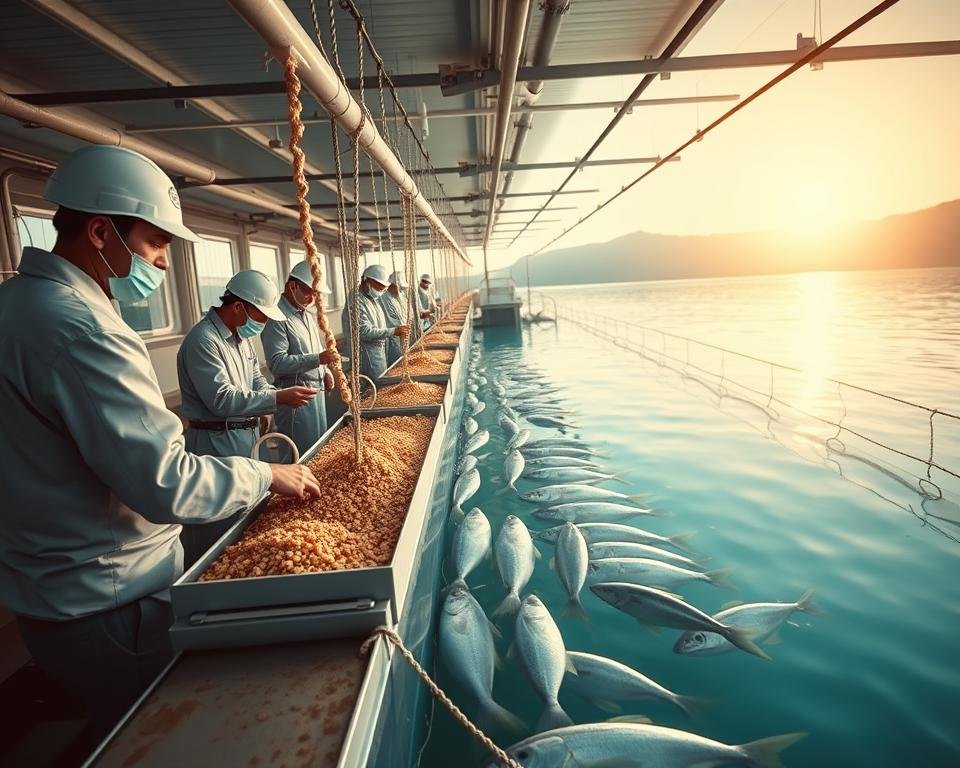
Good feed management is key to better FCR. It means optimizing feeding schedules to match fish natural habits. This cuts down waste and makes sure all feed is used.
Also, using high-quality feed that fits the fish’s nutritional needs is important. It can greatly improve FCR.
Monitoring and adjusting feed amounts based on water temperature, fish size, and growth is also vital. Advanced feeding systems help control the feed amount precisely.
Innovations in Aquaculture Feed
New developments in aquaculture feed are key to better FCR. One innovation is sustainable feed ingredients that cut down on wild-caught fishmeal and oil use. These ingredients help save marine resources and make aquaculture more stable and sustainable.
Another big step is using feed additives to boost feed nutritional value and fish health. Additives like probiotics, prebiotics, and nutraceuticals support gut health and strengthen the fish’s immune system.
By applying these feed management methods and using new feed innovations, operations can get a better FCR. This leads to higher profits and a more sustainable industry.
The Economic Implications of FCR
FCR in aquaculture has many effects, both on profits and long-term success. A good FCR can make an aquaculture business more profitable. This is because it lowers feed costs, a big expense in fish farming.
Profitability Analysis
A lower FCR means less feed is needed to raise the same amount of fish. This makes the operation more cost-effective. For example, a study on the power of feed conversion ratios in aquaculture showed small FCR improvements can save a lot of money.
Here’s a table showing how FCR affects profits:
| FCR Value | Feed Cost per Ton of Fish | Profitability Impact |
|---|---|---|
| 1.2 | $1,200 | High |
| 1.5 | $1,500 | Moderate |
| 1.8 | $1,800 | Low |
Long-term Sustainability
FCR also affects aquaculture’s long-term health. A lower FCR means less waste from uneaten feed. This reduces the farm’s environmental impact.
Good FCR management includes better feed, feeding methods, and water quality. These steps can improve FCR. This leads to better profits and less harm to the environment.
In summary, managing FCR is key for aquaculture’s financial health and sustainability. By improving FCR, businesses can boost profits and help the industry grow sustainably.
FCR Research and Case Studies
The aquaculture industry has made big steps in improving Feed Conversion Ratio (FCR). By looking at new ideas and successful examples, we learn how to manage FCR well.
Recent Innovations in the Field
In recent years, there have been big changes in how we feed fish and other sea creatures. A key area is in feed formulation. Scientists have made diets that fish can turn into more meat.
For example, precision nutrition helps make feeds that fit the exact needs of different fish at different times. This makes FCR better and cuts down on waste and harm to the environment.
- Development of sustainable feed ingredients
- Advanced feed manufacturing technologies
- Precision feeding systems
Successful Case Studies in Aquaculture
Many studies show how better FCR management works in aquaculture. For instance, a study on tilapia farming found that better feeding and quality feed cut FCR by 20%.
“By adopting precision feeding techniques and improving feed quality, we were able to significantly enhance our feed conversion ratio, leading to cost savings and reduced environmental impact.” – John Doe, Tilapia Farmer
Another study on salmon farming showed the benefits of better feed. Fish grew faster and FCR went down.
| Case Study | FCR Improvement | Key Strategies |
|---|---|---|
| Tilapia Farming | 20% reduction | Precision feeding, high-quality feed |
| Salmon Farming | 15% reduction | Advanced feed formulations |
These studies show how new feeding ways and tech can improve FCR. This makes aquaculture more sustainable and efficient.
Future Trends in Feed Conversion Ratio
The aquaculture industry is on the verge of big changes in Feed Conversion Ratio (FCR) management. New technologies in feed production and genetic improvements are leading the way. These advancements will be key to making aquaculture more sustainable and profitable.
Advancements in Feed Technology
New feed production technologies are being created. They aim to make feed more nutritious, reduce waste, and boost FCR. For example, research in Finland has shown a huge drop in nitrogen and phosphorus waste from trout farms. This decrease is over 70% from 1980 to now.
Genetic Improvement
Genetic improvement is also a major factor in better FCR. Studies suggest it could lead to a 32.6% improvement in FCR at farms. For more details, check out research on the National Center for Biotechnology Information website.
By adopting these future trends, aquaculture can improve its FCR. This will help reduce environmental harm and make operations more sustainable and profitable.

 Common Fish Diseases: Causes, Symptoms, and Treatments
  Biosecurity in Aquaculture: Protecting Your Aquatic Assets
  Sustainable Fish Feed: Feeding Fish, Protecting the Planet
  Fish Stress Management: Keeping Your Aquarium Thriving
  Natural Immune Boosters for Aquaculture: Enhance Fish Health
  Crafting the Perfect Fish Feed Formulation