


Did you know that disease outbreaks can cause big economic losses in aquaculture? Some reports say losses can be up to 20% or more of total production. As someone in this field, I know how vital it is to keep fish populations healthy. Good aquaculture disease management is key for keeping operations sustainable and profitable.
By using different methods and strategies for disease prevention, you can lower the chance of outbreaks. This helps keep the environment healthy for the fish. It also helps make the aquaculture industry more sustainable.
Key Takeaways
- Understanding the importance of disease prevention in aquaculture.
- Implementing effective aquaculture disease management strategies.
- Reducing the risk of disease outbreaks through biosecurity measures.
- Promoting a healthy environment for fish populations.
- Contributing to a more sustainable aquaculture industry.
Understanding Fish Diseases in Aquaculture
To keep fish healthy, it’s key to know about diseases they can get. Fish diseases can cause big losses in aquaculture. This affects the health of the fish and the business’s success.
Common Fish Diseases to Watch For
Aquaculture faces many diseases, like bacterial, viral, and parasitic ones. Some common ones are:
- Bacterial diseases such as Aeromonas and Pseudomonas
- Viral diseases like Infectious Pancreatic Necrosis (IPN)
- Parasitic infestations caused by organisms such as Ichthyophthirius (Ich)
Knowing these diseases helps prevent them. For more info, check out Frontiers in Aquaculture.
Symptoms of Fish Disease
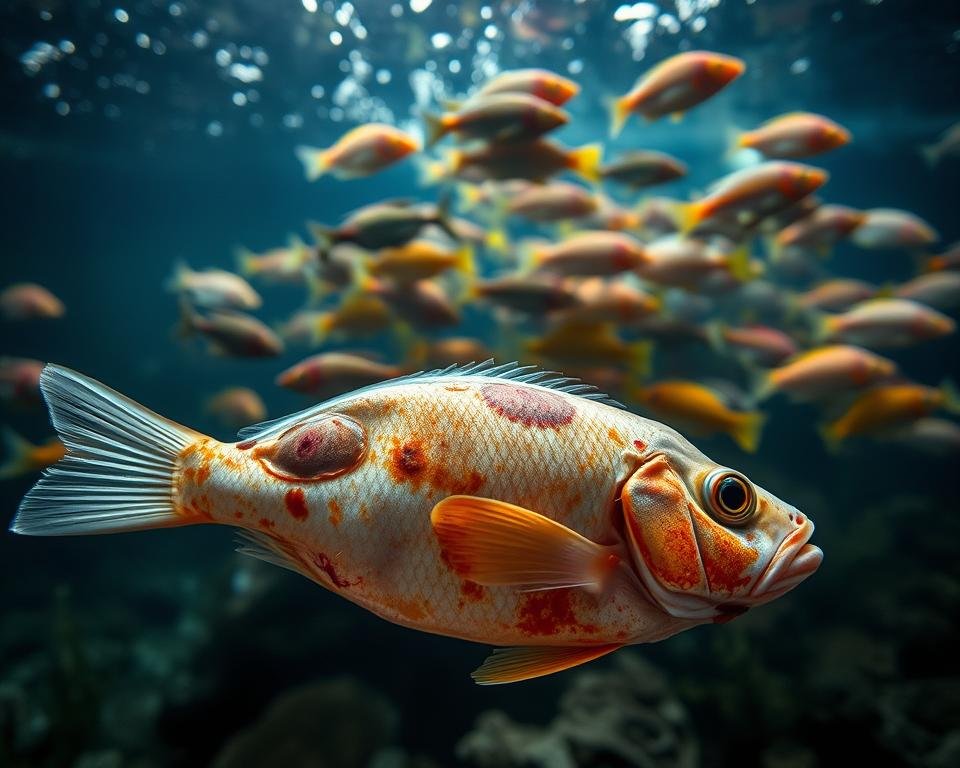
Spotting fish disease symptoms early is key. Common signs include:
| Symptom | Description |
|---|---|
| Abnormal Swimming Patterns | Fish may swim erratically or lethargically |
| Visible Lesions or Ulcers | Lesions or ulcers on the skin or fins |
| Loss of Appetite | Reduced feeding behavior |
The Impact of Fish Diseases on Aquaculture
Fish diseases can hurt aquaculture a lot. They can lower productivity, increase death rates, and cause financial losses. These effects can harm the fish’s health and the future of aquaculture.
Effective disease prevention strategies are vital. By knowing common diseases, spotting symptoms early, and taking steps to prevent them, aquaculture can keep fish healthy.
Importance of Fish Disease Prevention
Fish disease prevention is key in aquaculture. It keeps fish healthy and the business running smoothly. Without it, diseases can cause big financial losses.
Preventing fish diseases is also smart for your wallet. Using aquaculture biosecurity measures and fish disease control strategies can save a lot of money. This is because it stops diseases before they start.
Cost-Effectiveness of Preventative Measures
Preventing diseases is cheaper than treating them. For example, checking water quality often can stop many diseases. Keeping water conditions just right is a big help.
| Preventative Measure | Cost | Benefit |
|---|---|---|
| Water Quality Monitoring | $500/month | Reduces disease risk by 70% |
| Vaccination Programs | $1000/year | Prevents specific disease outbreaks |
| Biosecurity Protocols | $2000 initial setup | Reduces overall disease risk |
Maintaining Water Quality and Health
Keeping water quality right is vital. You need to check things like pH, ammonia, and nitrite levels often.
With good fish disease control strategies, fish can stay healthy for a long time. This keeps the aquaculture business going strong.
Long-Term Sustainability in Aquaculture
Keeping diseases at bay is key for long-term success in aquaculture. By spending on prevention, businesses can stay strong for years.
- Regular health monitoring
- Effective biosecurity measures
- Optimal water quality management
By using these methods, aquaculture can prevent diseases. This makes the industry more sustainable and better for the environment.
Best Practices for Fish Health Management
Keeping your aquaculture business thriving starts with good fish health management. By using these strategies, you can keep your fish healthy. This reduces disease risk and boosts their immune system.
Regular Health Monitoring Techniques
Watching your fish’s health closely is key. Look for changes in behavior and check for disease signs. Also, keep an eye on water quality. Effective monitoring techniques include:
- Daily observation of fish behavior and appetite
- Regular inspection for signs of disease or parasites
- Water quality testing for parameters such as pH, ammonia, and nitrite levels
Nutrition and Its Role in Fish Immunity
What your fish eat is very important for their health. A balanced diet with all the right nutrients can strengthen their immune system. Key nutritional considerations include:
- Providing a diet rich in vitamins and minerals
- Ensuring adequate protein levels
- Avoiding overfeeding, which can lead to water quality issues
A good diet supports fish health and helps your aquaculture business grow.
Stress Reduction Strategies for Aquaculture Fish
Stress can hurt your fish’s health and immunity. It’s important to reduce stress to keep your fish healthy. Effective strategies include:
- Maintaining optimal water quality and temperature
- Avoiding overcrowding and ensuring adequate space for fish
- Minimizing handling and providing adequate hiding places
Lowering stress helps your fish live better.
Vaccination and Preventative Treatments
Fish disease prevention in aquaculture relies on vaccination. Vaccination protects fish from diseases, keeping aquaculture sustainable.
Overview of Vaccines Available for Fish
Many vaccines protect fish from diseases. They fight bacterial and viral diseases. This has greatly reduced disease in aquaculture.
- Bacterial vaccines: These fight diseases from bacteria like Aeromonas salmonicida and Vibrio anguillarum.
- Viral vaccines: They prevent viral diseases, key in keeping fish healthy.
Timing and Administration of Vaccines
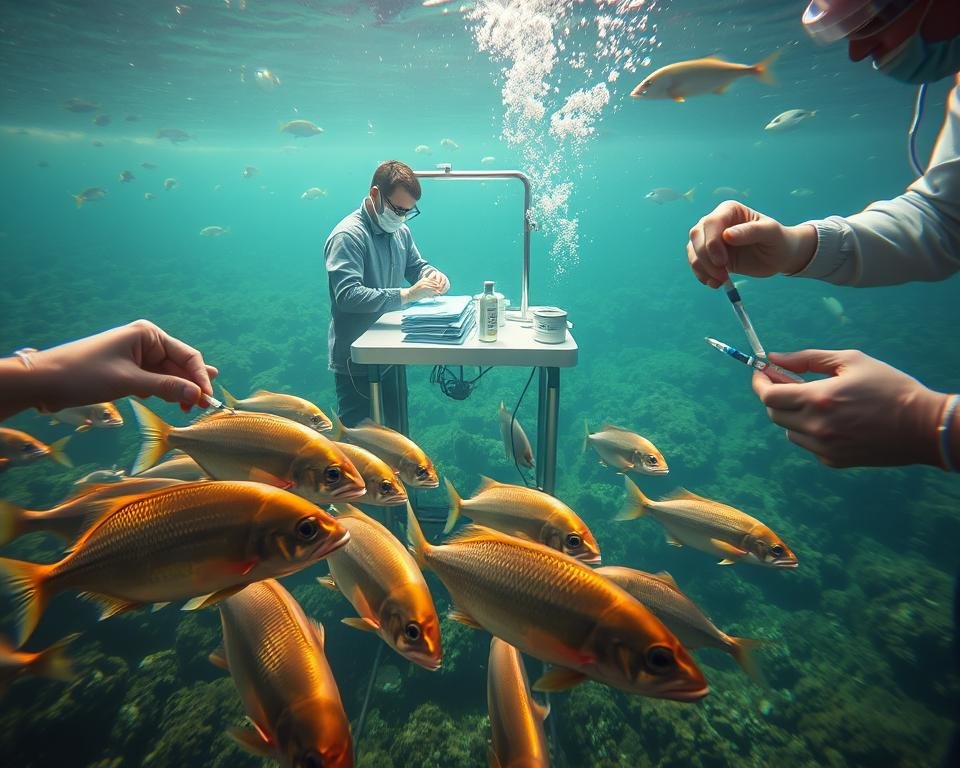
Vaccine timing is key. Vaccines work best when given early, before fish meet the disease. How the vaccine is given also matters.
- Injection: Best for big fish, gives strong immunity.
- Immersion: Easy on small fish, stress-free.
- Oral delivery: Convenient but less reliable.
Alternative Treatments and Medication
Other treatments like antibiotics and antifungals help manage diseases. But, they must be used wisely to prevent resistance.
Vaccination plus good aquaculture practices lowers disease risk. This approach keeps fish healthy and aquaculture sustainable.
Biosecurity Measures in Aquaculture Facilities
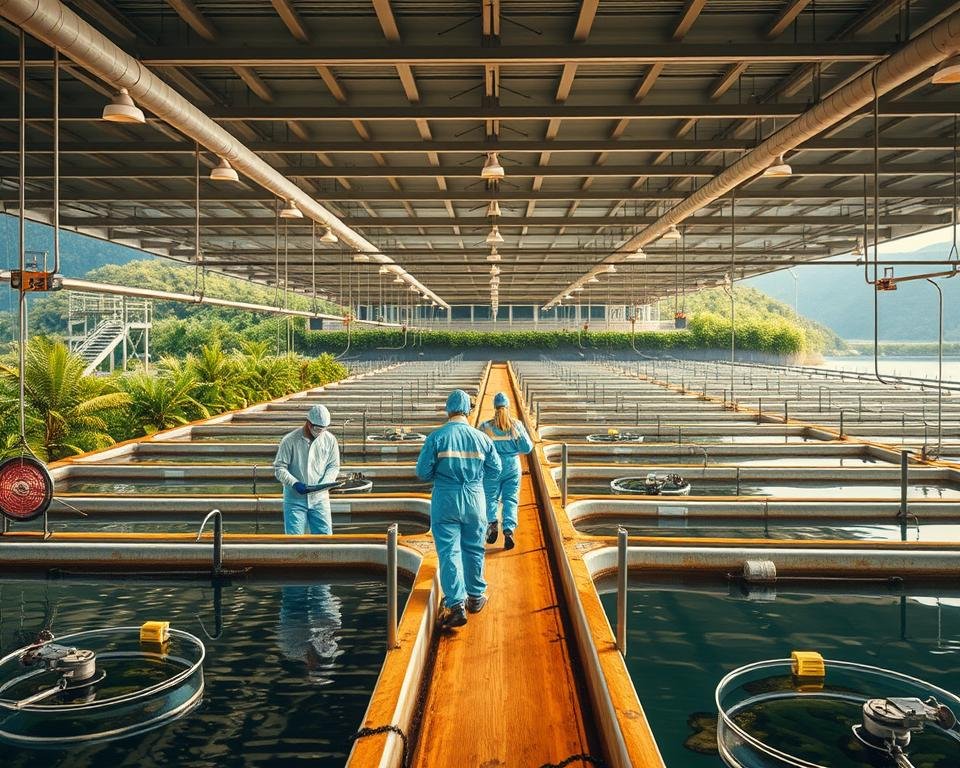
Effective biosecurity is key to stopping diseases in fish farms. By using strong biosecurity steps, farms can lower disease risks a lot.
Importance of Biosecurity Protocols
Biosecurity rules help stop diseases in farms. They are vital because they keep fish healthy, cut down on antibiotic use, and save money.
Key benefits of biosecurity protocols include:
- Reducing disease transmission
- Protecting fish health
- Minimizing economic losses
Steps to Improve Biosecurity
To boost biosecurity, several steps are needed. First, farms should make a biosecurity plan. This plan should cover how to control access, manage water and waste, and watch fish health.
Other key steps are:
- Regularly disinfecting equipment and facilities
- Implementing strict hygiene practices for personnel
- Monitoring water quality and managing waste effectively
Managing Equipment and Personnel Risks
Equipment and people can spread diseases. To lower these risks, farms must clean and disinfect all equipment before use.
People working in the farm should learn about biosecurity and follow strict hygiene rules. This includes:
- Wearing protective clothing and gear
- Following proper handwashing and disinfection procedures
- Avoiding contact with potentially contaminated sources
By doing these things, farms can make their biosecurity better and lower disease risks.
Role of Water Quality in Disease Prevention
In aquaculture, water quality is key to preventing disease. Keeping water quality high is vital for fish health and wellbeing.
Key Water Parameters to Monitor
It’s important to watch key water parameters. These include pH levels, ammonia, nitrite, and nitrate concentrations, and water temperature and dissolved oxygen levels. Regular checks help spot any problems early.
| Parameter | Optimal Range | Impact on Fish Health |
|---|---|---|
| pH | 6.5-8.5 | Affects metabolic processes and stress levels |
| Ammonia (ppm) | <0.02 | Toxic to fish, causes gill damage |
| Nitrite (ppm) | <0.1 | Interferes with oxygen transport in the blood |
| Nitrate (ppm) | <50 | Can cause stress and reduce growth rates |
| Dissolved Oxygen (ppm) | >5 | Necessary for fish respiration |
Filtration and Aeration Systems
Filtration and aeration systems are essential. They remove waste and increase oxygen levels. This is vital for fish survival.
Balancing pH and Temperature
Keeping pH and temperature balanced is critical. Sudden changes stress fish and make them sick. Regular checks and adjustments keep the environment stable.
By focusing on water quality, aquaculture can lower disease risks. This creates a healthier environment for fish.
Signs of Possible Outbreaks in Aquaculture
Monitoring closely for signs of disease is key to preventing fish diseases. Aquaculture experts can stop disease outbreaks early. This helps keep their operations running smoothly.
Recognizing Early Warning Signs
Spotting disease early is vital. Look for changes in fish behavior, like acting tired or swimming strangely. Also, watch for physical signs like sores, color changes, or hard breathing. Regular checks can catch these signs before they get worse.
Key indicators to watch for:
- Changes in appetite or feeding behavior
- Visible signs of stress or disease
- Unusual mortality rates
Seeing these signs early lets aquaculture experts act fast. This can stop the disease from spreading.
Procedures for Isolating Affected Fish
When disease signs appear, isolating sick fish is key. Move the sick fish to a separate area for treatment. This keeps the rest of the fish safe.
Effective isolation procedures include:
| Procedure | Description | Benefits |
|---|---|---|
| Quarantine Setup | Creating a separate tank or area for sick fish. | Prevents disease spread, allows targeted treatment. |
| Monitoring | Checking the isolated fish often for disease signs or improvement. | Enables timely adjustments to treatment plans. |
| Treatment | Using the right treatments based on the disease diagnosis. | Improves recovery chances for affected fish. |
By following these steps, aquaculture experts can manage disease outbreaks well. This protects their operations.
Educating Staff on Disease Management
In aquaculture, teaching staff about disease prevention is key. By investing in their education, you make sure they can manage fish health well. This improves fish health and helps your aquaculture operation last longer.
Training Programs for Aquaculture Employees
It’s important to have detailed training for aquaculture staff. They need to know how to spot diseases early, keep water quality good, and follow biosecurity rules. Regular training can really cut down disease risks.
A good training program might include:
- Workshops on disease identification and management
- Hands-on training in water quality monitoring
- Guidelines for maintaining biosecurity protocols
Resources for Ongoing Education
Keeping up with new knowledge in aquaculture is essential. Give staff access to the latest research, guidelines, and tech. Subscribing to industry journals and attending conferences is helpful.
| Resource Type | Description | Benefits |
|---|---|---|
| Industry Journals | Publications that feature the latest research and trends in aquaculture | Stay updated on disease management techniques |
| Conferences and Workshops | Events that bring together experts to share knowledge and experiences | Network with professionals and learn about new technologies |
| Online Courses | Digital platforms that offer courses on various aspects of aquaculture | Flexible learning opportunities for staff |
Encouraging Communication Among Staff
Good communication among staff is key for managing diseases. Encourage open talks about observations, concerns, and ideas. This helps spot problems early and solve them together. Regular team meetings can build a culture of openness and teamwork.
By focusing on staff education and communication, aquaculture facilities can better manage diseases. This leads to a healthier and more sustainable operation.
Using Technology for Disease Monitoring
Advanced technologies are key in improving disease monitoring in aquaculture. They help track fish health better. This way, experts can make smart choices to stop diseases before they start.
Software and Tools for Fish Health Tracking
There are many software and tools for keeping an eye on fish health. These include data logging systems for water quality, underwater cameras for fish behavior, and health monitoring software for analyzing data. This software can spot health problems early.
Some tools use artificial intelligence (AI) and machine learning (ML). They find patterns in fish health data. This helps catch issues before they get worse.
Benefits of Data Analysis in Disease Prevention
Data analysis is vital for stopping diseases. It helps find trends that might mean health problems are coming. By looking at data from sensors and health systems, experts can act fast to prevent outbreaks.
The good things about data analysis are early disease detection, lower death rates, and better farm productivity. Using data, aquaculture experts can fine-tune their disease control plans. This leads to healthier fish.
Collaborating with Veterinarians and Experts
In the world of aquaculture, working with vets and experts is essential. It helps me manage diseases better. Together, we can keep my fish healthy and improve how I handle diseases.
Building Relationships with Aquaculture Specialists
Having a good relationship with aquaculture experts is important. They offer advice on fish disease control strategies and keep me updated on new research. To build a strong connection, I should:
- Find local vets and experts who know about aquaculture
- Go to workshops and conferences to meet professionals
- Ask for advice on managing and preventing diseases
When to Consult Professionals for Help
It’s important to know when to ask for help to prevent fish diseases. I should seek advice when my fish act strangely or when treatments don’t work. Signs that I need expert help include:
- Many fish dying
- Unusual marks or color changes on fish
- Changes in water quality or environment
Working with vets and experts helps me tackle disease management challenges. This keeps my aquaculture operation healthy and strong.
Future Trends in Fish Disease Prevention
The aquaculture industry is always changing. It’s key to keep up with new ways to prevent fish diseases. Keeping fish healthy is vital for a successful and green aquaculture business.
Advances in Research and Development
New research and tech are changing how we fight fish diseases. For example, better vaccines and genetic studies are helping farmers keep their fish healthy. These advances are making it easier for aquaculture experts to manage diseases.
Genetic Resistance
Genetic resistance is a big deal in aquaculture. By breeding fish with strong immune systems, farms can use fewer medicines. This not only helps the environment but also makes the aquaculture business more sustainable in the long run.

 Common Fish Diseases: Causes, Symptoms, and Treatments
  Biosecurity in Aquaculture: Protecting Your Aquatic Assets
  Sustainable Fish Feed: Feeding Fish, Protecting the Planet
  Fish Stress Management: Keeping Your Aquarium Thriving
  Natural Immune Boosters for Aquaculture: Enhance Fish Health
  Crafting the Perfect Fish Feed Formulation