


Did you know eating a lot of seafood nutrients can really help your health? I’ve looked into nutrition a lot, and I’m excited to talk about these nutrients.
The nutrients in fish are very important for staying healthy. They help your heart and brain work well. In this article, we’ll look at the benefits of fish nutrition and how to add it to your meals.
Key Takeaways
- Seafood nutrients are key for good health and wellbeing.
- Nutrients in fish help your heart and brain.
- Eating fish can bring many health benefits.
- A diet full of seafood nutrients can strengthen your immune system.
- Knowing about fish nutrients helps you make better food choices.
What Are Essential Fish Nutrients?
Fish is packed with nutrients like omega-3 fatty acids, protein, and vitamins and minerals. These are key for staying healthy and avoiding diseases.
Definition of Essential Nutrients
Essential nutrients are things our bodies can’t make and must get from food. In fish, this includes omega-3 fatty acids, like DHA (docosahexaenoic acid) and EPA (eicosapentaenoic acid). They’re important for heart and brain health.
Fish also has high-quality protein, vitamin D, and selenium. These help with muscle repair and keeping the immune system strong.
Importance for Health
The role of these nutrients is huge. Omega-3s, for example, fight inflammation, boost heart health, and support brain function. Eating foods rich in these can also improve mental health and lower disease risk.
| Fish Type | Omega-3 Content | Protein Content |
|---|---|---|
| Salmon | High | High |
| Tuna | High | High |
| Cod | Moderate | High |
Eating a variety of fish can give you many essential nutrients. This supports your health and may lower disease risk.
Types of Fish Rich in Nutrients
Fish is a key part of many diets, thanks to its rich nutrients and variety. It’s important to look at both fatty and lean fish types.
Fatty Fish Varieties
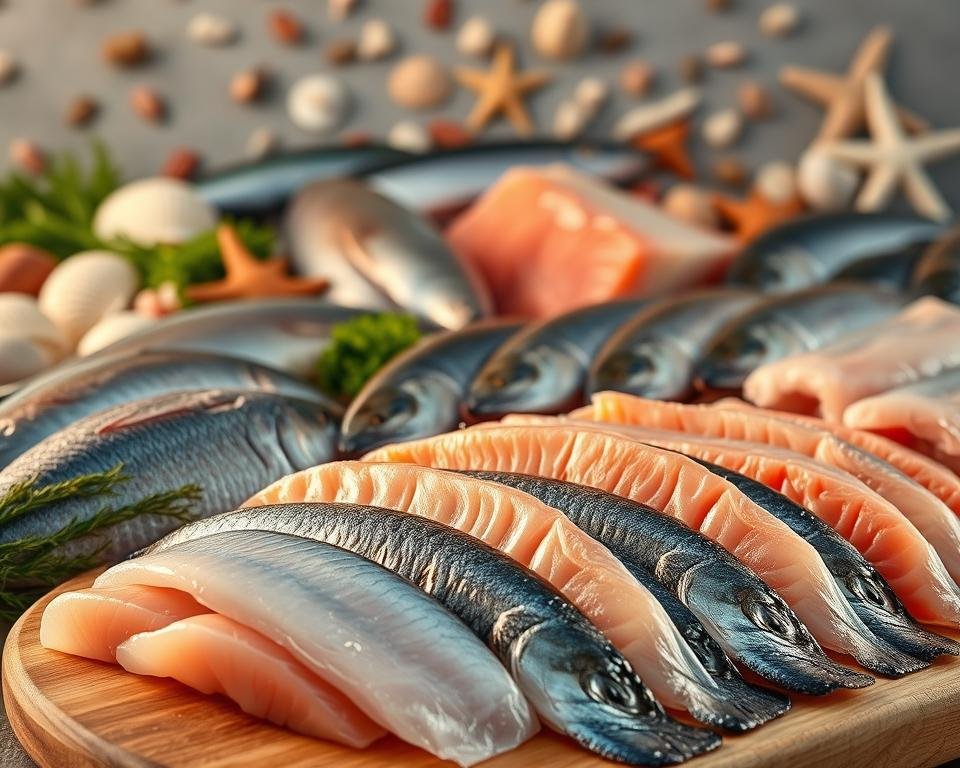
Fatty fish are known for their omega-3 fatty acids, which are good for the heart and brain. Salmon and sardines are top picks. They’re full of omega-3s and protein too. For more on fatty fish benefits, check out the Healthline article on the best fish to eat.
Other fatty fish like mackerel and tuna are also nutrient-rich. But, some tuna has more mercury. Yet, fatty fish are great for a healthy diet, bringing many health benefits.
Lean Fish Options
Lean fish like cod and tilapia are low in fat but high in protein. They’re perfect for those watching their fat intake but want to keep nutrients.
Lean fish are also easy to cook in many ways, like baking, grilling, or frying. Adding both fatty and lean fish to your meals can give you a wide range of nutrients. This helps keep you healthy and feeling good.
Omega-3 Fatty Acids: The Powerhouse Nutrient
Omega-3 fatty acids are key to our health. They help in many ways, like reducing inflammation and supporting brain function.
Health Benefits of Omega-3s
Omega-3s offer many health benefits. They help reduce inflammation, which is good for people with arthritis. They also improve heart health by lowering triglycerides and blood pressure.
These fatty acids are also great for brain health. They help with thinking and may help with depression and anxiety. They’re also important for a baby’s brain during pregnancy.
Sources of Omega-3 Fatty Acids
So, where can you find omega-3s? The best sources are fatty fish like:
- Salmon
- Sardines
- Mackerel
- Anchovies
Other good sources include flaxseeds, chia seeds, and walnuts. If you prefer supplements, fish oil capsules are common. But, always talk to a doctor before taking any supplements.
Protein Content in Fish
Fish is packed with protein, making it a top choice for nutrition. It’s great for building and repairing muscles. This is because fish has all the amino acids our bodies need.
Compared to other foods, fish is high in protein and low in fat. For example, salmon has about 20 grams of protein per serving. Chicken breast has around 26 grams. But fish has less saturated fat and more omega-3s, making it healthier.
Comparison with Other Protein Sources
When we look at protein sources, fish shines. It has a lot of protein and not much fat, thanks to lean fish. Salmon, for instance, has 20 grams of protein per serving. Chicken breast has about 26 grams.
But fish is better for you because it has less saturated fat and more omega-3s. Here’s a table comparing protein in different foods:
| Food | Protein Content (per serving) |
|---|---|
| Salmon | 20 grams |
| Chicken Breast | 26 grams |
| Tuna | 25 grams |
Benefits of Fish Protein
Eating fish protein has many benefits. It helps build and repair muscles and aids in weight control. It also reduces inflammation and improves heart health.
Some key benefits of fish protein include:
- Muscle Growth and Repair: Fish protein has all the amino acids needed for muscle repair and growth.
- Weight Management: The high protein in fish keeps you full longer, helping with weight control.
- Reduced Inflammation: Fish, rich in omega-3s, can lower inflammation.
Vitamins Found in Fish
Fish is more than just protein; it’s packed with vital vitamins. It’s a tasty way to add essential nutrients to your diet. These vitamins are key for staying healthy.
Vitamin D: The Sunshine Vitamin
Vitamin D is called “the sunshine vitamin” because our skin makes it when we’re in the sun. But, when it’s dark or we’re in places with little sun, we need to eat it. Fatty fish like salmon and mackerel are full of vitamin D.
This vitamin is vital for our bones. It helps our body use calcium. Eating fish with lots of vitamin D can make our bones stronger and lower the risk of osteoporosis.
B-Vitamins: Energy Boosters
B-vitamins are key for making energy. They’re found in many fish types. For example, Vitamin B12 is important for making red blood cells and keeping our nervous system working right. Sardines and tuna are great for B-vitamins.
Eating these fish can give you more energy and help your body work better. For more info on fish vitamins, check out Vital Choice.
| Type of Fish | Vitamin D Content | B-Vitamin Content |
|---|---|---|
| Salmon | High | Moderate |
| Sardines | Moderate | High |
| Tuna | Low | High |
Knowing what vitamins are in fish helps you choose better for your diet. This way, you get all the good stuff fish has to offer.
Minerals Essential for Health
Fish is not just good for protein and omega-3s. It also has minerals that are key for our health. These minerals help our immune system and keep our metabolism in check.
Selenium is a big deal in fish. It’s an essential antioxidant that guards our cells. It keeps our immune system strong and may lower cancer risk.
Importance of Selenium
Selenium fights oxidative stress, which can harm cells and lead to chronic diseases. Eating fish with selenium helps keep your body’s selenium levels up.
Some selenium benefits are:
- Protecting against cell damage
- Supporting immune function
- Reducing the risk of certain cancers
The Role of Iodine
Iodine is found in fish, mainly in saltwater types. It’s key for making thyroid hormones. These hormones control metabolism, growth, and development.
Lack of iodine can cause thyroid issues like goiter and hypothyroidism. Eating iodine-rich fish helps avoid these problems and keeps your thyroid healthy.
Eating fish can give you these vital minerals naturally. It boosts your health and well-being. Knowing about selenium and iodine helps you choose better foods for your diet.
Fish and Heart Health
Eating fish can be a simple way to keep your heart healthy. Fish has nutrients that help your heart stay strong.
Reducing the Risk of Heart Disease
Fish with omega-3 fatty acids can lower heart disease risk. These fats help by lowering triglycerides, blood pressure, and stopping blood clots.
Key benefits of omega-3s for heart health include:
- Lowering triglyceride levels
- Reducing inflammation
- Preventing blood clots
How Fish Impacts Cholesterol Levels
Fish can also change your cholesterol levels. It doesn’t lower bad cholesterol, but it boosts good cholesterol with omega-3s.
| Type of Fish | Omega-3 Content | Impact on Heart Health |
|---|---|---|
| Salmon | High | Reduces inflammation and triglycerides |
| Sardines | High | Supports heart health with rich omega-3 content |
| Tuna | Moderate | Helps in reducing blood pressure |
Choosing the right fish can help you get more omega-3s. This supports your heart health.
Brain Health and Fish Consumption
Eating fish can really boost your brain health. It’s packed with omega-3 fatty acids that are great for your brain.
Connection Between Fish and Cognitive Function
Studies show that eating fish often can make your brain work better. The DHA and EPA in fatty fish help your brain process information. They might even lower the chance of brain decline.
A study found that fatty fish like salmon and sardines are best. They have lots of omega-3s, which are good for your brain.
| Fish Type | Omega-3 Content | Cognitive Benefit |
|---|---|---|
| Salmon | High | Significant cognitive support |
| Sardines | High | Improved cognitive function |
| Cod | Low | Moderate cognitive benefit |
Omega-3s and Mental Health
Omega-3 fatty acids are also key for mental health. Research shows they can help with depression and anxiety.
They also help your brain by improving neural function and reducing inflammation.
Eating fish with lots of omega-3s can help keep your mind sharp and your mood good.
Fish in a Balanced Diet
Fish is a key part of a balanced diet because it’s full of nutrients. Adding the right fish to your meals can boost your nutrition.
Recommended Serving Sizes
The amount of fish you should eat depends on your age and health goals. Adults should aim for at least 8 ounces of fish each week.
For adults, a serving is about 4 ounces, or the size of a deck of cards. Kids and pregnant women might need different amounts based on their health needs.
How to Incorporate Fish into Meals
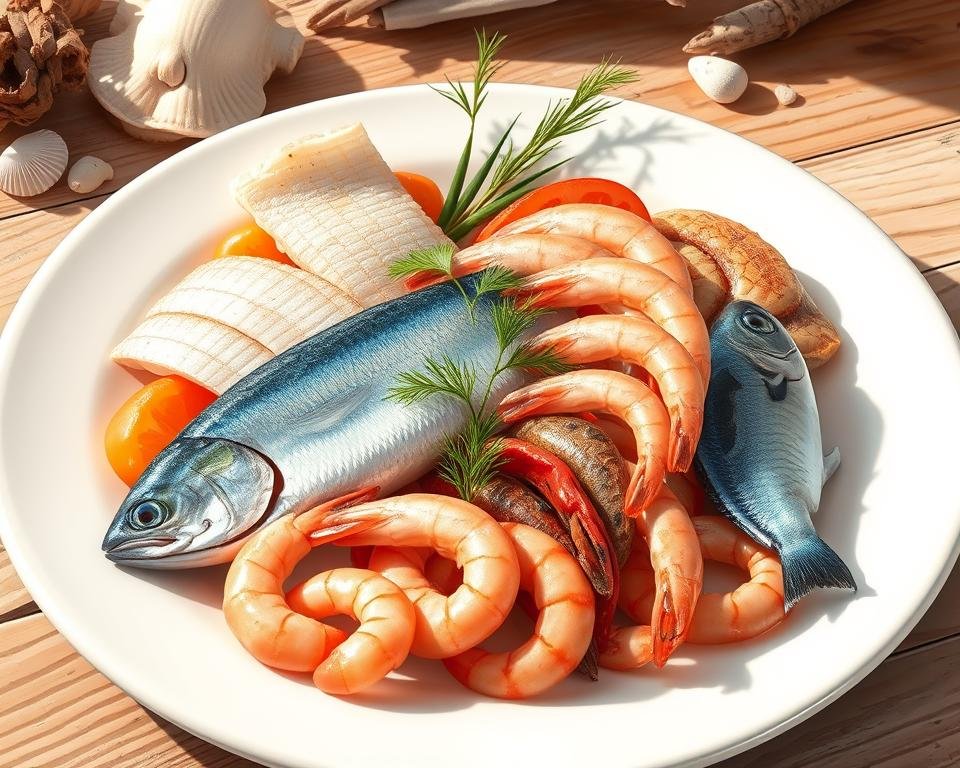
Making fish a part of your diet is easy and tasty. Here are some tips:
- Try baking or grilling fish instead of frying to reduce calorie intake.
- Experiment with different types of fish, such as salmon, tuna, and cod, to vary your nutrient intake.
- Add fish to salads, sandwiches, and pasta dishes for a protein boost.
Here’s a comparison of the nutritional benefits of different fish types:
| Fish Type | Omega-3 Content | Protein Content |
|---|---|---|
| Salmon | High | 35g per 3 oz serving |
| Tuna | Medium | 30g per 3 oz serving |
| Cod | Low | 20g per 3 oz serving |
Nutritional Considerations for Different Ages
Nutritional needs change as we age. Fish is a great source of protein and vitamins. These are key for growth and health.
Children, teens, adults, and seniors all have different needs. Kids need nutrients for growth. Seniors need them to stay healthy and fight off diseases.
Fish for Children and Teens
Children and teens benefit from fish’s protein and vitamins. Omega-3 fatty acids in fatty fish help the brain grow and work better.
Parents can make fish fun for kids by baking or grilling it. Trying different fish can give them a variety of nutrients.
Nutritional Needs for Seniors
Seniors face changes that affect their diet. Fish is rich in vitamins like vitamin D, which is good for bones. Omega-3s in fish also help the heart and reduce inflammation.
Seniors can easily add fish to their diet with grilled salmon or canned tuna. They should also watch their mercury intake and choose low-mercury fish.
Knowing how fish fits into our diet at every stage of life is important. It’s good for kids and helps seniors stay healthy. Fish can be a great choice for meals at any age.
Sustainable Fishing Practices
Sustainable fishing is key to keeping our oceans healthy and the fish we eat nutritious. As we learn more about fish nutrients, we must think about how our seafood choices affect the environment.
The Importance of Sustainable Seafood
Sustainable seafood helps keep our marine ecosystems in balance. Overfishing and harmful fishing methods can harm fish populations and damage habitats. This affects the quality of the fish we eat. The Food and Agriculture Organization (FAO) says sustainable fishing is vital for our oceans and the people who depend on them.
Importance of Sustainable Seafood
Choosing sustainable seafood supports eco-friendly fishing. By picking fish that’s certified as sustainably caught or farmed, we help reduce harm to the sea. Sustainable seafood has many benefits, including:
- Maintaining healthy fish populations
- Preserving marine biodiversity
- Supporting local fishing communities
How to Choose Eco-Friendly Fish
So, how do we pick the right seafood? Here are some tips:
- Look for MSC (Marine Stewardship Council) or ASC (Aquaculture Stewardship Council) certifications. They show the seafood meets high sustainability standards.
- Choose seafood from local sources or caught using eco-friendly methods.
- Stay away from seafood that’s overfished or caught badly.
By making these choices, we enjoy fish’s health benefits while supporting sustainable fishing. Dr. Jane Smith, a marine biologist, says, “Sustainable seafood is good for the environment and our health.”
“The way we fish today will determine the health of our oceans tomorrow.”
Choosing sustainable seafood helps our oceans stay healthy for future generations. It ensures our kids and grandkids can enjoy fish’s nutritional benefits too.
Conclusion: Embracing Fish for Optimal Health
Eating fish can greatly improve your health. It gives you important nutrients like omega-3 fatty acids. These help your heart and brain work better.
Nutrient Benefits
Fish is full of nutrients that keep you healthy. Omega-3 fatty acids are key. They fight inflammation and keep your heart healthy. Eating different fish can boost your health and well-being.
Incorporating Fish into Your Diet
Try different fish and cooking methods to find what you like. You can choose fatty fish like salmon or lean fish like cod. Making smart choices lets you enjoy the health benefits of fish.

 Common Fish Diseases: Causes, Symptoms, and Treatments
  Biosecurity in Aquaculture: Protecting Your Aquatic Assets
  Sustainable Fish Feed: Feeding Fish, Protecting the Planet
  Fish Stress Management: Keeping Your Aquarium Thriving
  Natural Immune Boosters for Aquaculture: Enhance Fish Health
  Crafting the Perfect Fish Feed Formulation