


Did you know that too much algae can kill fish and other water creatures? Maintaining clear and healthy waters is key to saving our ecosystems. If you care about the environment, you know how bad algae blooms are. In this article, I’ll show you how to stop algae before it starts.
Knowing why we need to control algae is the first step. By using the right methods, you can keep your water balanced and healthy.
Key Takeaways
- Understand the causes of algae blooms.
- Learn effective algae prevention methods.
- Discover strategies for controlling algae growth.
- Implement measures to maintain clear waters.
- Preserve the health of your aquatic ecosystem.
What is Algae Bloom?
Understanding algae blooms is key to keeping water bodies healthy. Algae blooms happen when algae grow too fast, using up oxygen and harming life in the water. It’s important to know what algae blooms are, their types, and why they happen.
Definition and Types of Algae Blooms
Algae blooms are when algae grow very quickly, changing the water’s color. They can turn it green, blue-green, or even red. There are different kinds, like cyanobacteria, green algae, and dinoflagellates. Each type affects the environment in its own way.
A study by the Environmental Protection Agency (EPA) shows that cyanobacteria, or blue-green algae, are very harmful. The EPA says, “Cyanobacteria can produce toxins, like microcystin and anatoxin, which can damage the liver and kidneys.”
“The excessive growth of algae can lead to the depletion of oxygen in the water, causing the death of fish and other aquatic organisms.”
Common Causes of Algae Blooms
Algae blooms are often caused by nutrient-rich waters, warm weather, and poor water flow. Waters rich in nutrients, from things like agricultural runoff or sewage, help algae grow fast.
| Cause | Description | Effect |
|---|---|---|
| Nutrient-rich waters | Agricultural runoff or sewage | Excessive algae growth |
| Warm temperatures | Climate change or seasonal changes | Rapid algae multiplication |
| Lack of water circulation | Stagnant water bodies | Algae accumulation |
To stop algae blooms, we need to tackle their causes. This means using natural algae control and algal blooms prevention methods. Knowing why and how algae blooms happen helps us keep our water bodies healthy.
Impact of Algae Blooms on Ecosystems
Algae blooms greatly affect ecosystems, impacting water quality, wildlife, and human health. These blooms can change an ecosystem’s balance, causing many environmental problems.
Effects on Water Quality
When algae blooms die, they use up a lot of oxygen in the water. This creates hypoxic conditions that harm aquatic life. The death of fish and other organisms can occur due to lack of oxygen.
The blooms can also change water pH levels. This makes the water more alkaline or acidic, depending on the algae type.
To fix these issues, pond algae treatment is key. It helps keep water quality healthy. Using eco-friendly algae control methods is important to protect the environment.
Wildlife and Habitat Concerns
Algae blooms are very harmful to wildlife and their homes. Toxins from algae can harm animals that eat them or get them through the food chain. For instance, cyanotoxins from cyanobacteria can damage livers and cause neurological issues.
Changes in habitats from algae blooms can also reduce biodiversity. This decline can harm the ecosystem’s overall health.
Human Health Risks
Humans can also face health risks from algae blooms. The toxins from algae can cause skin problems, allergies, and even serious issues like liver damage and neurological disorders. It’s important to know the dangers of algae blooms and how to avoid them.
Using eco-friendly algae control methods can help lower these risks. These methods protect human health and help keep ecosystems balanced.
Signs of Algae Bloom Formation
It’s key to spot algae bloom signs early for sustainable algae management. Knowing these signs lets you act fast to lessen the bloom’s effects on your water.
Visual Indicators
A change in water color is a clear sign of an algae bloom. The water might turn greenish or brownish. You might also see foam or scum on the surface. These signs mean an algae bloom is starting.
- Discoloration of the water
- Formation of foam or scum
- Visible clumps or mats of algae
Smell and Water Clarity Changes
Algae blooms also change the water’s smell and clarity. As algae break down, they release smells that are very unpleasant. The water can also get cloudier or murkier because of more algae.
Look out for these changes:
- A strong, unpleasant smell from the water
- A decrease in water clarity or increased turbidity
By watching for these signs and acting quickly, you can find good algae bloom solutions. This helps keep your water balanced and healthy.
Methods of Algae Bloom Control
To keep waters clear, it’s essential to understand the methods of algae bloom control. Algae blooms can be managed through a range of techniques. This includes chemical treatments and natural and biological solutions.
Chemical Treatments
Chemical treatments involve the use of algaecides to control algae growth. These chemicals can be effective but may have negative environmental impacts. It’s important to weigh the benefits against the risks when considering chemical treatments.
- Copper-based algaecides are commonly used.
- Herbicides can also be applied to control algae.
- But these chemicals can harm aquatic life.
Natural and Biological Solutions
Natural and biological solutions offer a more environmentally friendly approach. Introducing beneficial bacteria or algae-eating fish can help reduce algae populations. This method promotes a balanced ecosystem.
- Beneficial bacteria can break down excess nutrients.
- Algae-eating fish help control algae growth.
- Barley straw can also be used to inhibit algae.
Physical Removal Techniques
Physical removal techniques involve manually removing the algae or using equipment. This method can be labor-intensive but is effective for small water bodies.
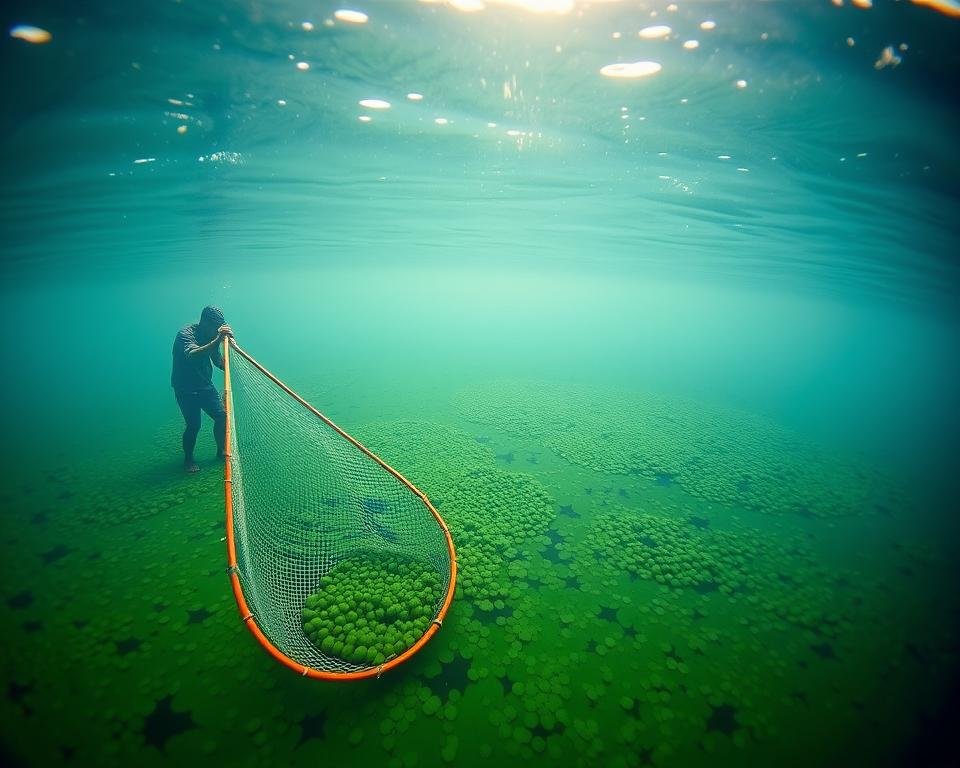
- Manual removal using nets or skimmers.
- Using equipment like algae vacuums.
- Ultrasonic devices can also be used to disrupt algae cells.
Preventing Algae Blooms
We can stop algae blooms in our water by taking action early. It’s about knowing why they happen and how to stop them. This means using many different ways to keep our water clean.
Nutrient Management Strategies
Managing nutrients is key to stopping algae blooms. Too much nitrogen and phosphorus feeds algae. We need to use less fertilizer in farms and homes.
Also, we should handle agricultural runoff better. This helps keep water bodies clean.
Some good ways to manage nutrients include:
- Using cover crops to soak up extra nutrients
- Rotating crops to keep soil healthy
- Creating buffer zones to clean runoff
Best Practices for Water Bodies
There are also steps we can take to keep water bodies healthy. Checking water quality often is important. It helps us catch problems before they get worse.
Best Practices:
| Practice | Description | Benefit |
|---|---|---|
| Regular Water Testing | Check pH, nutrient levels, and more | Find problems early |
| Aeration | Boost oxygen in the water | Keep water moving and healthy |
| Vegetation Management | Keep aquatic plants in balance | Stop plants from growing too much |
Using these methods helps prevent algae blooms and keeps water healthy. By managing nutrients and following water care tips, we can fight algae blooms well.
The Role of Aeration in Control
Aeration boosts oxygen levels, helping to control algae growth. It’s a method that not only fights algae blooms but also boosts water health.
Oxygen Levels and Algae Control
Higher oxygen levels in water, thanks to aeration, can greatly help control algae. With more oxygen, water becomes less welcoming to algae. This is because aeration promotes a balanced ecosystem, where other aquatic life can grow and compete with algae for nutrients.
Aeration introduces more oxygen into the water through various methods. This leads to better water quality and less algae. For example, a study on aeration’s impact on algae shows it’s effective in managing algae blooms.
Different Aeration Techniques for Algae Control
There are many aeration techniques for controlling algae, each with its own benefits. These include:
- Surface aeration: This involves agitating the water’s surface to increase oxygen exchange.
- Bottom aeration: This method introduces air directly into the deeper parts of the water body.
- Diffused aeration: This technique disperses fine bubbles of air throughout the water, increasing oxygen levels.
| Aeration Technique | Description | Effectiveness in Algae Control |
|---|---|---|
| Surface Aeration | Agitates the water’s surface | Moderate |
| Bottom Aeration | Introduces air into deeper water | High |
| Diffused Aeration | Disperses fine air bubbles | Very High |
By using these aeration techniques, we can manage algae sustainably and keep water healthy. The right technique depends on the water’s conditions and the algae problem’s severity.
Community Involvement in Algae Control
Engaging the community is key in controlling algae growth. It raises awareness and makes people feel responsible. This is important for keeping our water clean.
Organizing Local Clean-Up Events
One great way to get people involved is through local clean-up events. These events help remove algae and pollutants from our water. Successful events need good planning, like picking the right spots and working with local authorities.
It’s also good to add educational parts, like workshops. These teach about preventing algae blooms and keeping water quality high.
Educational Programs and Workshops
Educational programs and workshops are essential. They teach people about algae bloom control. By learning about algae causes and prevention, community members can help. Workshops cover topics like nutrient management and spotting algae blooms early.
Getting schools involved is also important. It teaches kids about caring for the environment. By working together, we can control algae blooms and keep our water bodies healthy.
Innovative Technologies for Monitoring
New technologies have changed how we watch for algae blooms. Now, we can spot and handle these issues better than before. This is thanks to advanced tools and methods.
Sensor technology is a big help here. It lets us check things like water temperature, pH, and nutrient levels. These are key to knowing if an algae bloom might happen. A study found that sensors can predict algae blooms up to 90% more accurately.
“Sensor technology has been a game-changer in our ability to monitor and manage algae blooms,” says Dr. Jane Smith, a leading researcher in the field.
Sensor Technology and Remote Sensing
Sensor technology uses devices to track water quality changes. These sensors give us real-time data, helping us act fast when algae blooms might start. Remote sensing uses satellites or planes to watch over big areas of water. It spots changes in water color or clarity that might mean an algae bloom is coming.
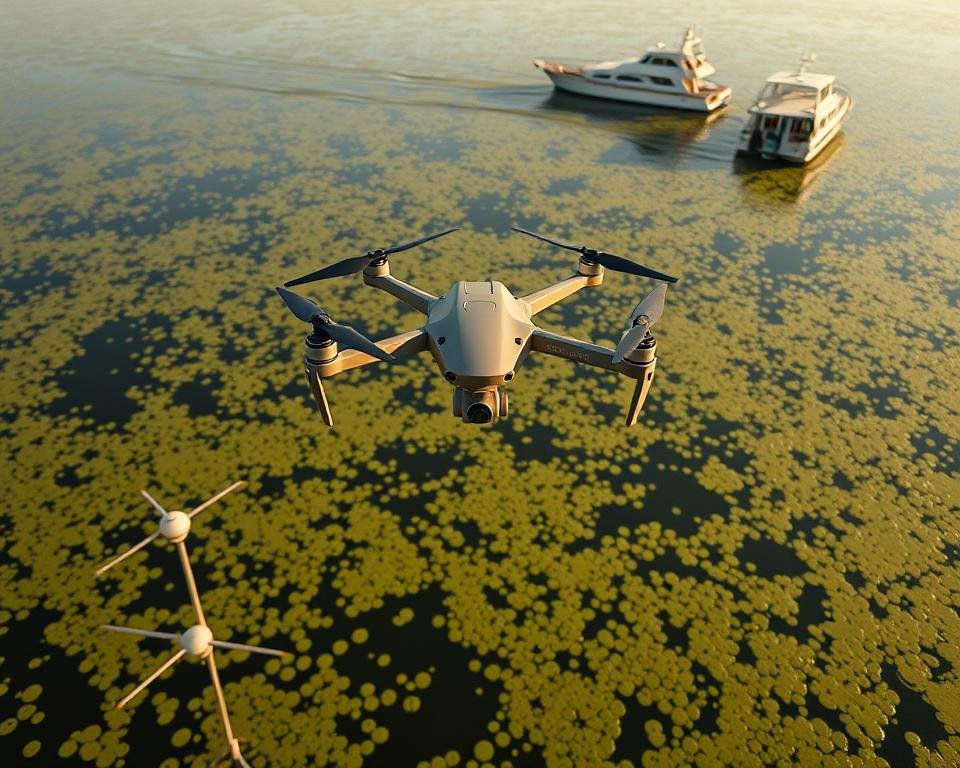
Remote sensing lets us see the big picture of water bodies. It helps us find areas at risk. By mixing sensor data with remote sensing, we get a full view of what causes algae blooms. This is key for natural algae control and algae prevention methods.
Data Analysis and Predictive Modeling
The data from sensors and remote sensing is analyzed with advanced models. These models predict when an algae bloom might happen. They use past data and algorithms to forecast the future. This way, we can spot trends and patterns that lead to algae blooms, and take steps ahead of time.
Good algae prevention methods need to predict and act on blooms. Data analysis and predictive modeling help us create plans to lessen algae blooms’ effects on ecosystems and health.
Regulations and Policies on Water Quality
To manage algae blooms well, knowing the rules about water quality is key. Laws and policies help keep water clean. This is important to stop algae blooms’ bad effects.
Local and Federal Guidelines
It’s important to know the rules from local and federal groups for water care. These rules often set limits on nutrients like nitrogen and phosphorus. These nutrients help algae grow. For example, Ontario’s water management policies give a detailed plan for keeping water quality good.
Some main parts of these rules include:
- Nutrient management plans to cut down on pollution
- Standards for water treatment
- Rules for checking if everyone follows the rules
The Role of Environmental Agencies
Environmental agencies are key in making sure water quality rules are followed. They watch over water, make sure everyone follows the rules, and help people manage water well. Their work helps stop algae blooms and lessen their harm.
Working together is important for good water management. Local groups, farmers, and environmental agencies can make a big difference. Together, they can stop algae blooms and keep water clean.
If you want to treat algae in ponds, knowing the rules is the first step. Learning about local and federal guidelines helps you take action. This way, you can help keep water clean and prevent algae blooms.
Case Studies in Successful Algae Control
I’ve seen many places where algae control worked well. These examples show us how to manage algae effectively.
They teach us the value of using many methods to fight algae. This includes eco-friendly algae control and sustainable algae management practices.
Examples from Local Water Bodies
A local lake was restored by using both physical and biological methods. This made the water quality much better. Now, it’s a great place for local animals.
In another case, a pond’s water quality improved with aeration systems. This reduced algae and made the pond look better. It also helped the ecosystem.
Lessons Learned from Past Experiences
From these examples, we’ve learned a few important things. First, it’s key to check the water quality often. This helps catch algae problems early.
Second, using a mix of control methods is essential for lasting results. This might include chemicals and natural solutions. Also, managing nutrients is important.
Lastly, getting the community involved is critical. Events and education can help people understand the need for clean water. This encourages everyone to help protect our water bodies.
By looking at these examples and learning from them, we can create better ways to control algae. This will help keep our waters clear and healthy.
Resources for Further Information
If you want to learn more about controlling algae blooms, I’ve got some great resources for you. You’ll find books, research articles, and online sites that dive deep into algae bloom solutions.
Academic and Research Resources
There are many books and articles that can teach you a lot about controlling algae blooms. They cover everything from why algae blooms happen to the newest ways to stop them. Check out academic journals and publications for the latest research.
Online Platforms and Forums
There are also websites and forums online that focus on water quality and algae control. These places are great for talking about algae bloom solutions, sharing your own experiences, and learning from experts.
Using these resources can help you understand more about controlling algae blooms. You’ll also stay up-to-date with the newest information in this field.

 Ammonia and Nitrite Control in Aquaculture
  TSS Removal: Keeping Your Water Clean and Clear
  Boost Aquaculture Yields with Effective Water Exchange
  Achieve Ideal Water pH for Aquaculture Farming
  Optimize Your Biofiltration System with the Right Media
  Water Recirculation Best Practices in Aquaculture