


The global aquaculture industry is booming. The global fish production has reached an all-time high. As an aquaculture professional, I know how key nutritious feed is for healthy growth and high yields.
Making the perfect diet for aquatic animals is a complex task. It needs a deep understanding of their nutritional needs. In this article, I’ll show you how to create a balanced diet for your aquatic friends.
By improving feed composition, you can boost growth rates and cut down waste. This also supports sustainable aquaculture practices.
Key Takeaways
- Understanding the nutritional needs of aquatic animals is key for the perfect diet.
- A balanced diet helps in healthy growth and high yields.
- Optimizing feed composition can improve growth rates and reduce waste.
- Nutritious feed is essential for sustainable aquaculture practices.
- Crafting the perfect diet requires a deep understanding of the aquaculture industry.
Understanding Fish Nutritional Needs
Knowing what fish need to eat is key to making good fish food. Fish, like all living things, need a balanced diet to grow and thrive.
It’s important to give fish the right nutrients. The needs change based on the fish’s species, age, and growth stage.
The Importance of Protein
Protein is vital in fish food for growth and repair. Traditionally, fish meal and fish oil were used. Now, plant-based options are becoming more popular.
Protein sources must be easy for fish to digest and have all the amino acids. Fish meal is rich in protein but can be pricey and harm the environment.
Essential Fatty Acids
Essential fatty acids (EFAs) are key for fish growth and health. They help keep the fish’s skin, scales, and overall health in check.
EFAs are not made by fish and must come from their food. Fish oil and some plant oils are good sources. Getting the right mix of EFAs is important for fish health.
Vitamins and Minerals
Vitamins and minerals are vital for fish health. They help with growth, reproduction, and fighting off diseases.
Lacking vitamins and minerals can cause health problems. These include slow growth, more sickness, and poor breeding. Supplements made for fish food are common sources.
Different Types of Fish Feed
Knowing the different fish feeds is key for good aquaculture. The right feed depends on the fish, their eating habits, and the farm setup.
There are many fish feeds, like floating and sinking pellets, crumble and powder, and live and frozen. Each has its own benefits and fits certain needs.
Floating vs. Sinking Pellets
Floating pellets are great for fish that eat at the surface. They make it easy to see how much they eat and cut down on waste. Sinking pellets are best for fish that eat at the bottom. They help keep the water clean and prevent overfeeding.
Choosing between floating and sinking pellets depends on the fish’s eating habits. For example, Catla and Rohu like floating pellets because they eat at the surface. But Common Carp eats at the bottom, so they need sinking pellets.
Crumble and Powdered Feed
Crumble and powdered feed are for young fish, like larvae and fry. They are easy for them to eat and packed with nutrients.
Crumble feed is good for fish growing from larvae to juveniles. It gives them the nutrients they need to grow fast.
Live and Frozen Options
Live feeds, like brine shrimp and rotifers, are very nutritious. They are often used in hatcheries to help young fish grow and survive. Frozen feeds are a convenient option that keeps the nutrients of live feeds.
Live and frozen feeds are great for fish with special diets or for breeding fish. They are important for getting the best nutrition.
Key Ingredients in Fish Feed
Choosing the right ingredients for fish feed is key for its sustainability and nutrition. It’s important to think about how these ingredients affect the environment and the health of the fish.
Fish Meal and Oil
Fish meal and oil are packed with protein and omega-3 fatty acids. They’re great for fish feed. But, using them can harm wild fish populations. To fix this, many are turning to sustainable sources or finding other options.
The quality of fish meal and oil can really vary. Good fish meal is full of nutrients and has low moisture. Fish oil is prized for its fatty acids.
Plant-Based Ingredients
Plant-based ingredients are a greener choice than fish meal and oil. Soybeans, corn, and wheat are often used. They can give fish a balanced diet when mixed right.
But, plant-based ingredients have their limits. Soybeans, for example, can block nutrient absorption in fish. So, it’s important to carefully mix and process them to get the most nutrition.
Additives and Supplements
Additives and supplements are vital for making fish feed better and helping fish grow. Vitamins, minerals, and probiotics help with immune health and overall well-being.
Choosing the right additives and supplements depends on the fish species. Some fish need more vitamins and minerals than others.
| Ingredient | Nutritional Value | Sustainability |
|---|---|---|
| Fish Meal | High in protein and omega-3 fatty acids | Concern due to wild fish depletion |
| Plant-Based Ingredients | Variable nutritional profile | More sustainable than fish meal |
| Fish Oil | Rich in omega-3 fatty acids | Concern due to wild fish depletion |
| Additives and Supplements | Enhance nutritional value and health | Varies depending on the additive |
In conclusion, finding the right mix of ingredients is key for fish feed. By knowing the nutritional and environmental impact of each, producers can make feed that’s good for fish and the planet.
Formulating for Different Fish Species
To help fish grow well and stay healthy, we need to make special feeds for them. Each fish species has its own needs because they live in different places in the water.
Tropical Fish Feed
Tropical fish, like those in coral reefs, need lots of vitamins and minerals. This helps them stay colorful and grow fast. Their feeds often have more astaxanthin and carotenoids to make them look vibrant.
Coldwater Fish Considerations
Coldwater fish, like trout and salmon, need more protein in their food. This is because they grow and have energy in colder water. Making their feed right means using the best proteins for them.
Species-Specific Nutritional Needs
It’s important to know what each fish species needs to eat. Some need special amino acids or fatty acids that others don’t. Here’s a table showing some of these differences.
| Fish Species | Protein Requirement | Key Nutrients |
|---|---|---|
| Tropical Fish | 30-40% | Vitamin C, Astaxanthin |
| Coldwater Fish | 45-55% | Omega-3 Fatty Acids, Protein-rich ingredients |
| Catfish | 25-35% | Essential Amino Acids, Vitamin E |
By knowing these differences and making feeds just for them, fish farmers can make their fish healthier. This also makes farming more efficient.
The Role of Feed Size and Shape
Choosing the right size and shape for fish feed pellets is key. It makes sure fish eat well and waste less. This also helps in using feed more efficiently.
The size of the pellets matters a lot. If they’re too big, small fish can’t eat them. If they’re too small, they get eaten fast or don’t give enough nutrients.
Pellet Size Considerations
When picking the best pellet size, think about the fish’s type, age, and how they eat. For example, big pellets work for big fish, and small pellets are better for young fish or small species.
A study on pellet size and its impact on feeding efficiency is summarized in the following table:
| Pellet Size (mm) | Feed Conversion Ratio (FCR) | Waste Reduction (%) |
|---|---|---|
| 2 | 1.8 | 15 |
| 3 | 1.6 | 20 |
| 4 | 1.4 | 25 |
Impact of Shape on Consumption
The shape of pellets also plays a big role. It affects how fish eat them. Different shapes can make pellets sink or float, which is important for fish that eat differently.
Sinking pellets are great for fish that eat from the bottom. Floating pellets are better for fish that eat at the surface. The shape also makes pellets last longer and stay good in water.
By thinking about both size and shape, fish farmers can make feeding better. This leads to healthier fish and better farming practices.
The Importance of Digestibility
In aquaculture, how well fish can digest their food is key. It affects their health and how fast they grow. The quality of the feed is very important here.
Factors Affecting Digestibility
Many things can change how fish digest their food. This includes the quality of the ingredients and how the feed is made. The type of protein, anti-nutritional factors, and fiber levels all play a role.
Ingredient Quality: Better ingredients are easier for fish to digest. For example, fresh fish meal is more digestible than old or bad meal.
Processing Methods: How the feed is made can also change its digestibility. Methods like extrusion can make nutrients easier for fish to use.
Techniques to Improve Digestibility
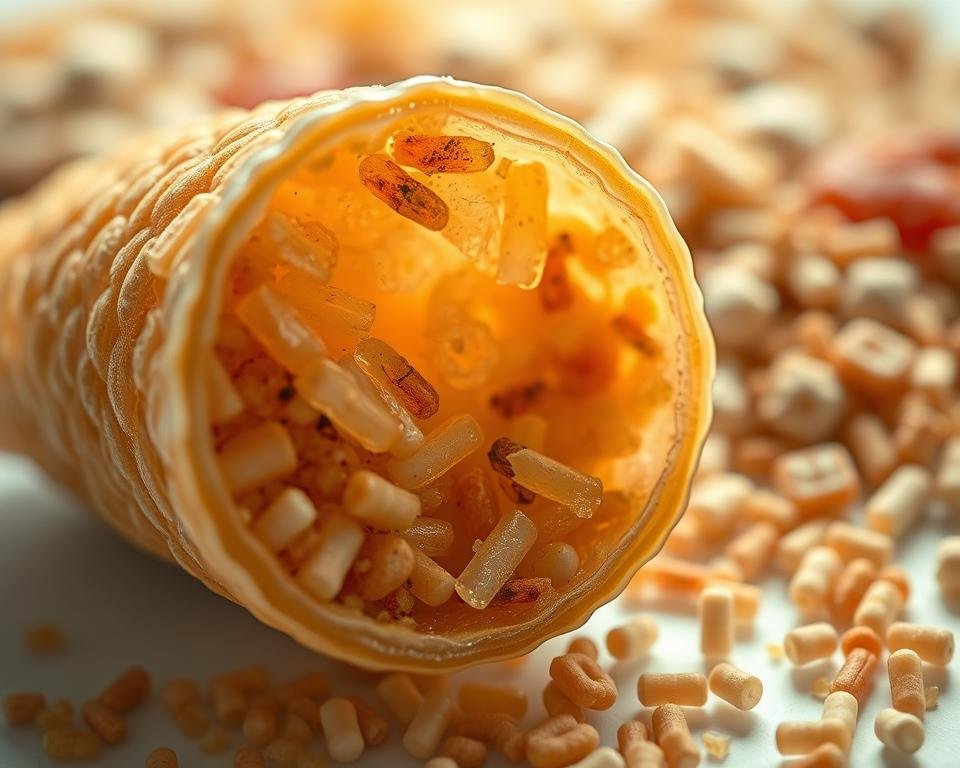
There are ways to make fish feed more digestible. Using enzymes is one effective method. Enzymes help break down nutrients into simpler forms that fish can absorb better.
- Enzyme Supplementation: Adding enzymes like proteases, lipases, and phytases can make nutrients more available.
- Feed Processing: Methods like extrusion and micronization can make feed more digestible by changing its structure.
- Ingredient Selection: Using ingredients like fish meal and certain plant proteins can improve digestibility.
| Factor | Effect on Digestibility | Example |
|---|---|---|
| Ingredient Quality | High-quality ingredients improve digestibility | Fresh fish meal vs. spoiled meal |
| Processing Method | Certain processing techniques enhance digestibility | Extrusion improves starch gelatinization |
| Enzyme Supplementation | Enzymes break down complex nutrients | Phytase improves phosphorus availability |
By focusing on digestibility, aquaculture farmers can make their feed better. This leads to healthier fish and faster growth.
The Impact of Feeding Frequency
Getting the right amount of food to fish is key for sustainable fish feed. It helps fish get the nutrients they need and cuts down on waste. How often fish eat affects their growth and how much food they use, making it a big deal in fish farming.
Daily Feeding Routines
Having a set daily feeding time is important for fish health and growth. Studies show that regular meals help fish grow better and more evenly. For example, trout that ate twice a day grew faster than those who ate once.
“Feeding fish at the same time every day is essential for their growth and less waste,” says a top aquaculture expert. “Knowing what your fish need and adjusting their meals can make your fish farm more efficient.”
Adjusting for Growth Stages
As fish grow, their feeding needs change. Young fish need to eat more often because they grow fast and use a lot of energy. Older fish might eat less often but need more food to keep growing.
- Larval stages: Frequent feeding (3-4 times a day) is often necessary due to high energy demands.
- Juvenile stages: Feeding frequency can be gradually reduced as the fish grow, typically to 2-3 times a day.
- Adult stages: Feeding once or twice a day is common, depending on the species and farming goals.
Changing how often fish eat based on their growth stage helps farmers. It boosts growth, improves how much food is used, and cuts down waste. This makes fish feed production more sustainable.
Understanding Feed Conversion Ratio
In aquaculture, the Feed Conversion Ratio (FCR) is key to judging fish feed quality. It shows how well fish turn feed into body mass. Lowering FCR helps cut down on waste, reduces costs, and supports green aquaculture.
What is FCR?
FCR is found by dividing the feed given to fish by their weight gain. For example, if 2 kg of feed adds 1 kg of weight, the FCR is 2. A lower FCR means fish use more of the feed for growth, not waste.
Many things affect FCR, like feed quality, fish type and size, water temperature, and how fish are fed. Some fish naturally have better FCRs because of their metabolism and eating habits.
Optimizing FCR for Efficiency
To better FCR, focus on high-quality feed, smart feeding, and clean water. Better FCR means less harm to the environment and more profit for aquaculture.
A study in the Aquaculture Journal found, “Better feed and feeding can save a lot of money and reduce harm to the environment.”
“The key to successful aquaculture is not just in the feed itself, but in how efficiently that feed is converted into fish biomass.”
Here’s a table showing how different fish species compare in FCR:
| Fish Species | Average FCR |
|---|---|
| Salmon | 1.2 |
| Tilapia | 1.8 |
| Catfish | 1.5 |
By improving FCR, aquaculture can become more sustainable and efficient. This helps the whole industry grow better.
Environmental Considerations in Feed Formulation
Creating sustainable fish feed is key to reducing the environmental impact of aquaculture. As the industry grows, it’s vital to think about the feed production’s environmental effects.
Choosing the right ingredients is essential. I aim for sustainable sourcing to lessen our environmental footprint. I pick ingredients certified by groups like the Marine Stewardship Council (MSC) or the Aquaculture Stewardship Council (ASC).
Sustainable Sourcing of Ingredients
It’s important to select ingredients wisely for sustainable fish feed. I look for suppliers who follow eco-friendly practices and have a low impact on ecosystems. For example, using plant-based ingredients can greatly reduce our need for fish meal and oil, helping to save marine resources.
Here’s a comparison to show the benefits of sustainable sourcing:
| Ingredient | Environmental Impact | Sustainability Rating |
|---|---|---|
| Fish Meal | High | 2/5 |
| Plant-Based Meal | Low | 4/5 |
| Fish Oil | High | 2.5/5 |
| Algal Oil | Low | 4.5/5 |
For more on making fish feed eco-friendly, check out Finnforel’s insights on sustainable aquaculture.
Reducing Aquaculture’s Carbon Footprint
To lower aquaculture’s carbon footprint, we focus on better feed formulation and production. We use energy-efficient methods and cut down on waste.
These steps help reduce our environmental impact. For instance, using locally sourced ingredients cuts down on emissions from transportation, making our supply chain greener.

In summary, making fish feed with the environment in mind is vital for aquaculture’s future. By focusing on sustainable sourcing and lowering our carbon footprint, we can lessen our ecological impact.
Common Mistakes in Fish Feed Formulation
The fish feed industry faces formulation mistakes that harm fish health and nutrition. Despite tech advances and better understanding of fish needs, errors can happen. It’s key to spot and fix these mistakes to make high-quality fish feed.
Overlooking Nutritional Balance
One big mistake is ignoring nutritional balance in fish feed. Fish need a mix of proteins, fats, carbs, vitamins, and minerals to thrive. A feed lacking this balance can cause health issues and lower aquaculture efficiency.
To prevent this, it’s important to:
- Do detailed nutritional checks on the fish species being farmed.
- Choose top-notch ingredients that meet fish nutritional needs.
- Keep updating feed formulas with new research and data.
Ignoring the Quality of Ingredients
Another mistake is not caring about ingredient quality in fish feed. The quality of ingredients affects the feed’s nutritional value and taste. Bad ingredients can harm fish health, slow growth, and make them more prone to disease.
To lessen this risk, producers should:
- Get ingredients from trusted suppliers.
- Regularly check the quality of incoming ingredients.
- Look into using better ingredients that are consistent and nutritious.
By knowing these common mistakes and taking steps to avoid them, fish feed makers can enhance their product quality. This helps make aquaculture more sustainable and efficient.
Innovations in Fish Feed Technology
New technologies in fish feed are changing the aquaculture world. They make farming fish more sustainable and profitable. It’s important to keep up with the latest in feed making and feeding systems.
The fish feed formulation process has made big strides. It now focuses on optimizing fish feed composition for different fish species. This means adding essential nutrients and using eco-friendly ingredients to lower the environmental impact of fish farming.
Enhanced Formulations
One major area of improvement is in making fish feed more nutritious. This includes:
- Using new protein sources like insect meal and plant-based proteins.
- Adding probiotics and prebiotics to improve gut health.
- Creating feeds with specific fatty acid profiles for better fish health and growth.
Automated Feeding Systems
Automated feeding systems are another big step forward. They make feeding more efficient and cut down on waste. These systems can be set to feed fish at the best times and amounts, based on their growth and needs.
The advantages of automated feeding systems are:
- Better feed conversion ratios.
- Lower labor costs.
- Better monitoring and control over feeding.
By adopting these new technologies, fish farms can become more sustainable and profitable. They also help ensure a more food-secure future.
Resources for Fish Feed Formulation
To keep up with the latest in fish feed formulation, it’s key to use available resources. The fish feed industry is always changing. New research and technologies come out often.
Research Institutions
Places like the USDA and the NOAA share important info on fish nutrition and feed making. Their studies guide the industry on what works best.
Online Courses and Guides
Online courses and guides teach practical skills in fish feed making. Sites like Coursera and edX make learning easy.
Industry Associations and Networks
Groups like the Aquaculture Alliance offer chances to meet others and learn about new trends. Joining these can help you stay ahead in fish feed making.
Using these resources can improve your skills in fish feed formulation. This helps make the fish feed industry more sustainable and efficient.

 Common Fish Diseases: Causes, Symptoms, and Treatments
  Biosecurity in Aquaculture: Protecting Your Aquatic Assets
  Sustainable Fish Feed: Feeding Fish, Protecting the Planet
  Fish Stress Management: Keeping Your Aquarium Thriving
  Natural Immune Boosters for Aquaculture: Enhance Fish Health
  Essential Fish Nutrients: What Your Body Needs