


Aquatic life needs enough oxygen to thrive. As someone who works in aquaculture, I know that insufficient aeration can harm growth, increase death rates, and lower productivity.
Did you know that poorly oxygenated water can cause big financial losses in aquaculture? Studies show that good aeration can boost fish growth by up to 20%. Using the right aeration strategies can make your water healthier. This leads to better growth and more profit for your aquatic life.
Key Takeaways
- Optimal aeration improves fish growth rates and reduces mortality.
- Effective aeration strategies can increase aquaculture productivity.
- Adequate oxygen levels are key for aquatic life.
- Poorly oxygenated water can result in significant economic losses.
- Implementing the right aeration techniques is essential for a thriving aquaculture operation.
Understanding Pond Aeration in Aquaculture
In aquaculture, knowing about pond aeration is essential for a thriving ecosystem. It’s not just about adding oxygen to the water. It’s about creating a balanced environment that supports fish health and growth.
Importance of Aeration
Aeration is key because it affects water quality and fish well-being. By enhancing oxygen levels, aeration helps fish grow healthily. This is vital in aquaculture, where the goal is to raise healthy fish efficiently.
Good aeration reduces fish stress, leading to better growth and lower death rates. Also, proper aeration improves water quality, reducing pollution’s negative effects.
Benefits for Fish Health
Pond aeration has many benefits for fish health. Firstly, increased oxygen levels meet fish metabolic needs, helping them grow stronger. Secondly, it keeps water parameters stable, which is key for fish health.
- Enhanced growth rates due to optimal oxygen levels
- Reduced stress among fish populations
- Lower mortality rates resulting from healthier conditions
Key Factors Affecting Oxygen Levels
Several factors affect pond oxygen levels, including water temperature, aquatic plants, and organic matter. Understanding these is vital for effective aeration management.
For example, high water temperatures can lower oxygen levels. Too many aquatic plants can also cause oxygen level changes, as they use oxygen during respiration.
By knowing these factors and their effects, I can make better decisions for aeration in my aquaculture pond. This helps create a balanced and healthy ecosystem for my fish.
Types of Pond Aeration Techniques
To make your pond healthier, it’s key to know about different aeration methods. These techniques help increase oxygen, improve water flow, and support life in the water.
Surface Aeration Methods
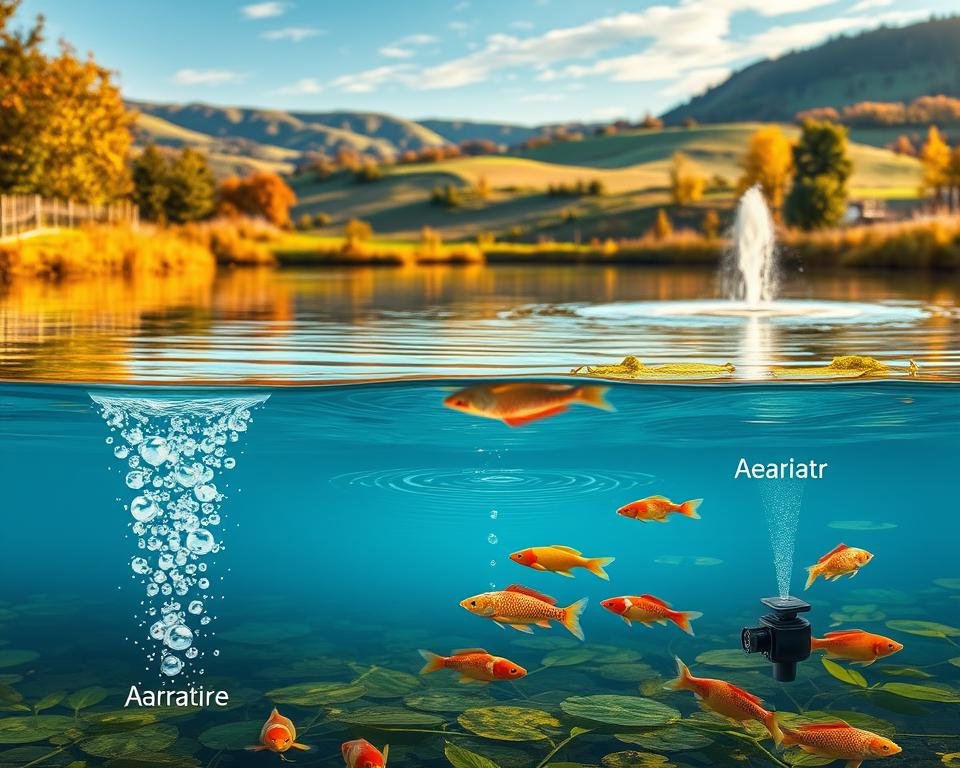
Surface aeration boosts oxygen levels near the pond’s surface. It includes:
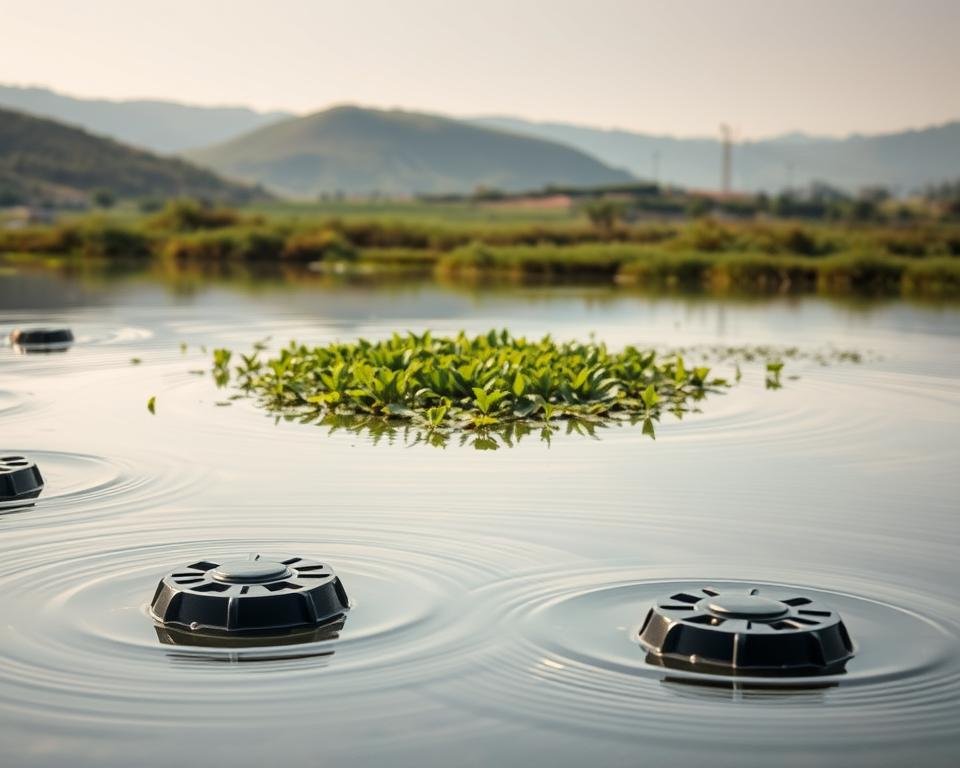
- Paddlewheel aerators, known for their efficiency and easy upkeep.
- Floating aerators, simple to install and raise oxygen levels a lot.
- Surface agitators, which break the surface tension for better gas exchange.
Subsurface Aeration Approaches
Subsurface aeration sends air bubbles under the water. This method improves water flow and oxygen distribution. Common methods are:
- Diffused aeration systems, which release fine bubbles for better oxygen transfer.
- Submersible aerators, designed for underwater use and can be placed at different depths.
Mixing Aeration Systems
Mixing aeration systems use both surface and subsurface methods. They aim to:
- Boost overall oxygen levels.
- Improve water circulation and mixing.
- Support a balanced ecosystem.
Knowing these methods helps pick the best aeration system for your pond. The right Pond Aeration Systems can greatly enhance your pond’s health and productivity.
Choosing the Right Aeration System
Aeration for aquaculture ponds is not a one-size-fits-all solution. It’s key to pick a system that matches your needs. The right aeration system can greatly affect your aquatic life’s health and productivity.
Assessing Pond Size and Depth
The size and depth of your pond are key to choosing the right aeration system. Larger and deeper ponds need more powerful systems for good oxygen distribution. Make sure to measure your pond’s dimensions to find the right system.
Evaluating Water Quality
Water quality, like pH, temperature, and dissolved oxygen, is vital for picking the best aeration strategy. Regular checks on these factors help spot areas for improvement. This ensures your aeration system works its best.
Key Water Quality Parameters to Monitor:
- Dissolved Oxygen Levels
- pH Levels
- Water Temperature
Budget Considerations
When choosing an aeration system, budget is a big factor. It’s important to spend on quality but also think about costs over time. Look at different options and weigh the initial cost against long-term expenses.
By looking at your pond’s size and depth, checking water quality, and thinking about your budget, you can choose the best aeration system for your aquaculture pond.
How to Implement Aeration Techniques
Getting pond aeration right in aquaculture is all about how you do it. Knowing the key steps is essential for success. It’s important to understand what makes aeration systems work well.
Installation and Setup Tips
When you set up an aeration system, always follow the maker’s instructions. Think about your pond’s layout and water flow too. Where you put the aerators matters a lot. For example, setting them up for circular water flow helps oxygen spread better.
Also, make sure the aeration system fits your pond right. You need to figure out the right amount of aeration for your pond’s size and oxygen needs.
Maintenance Best Practices
Keeping your aeration system in top shape is key. Regular checks, cleaning, and tweaks are a must. This way, you avoid problems like clogged aerators or broken pumps. Such issues can harm fish health by lowering oxygen levels.
| Maintenance Task | Frequency | Benefits |
|---|---|---|
| Inspect Aerators | Weekly | Prevents Clogging |
| Clean Aeration System | Monthly | Ensures Optimal Performance |
| Check Electrical Components | Quarterly | Reduces Risk of Failure |
By sticking to these tips for installation, setup, and upkeep, you’ll get the most out of pond aeration. This will help keep your aquatic life healthy and thriving.
Monitoring Aeration Efficiency
It’s important to check how well your aeration system works. Good aeration keeps your pond’s oxygen levels right. This is key for your fish’s health and growth.
To check aeration efficiency, focus on two main things: oxygen levels and fish health. Regularly measuring oxygen levels shows if your system is doing its job. You can use oxygen meters and sampling kits for this.
Measuring Oxygen Levels
Checking oxygen levels is a must. Oxygen meters give you instant readings. It’s also good to check levels at different depths and spots.
- Use oxygen meters for real-time readings.
- Take readings at various depths and locations.
- Consider using sampling kits for additional data.
Tracking Fish Growth and Health
Watching how your fish grow and stay healthy is just as important. It shows if your aeration plan is working. Regular checks help spot problems early.
Some important things to watch include:
- Growth rates.
- Mortality rates.
- Visible signs of stress or disease.
By keeping an eye on these, you can make data-driven decisions to improve your aeration. Regular checks and tweaks are essential for a healthy aquaculture operation.
In summary, keeping an eye on aeration efficiency is a continuous task. It involves checking oxygen levels and fish health regularly. This ensures your aeration system supports your aquaculture well.
Seasonal Considerations for Aeration
Knowing how aeration changes with the seasons is key to keeping your aquaculture ponds healthy. Each season has its own aeration needs.
Throughout the year, different seasons bring their own challenges for keeping your pond’s oxygen levels right. In the cold months, ice can block oxygen from getting into the water. And in the warmer months, fish need more oxygen because they’re more active.
Winter Aeration Challenges
Winter is tough for aeration because of ice and cold. Ice stops oxygen from getting into the water. And cold slows down fish and plants, but they keep needing oxygen.
- Use aeration systems that can work under ice, like subsurface aeration.
- Watch how thick the ice is and don’t over-aerate, which can melt the ice and cause problems.
- Think about using destratification fans to keep air moving and prevent ice from forming in some spots.
Summer Oxygen Depletion
Summer is warmer, which means fish are more active and need more oxygen. Also, algae blooms can use up a lot of oxygen, mostly at night.
To deal with summer’s oxygen problems, try these:
| Strategy | Description | Benefits |
|---|---|---|
| Increased Aeration | Turn up the aeration in the hottest summer months | More oxygen, healthier fish |
| Algae Management | Keep an eye on and control algae growth | Stops oxygen loss, lowers fish stress |
| Water Circulation | Make water move better to stop it from stratifying | Better oxygen spread, less disease risk |
By getting to know and adjusting to these seasonal challenges, you can keep your aeration plan working all year. This helps keep your fish healthy and your pond thriving.
Common Mistakes in Pond Aeration
Aeration is key to keeping ponds healthy. But, there are mistakes that can mess up its effectiveness. Knowing these mistakes is vital for your pond’s aeration system to work well.
Over-Aeration Issues
Too much aeration can waste energy and stress fish. Too much aeration can cause water turbulence, harming fish habitats. It also increases energy use, raising costs.
To avoid this, check your pond’s needs. Size, depth, and fish types matter. For example, a study on catfish farming showed right aeration levels improve health and cut costs.
“The key to effective pond aeration lies in striking the right balance between oxygen supply and energy consumption.” – Aquaculture Expert
Neglecting Maintenance
Ignoring maintenance can lead to equipment failure and less aeration. Regular checks and maintenance can solve most problems.
Here are some maintenance tips:
- Regularly inspect aeration equipment for signs of wear and tear.
- Clean aerators and diffusers as per the manufacturer’s instructions.
- Check for any blockages or damage in the aeration pipes.
| Maintenance Task | Frequency | Benefits |
|---|---|---|
| Inspect Aeration Equipment | Weekly | Early detection of issues |
| Clean Aerators/Diffusers | Monthly | Ensures optimal oxygen transfer |
| Check Aeration Pipes | Quarterly | Prevents blockages and damage |
By avoiding these mistakes and staying proactive, your pond aeration system will work better.
Innovations in Pond Aeration
New ideas in pond aeration are changing the aquaculture world. They make farming fish and seafood better and greener. As more people want fish and seafood, we need better ways to farm them.
New aeration tech is key to meeting these needs. It makes water better and cuts down on harm to the environment. This helps the aquaculture industry grow in a green way.
Emerging Technologies
Solar-powered aeration systems are a big deal now. They use the sun’s power, cutting down on fossil fuel use and costs. A study found they can boost pond oxygen by 30%, helping fish and making farming better.
Advanced aeration diffusers are another big step. They can add up to 50% more oxygen than old systems. They use less energy but give more oxygen to fish and plants.
Eco-Friendly Solutions
Eco-friendly pond aeration aims to lessen harm to the environment. Using natural methods, like plants, is one way. These plants help oxygenate the water and give fish a home.
Another green solution is aeration systems that work with nature. They help water move better, improving quality without needing lots of machines.
“The future of aquaculture depends on our ability to innovate and adopt sustainable practices. By embracing new technologies and eco-friendly solutions, we can ensure a healthier environment for both our aquatic resources and our communities.”
The aquaculture world is always changing. Keeping up with new pond aeration ideas is important for those in the field. Using new tech and green methods can make farming fish and seafood better, greener, and more efficient.
Integrating Aeration with Other Techniques
In aquaculture, combining aeration with other water management techniques can greatly improve water quality and fish health. This mix creates a balanced and strong ecosystem.
Combining Aeration with Filtration
Using aeration with filtration systems can make your aquaculture pond healthier. This combo boosts water quality by removing waste and excess nutrients. This reduces water quality problems.
A study on aquaculture pond management shows that good water treatment strategies are key for healthy fish. Filtration systems clear out particles and nutrients, preventing algae blooms and keeping oxygen levels right.
Adding aeration to these systems keeps oxygen levels perfect while keeping water clean and clear.
Use of Aquatic Plants
Aquatic plants are great for improving your pond’s ecosystem. They stabilize water, provide shade, and homes for fish and other creatures. Plants take nutrients from the water, reducing algae and improving water quality.
Adding plants to your aeration plan makes your ecosystem more diverse and strong. This not only improves water quality but also boosts biodiversity. Your aquaculture operation becomes more sustainable over time.
Case Studies in Successful Aeration
Looking at case studies from commercial farms shows us how to improve fish health and productivity. These examples give us insights into the best fish pond aeration methods. They can help many aquaculture operations.
Examples from Commercial Farms
Many commercial aquaculture farms have used aeration to better their pond conditions. For example, a farm in the southern United States used surface aeration. This increased oxygen levels and boosted fish growth.
- A farm in Asia used subsurface aeration. It kept oxygen levels stable, reducing fish death.
- In Europe, a farm added aquatic plants to their aeration system. This improved water quality and biodiversity.
These examples from commercial farms show how different aeration methods work in different places.
Lessons Learned
The case studies teach us important lessons learned for aquaculture:
- It’s key to regularly check oxygen levels to adjust aeration.
- Using aeration with other methods, like filtration, can greatly improve water quality.
- Keeping aeration equipment in good shape is vital to avoid failures and ensure it works well.
By learning from these lessons, aquaculture experts can make their fish pond aeration methods better. This can lead to better results.
In summary, the success stories from commercial farms show how important good aeration is in aquaculture. By studying these examples and lessons, you can use similar strategies in your own operation. This could improve your productivity and fish health.
Resources for Aquaculture Professionals
Staying updated on pond aeration techniques is key for fish health and farm productivity. Many resources are available to help you.
Educational Materials
There are many Books and Publications that dive deep into pond aeration systems. They cover everything from the basics to advanced techniques.
Professional Development Opportunities
Online Courses and Workshops offer practical training and the newest info on pond aeration. Taking part in these can keep you ahead in aquaculture management.
Using these resources, including info on Pond Aeration Systems, can boost your aquaculture skills. This ensures a healthy and thriving environment for your fish.

 Ammonia and Nitrite Control in Aquaculture
  TSS Removal: Keeping Your Water Clean and Clear
  Boost Aquaculture Yields with Effective Water Exchange
  Achieve Ideal Water pH for Aquaculture Farming
  Optimize Your Biofiltration System with the Right Media
  Water Recirculation Best Practices in Aquaculture