


Did you know that bad wastewater treatment can harm the environment and our health? It’s vital to make your biofiltration system work better. This starts with picking the right parts.
If you care about clean water, I’m here to help. Choosing the right filtration media boosts your system’s power.
The right filtration media makes your wastewater treatment better. We’ll look at what matters and how to pick the best media for you.
Key Takeaways
- Understand the importance of efficient wastewater treatment.
- Learn how to choose the right filtration media for your system.
- Discover key factors that impact biofiltration system performance.
- Implement tips for optimizing your wastewater treatment process.
- Enhance your system’s overall efficiency with the right media.
Introduction to Biofiltration Media
Biofiltration media is a key part of wastewater treatment. It affects how well the system works. Let’s explore the basics of this technology.
What is Biofiltration?
Biofiltration uses microorganisms on a medium to break down pollutants. This biological process is effective in removing contaminants from wastewater. It’s a key step in water treatment.
The process uses biofilter media types. These media provide a home for microorganisms to grow and break down pollutants. Choosing the right media is key for a good biofiltration system.
Importance in Wastewater Treatment
Biofiltration is very important in wastewater treatment. It’s a cost-effective and environmentally friendly way to remove pollutants. Using the best biofiltration media helps improve the treated water’s quality.
- Reduces pollutants effectively
- Environmentally friendly
- Cost-effective solution
How Biofiltration Works
Biofiltration works by passing wastewater through a media bed. Microorganisms on the media break down pollutants. The efficiency of this process depends on the media type, surface area, and wastewater retention time.
Understanding biofiltration is key for better wastewater treatment systems. By picking the right media and keeping the system in good shape, plants can produce high-quality effluent that meets standards.
Factors to Consider in Media Selection
To get the most out of your biofiltration system, knowing what media to choose is key. The right media can make the treatment process better. But, picking the wrong one can cause problems and increase costs.
Types of Pollutants to Treat
First, think about what pollutants you need to remove. Different media work best for different contaminants. For example, organic pollutants need media that supports a lot of microbes.
If your water has a lot of solids, you’ll need media with bigger pores. This prevents clogs.
The Role of Microorganisms
Microorganisms are essential in breaking down pollutants. The media should offer a good home for these microbes. It needs a lot of surface area and the right chemistry for growth.
Flow Rates and Retention Times
Flow rate and retention time are also important. Fast flow rates can mean less treatment if contaminants don’t get enough time to break down. The media should handle the flow well and give enough time for treatment.
By thinking about these factors—pollutants, microbes, and flow rates—you can pick the right media. This ensures your system works well, treating wastewater effectively and reducing harm to the environment.
Common Types of Biofiltration Media
Different biofiltration media have unique benefits. Choosing the right one is key for a system’s success. Knowing the traits of each media is vital when setting up or improving a biofiltration system.
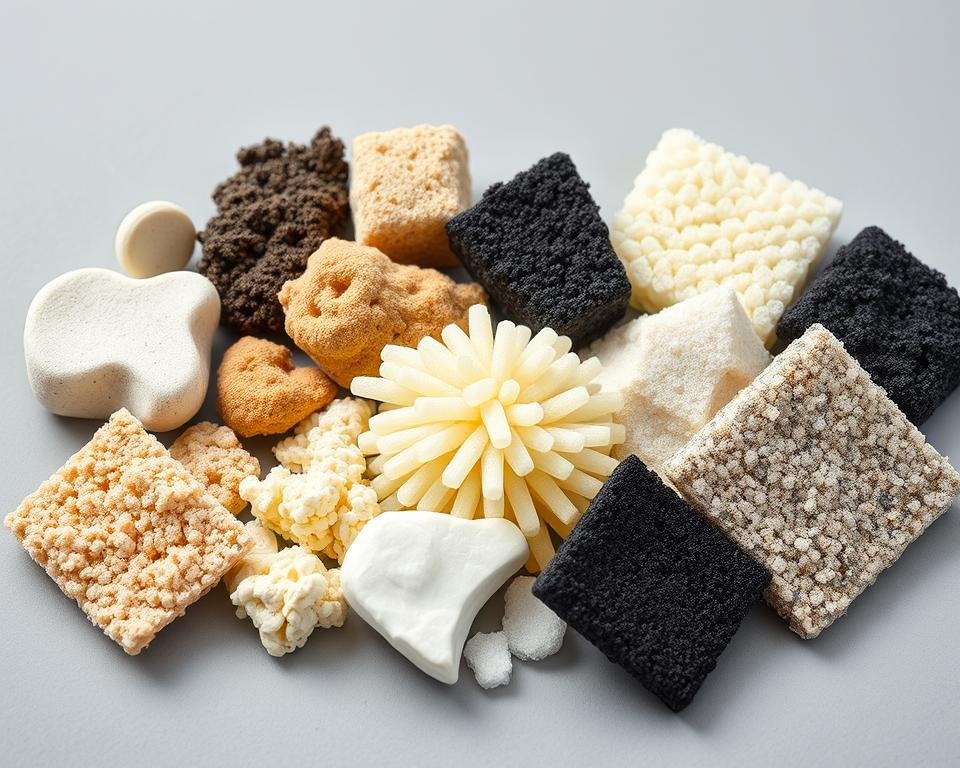
Sand and Gravel Media
Sand and gravel are common choices for biofiltration. They are affordable and effective. They offer a lot of space for microbes to grow and help remove solids and pollutants.
Advantages: They have a lot of surface area, are cost-effective, and are easy to keep up with.
Limitations: They might need frequent cleaning, and could clog up.
Activated Carbon
Activated carbon is great at removing pollutants and odors. It has a lot of pores that support microbes. This makes it a top pick for many.
Benefits: It has a high adsorption capacity, and is good at tackling many pollutants.
Considerations: It can be pricey, and might need to be replaced sometimes.
Synthetic Media Options
Synthetic media, like plastic or ceramic, are made to last and work well. They are used in newer systems because they are efficient and don’t need much care.
Advantages: They have a lot of surface area, don’t clog easily, and last a long time.
Limitations: They cost more upfront, and might not work for all pollutants.
| Media Type | Surface Area | Cost | Maintenance |
|---|---|---|---|
| Sand/Gravel | High | Low | Frequent backwashing |
| Activated Carbon | Very High | High | Periodic replacement |
| Synthetic Media | High | Moderate to High | Low |
Knowing the good and bad of each media helps you choose the best one for your needs.
Comparing Organic and Inorganic Media
In the world of biofiltration, knowing the difference between organic and inorganic media is vital. The type of media used greatly affects how well a biofiltration system works.
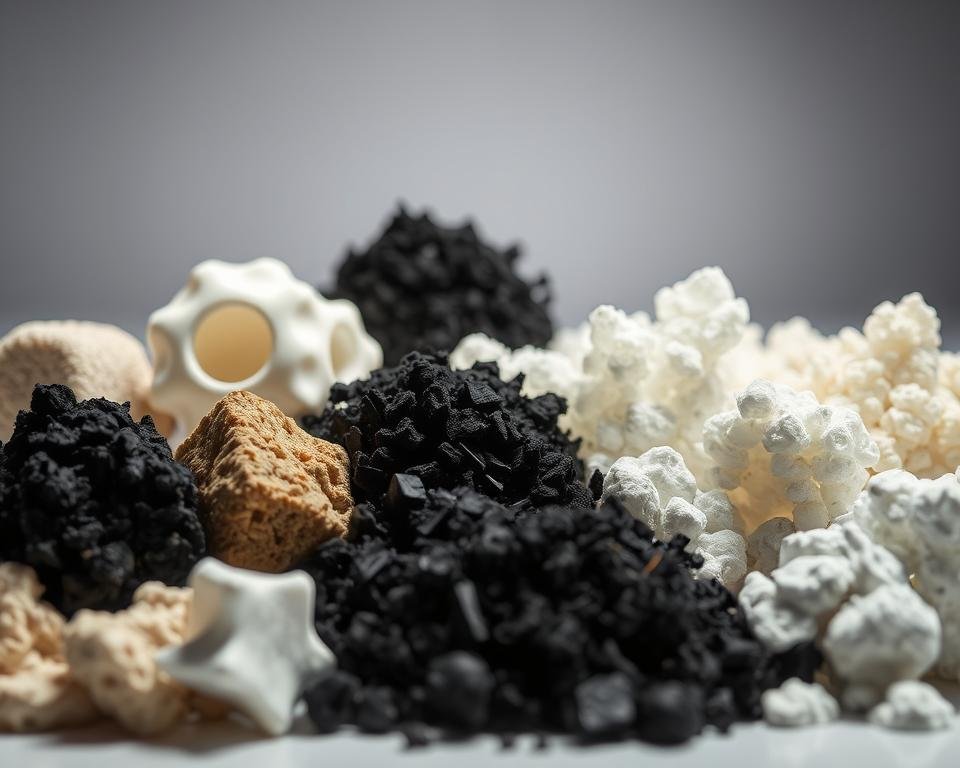
Biofiltration media can be split into organic and inorganic types. Each has its own benefits and drawbacks. Organic media, like compost or peat, create a home for microorganisms. This boosts the biological processes needed to remove pollutants.
Advantages of Organic Media
Organic media have several advantages:
- Enhanced microbial activity: They support a wide variety of microorganisms, key for breaking down pollutants.
- Improved water retention: Organic materials hold water well, preventing dry spots in the biofilter.
- Cost-effective: They can be made from natural, often local materials, saving money.
Benefits of Inorganic Media
Inorganic media, such as sand, gravel, or synthetic materials, also have benefits:
- Durability: They last longer and don’t break down as fast, ensuring steady performance.
- Chemical resistance: Inorganic media can handle many chemicals, making them good for industrial use.
- Easy to maintain: They need less upkeep because they don’t compact or decompose easily.
Choosing between organic and inorganic media depends on your biofiltration system’s needs. Consider the pollutants you’re treating and the system’s flow rates. Knowing the specifics of each media type helps you pick the best option for your system’s performance.
Evaluation Criteria for Media Performance
The success of a biofiltration system depends a lot on its media. When we check how well biofiltration media works, we look at several important things.
Surface Area and Porosity
The surface area and porosity of the media are key to its success. A bigger surface area lets more microorganisms grow, helping break down pollutants. The porosity also affects how fast water flows through and how long it stays, which is important for treatment.
Media with the right surface area and porosity can make the biofiltration process better. For example, media with high porosity can prevent clogs and improve airflow, which is good for aerobic processes.
Chemical Compatibility
Chemical compatibility is also very important when looking at biofiltration media. The media should not react with the chemicals in the wastewater. If it does, it can break down and the system won’t work as well.
It’s important to check the chemicals in the wastewater and pick media that can handle them. This keeps the biofiltration system working well.
Durability and Longevity
The durability and longevity of the media are key for the system’s long-term success. Media that lasts a long time without breaking down will keep working well.
Choosing media that is very durable and long-lasting can save money on maintenance. It also means you won’t have to replace it as often. This is good for keeping the system running smoothly.
Cost Considerations in Media Selection
Understanding the costs of different biofiltration media is key to making a good choice. When picking a biofilter media guide, think about both the initial and long-term costs. This helps you make a smart decision.
Initial Purchase Costs
The cost of buying biofiltration media is a big upfront expense. Prices vary based on the media’s type, durability, and how well it works. For example, synthetic media might cost more at first but could last longer and work better.
Long-term Maintenance Expenses
Long-term costs are also important. This includes the cost of replacing media, cleaning, and keeping the system running. Regular maintenance is essential for the system’s long-term efficiency and effectiveness.
Total Cost of Ownership
When calculating the total cost, consider both the initial and long-term expenses. Think about any savings from using more efficient media. For instance, media that saves energy or lasts longer can save money over time.
By looking at these costs carefully, you can make a better choice for your wastewater treatment needs. A good biofilter media guide will help you understand these costs and pick the most cost-effective option.
Case Studies in Effective Media Use
Looking at real-world examples, we learn a lot about using biofiltration media well. These stories cover different areas like treating wastewater from cities, industrial needs, and managing farm runoff. They show how the right media can make a big difference in many situations.
Municipal Wastewater Treatment
In cities, biofiltration media is key to cleaning wastewater. A small town in the U.S. used sand and activated carbon. This mix greatly cut down BOD (Biochemical Oxygen Demand) and TSS (Total Suspended Solids).
Industrial Applications
Places like food and drug factories make special wastewater. A food plant used synthetic media. It cleaned up organic pollutants and saved money.
Agricultural Runoff Management
Farms can pollute water with runoff. A farm in the Midwest used compost and wood chips. This cut down nutrient pollution in water.
| Application | Biofiltration Media Used | Pollutants Removed |
|---|---|---|
| Municipal Wastewater Treatment | Sand and Activated Carbon | BOD, TSS |
| Industrial Applications | Synthetic Media | Organic Pollutants |
| Agricultural Runoff Management | Organic Media (Compost, Wood Chips) | Nutrients, Sediments |
These examples show how picking the right biofiltration media is key. Knowing what media works best in different situations helps us improve our water treatment systems.
Tips for Implementing Biofiltration Media
To get the most out of your biofiltration system, careful planning and ongoing management are key. Choosing the right biofiltration media is essential for effective wastewater treatment.
Testing and Optimization
Before picking a biofilter media type, thorough testing is a must. You need to check pollutant removal efficiency and media longevity. For example, a study on biofiltration techniques showed that different media types greatly affect system performance.
The testing process should include:
- Evaluating the surface area and porosity of different media
- Assessing chemical compatibility to prevent adverse reactions
- Examining the durability and longevity of the media
| Media Type | Pollutant Removal Efficiency | Longevity |
|---|---|---|
| Sand and Gravel | High | Long |
| Activated Carbon | Very High | Medium |
| Synthetic Media | High | Long |
Adjusting for Seasonal Changes
Seasonal changes can impact biofiltration system performance. For instance, temperature and flow rate changes can alter pollutant removal efficiency. To adapt, it’s important to:
- Monitor system performance regularly
- Adjust media configurations as needed
- Implement strategies to maintain optimal microbial activity
Regular Monitoring Practices
Regular monitoring is vital for maintaining your biofiltration system’s effectiveness. This includes:
- Tracking pollutant removal rates
- Inspecting media condition
- Adjusting system parameters as necessary
By following these tips and being proactive in managing your biofiltration media, you can improve system performance. This leads to better wastewater treatment outcomes.
Conclusion: Making the Right Choice
Choosing the right biofiltration media is key for your system’s best performance. By understanding the factors we’ve discussed, you can make a smart choice that fits your needs.
Key Considerations
The type of media you pick depends on several things. These include the pollutants you want to remove, how fast water flows, and how long it stays in the system. Different media, like sand, gravel, and synthetic types, vary in how well they work and their cost.
For more details on picking the right media, check out the Global Seafood Alliance guide on biofilters.
Future Trends
The biofiltration industry is always changing. New trends will likely aim to make systems more efficient, cheaper, and greener. Keeping up with these changes will help you choose the best media for your system.

 Ammonia and Nitrite Control in Aquaculture
  TSS Removal: Keeping Your Water Clean and Clear
  Boost Aquaculture Yields with Effective Water Exchange
  Achieve Ideal Water pH for Aquaculture Farming
  Water Recirculation Best Practices in Aquaculture
  Mastering Salinity Management in Aquaculture