


Did you know sudden water temperature changes can kill fish? As a pond owner, keeping the right temperature is key for your fish’s health and survival.
Effective temperature control is vital because it affects fish’s metabolism and growth. I will share proven tips to help you manage your fish pond’s temperature. This will ensure a healthy environment for your fish.
Key Takeaways
- Understanding the importance of temperature control for fish health
- Identifying the ideal temperature range for your fish species
- Implementing practical tips for maintaining optimal temperature
- Recognizing the signs of temperature-related stress in fish
- Adjusting temperature management strategies according to seasonal changes
Understanding the Importance of Temperature Management
Keeping the water temperature right is key for a healthy fish pond. It’s important for the health, growth, and survival of your fish.
How Temperature Affects Fish Health
Temperature greatly affects fish health. It impacts their metabolism, growth rate, and resistance to disease. Fish rely on the water temperature to regulate their body heat.
Too cold water makes fish slow and more likely to get sick. Too warm water increases their metabolism and oxygen needs.
Regularly checking the temperature helps prevent problems. You can adjust the pond to keep a good temperature for your fish.
The Role of Temperature in Aquatic Ecosystems
Temperature is essential for the balance of aquatic ecosystems. It affects dissolved oxygen levels, nutrient cycling, and the presence of aquatic life. Each species needs a certain temperature range for health and diversity.
Knowing how temperature affects your pond helps you manage it better. This ensures a healthy home for your fish.
Factors Influencing Pond Temperature
Many things affect your fish pond’s temperature. It’s important to know these to manage it well. The temperature isn’t just one thing, but a mix of elements working together.
Sunlight Exposure and Its Effects
Sunlight is a big factor in pond temperature. How much sunlight your pond gets changes its temperature. Ponds in direct sunlight are warmer than shaded ones. You can use shades or change plants to control sunlight.
Depth and Size of the Pond
The pond’s depth and size matter too. Deeper ponds stay cooler because deeper water doesn’t change temperature as much. Bigger ponds also keep a steady temperature because they have more water.
| Pond Characteristics | Effect on Temperature |
|---|---|
| Depth | Deeper ponds have more stable temperatures |
| Size | Larger ponds tend to have more stable temperatures |
Surrounding Vegetation and Structures
Vegetation and structures around your pond also affect its temperature. Trees can shade your pond, cooling it. But, buildings or walls can reflect sunlight or block winds, changing the temperature. By planning your pond’s surroundings, you can keep the temperature right for your fish.
- Planting trees or installing shade structures can reduce direct sunlight.
- Removing or pruning vegetation can increase sunlight exposure.
- Strategically placing structures can help control wind direction and speed.
Understanding and managing these factors helps keep your fish healthy and thriving. It ensures they grow well in their environment.
Ideal Temperature Ranges for Different Fish Species
Keeping the right temperature in your fish pond is key. Each fish species likes a certain temperature range. Knowing these ranges helps keep your pond healthy.
Fish are very sensitive to temperature changes. Even small changes can hurt their health and growth. It’s important to know what temperature each fish needs.
Coldwater Fish
Coldwater fish, like trout, do best in cooler water. They like temperatures between 50°F to 60°F (10°C to 15°C). If the water gets too hot or cold, they can get stressed and sick.
Warmwater Fish
Warmwater fish, like bass and catfish, need warmer water. They prefer temperatures between 70°F to 80°F (21°C to 27°C). Keeping the water at this range is important for their health and growth.
Tropical Fish
Tropical fish, often found in aquariums, need warm water to thrive. They do best in temperatures between 75°F to 85°F (24°C to 29°C). Keeping the temperature steady is very important for their health.
To keep your fish pond healthy, you need to control the temperature. Knowing and using the right temperature for your fish helps them grow and stay healthy.
Seasonal Temperature Variations in Fish Ponds
It’s key to know how the seasons change your fish pond’s temperature. This ensures your fish stay healthy. As seasons shift, the pond’s temperature changes, affecting fish health and activity.
Winter Effects on Pond Dynamics
In winter, cold temperatures impact the pond’s ecosystem. Fish move slower and are less active. It’s important to watch the pond’s temperature and stop ice from covering it completely. This prevents oxygen loss.
Key winter management tips:
- Use aeration systems to maintain oxygen levels.
- Monitor water temperature regularly.
- Avoid overfeeding, as fish metabolism slows down.
Spring Warming and Fish Activity
Spring brings warmer water, making fish more active. This is a key time for pond care. The rising temperature can cause algae and water chemistry changes.
Spring management strategies:
- Gradually increase feeding as fish become more active.
- Monitor water quality parameters.
- Perform pond maintenance tasks such as cleaning and repairs.
Summer Heat and Oxygen Levels
Summer’s high temperatures stress fish and lower oxygen levels. It’s vital to manage the pond to keep oxygen levels up and prevent fish stress.
Summer care tips:
- Increase aeration to compensate for lower oxygen levels.
- Provide shade for fish to reduce heat stress.
- Monitor water temperature and quality regularly.
Autumn Cooling Trends
Autumn brings cooler water, changing fish behavior and metabolism. It’s a time of transition, getting the pond ready for winter.
| Season | Temperature Impact | Management Tips |
|---|---|---|
| Winter | Cold temperatures slow fish metabolism. | Use aeration, monitor temperature, avoid overfeeding. |
| Spring | Warming stimulates fish activity. | Gradually increase feeding, monitor water quality, perform maintenance. |
| Summer | High temperatures stress fish and reduce oxygen. | Increase aeration, provide shade, monitor temperature and quality. |
| Autumn | Cooling signals change in fish behavior. | Prepare pond for winter, reduce feeding, monitor water quality. |
Signs of Temperature Stress in Fish
It’s important to know the signs of temperature stress in fish to keep your pond healthy. Fish can change their behavior and body when they’re in the wrong temperature. This can harm their health.
Behavioral Changes in Fish
Fish under stress may act differently. They might:
- Swim erratically or seem tired
- Eat less or not at all
- Stay near the surface or pond edges
These signs can be small, so watching them closely is key. For more on how temperature affects fish, check out Chewy’s guide on hot weather issues in fish.
Physical Symptoms to Watch For
Stressed fish may also show physical signs. These include:
- Fading or discoloration of their scales
- Increased susceptibility to disease because their immune system is weak
- Visible signs of stress or injury, like clamped fins or hard breathing
Knowing these signs and acting fast can help your fish. Keeping a close eye on temperature and acting quickly is vital for a healthy pond.
Methods for Monitoring Pond Temperature
Keeping an eye on your fish pond’s temperature is key to its health. Regular checks help spot any temperature shifts. This lets you act fast to keep the environment stable.
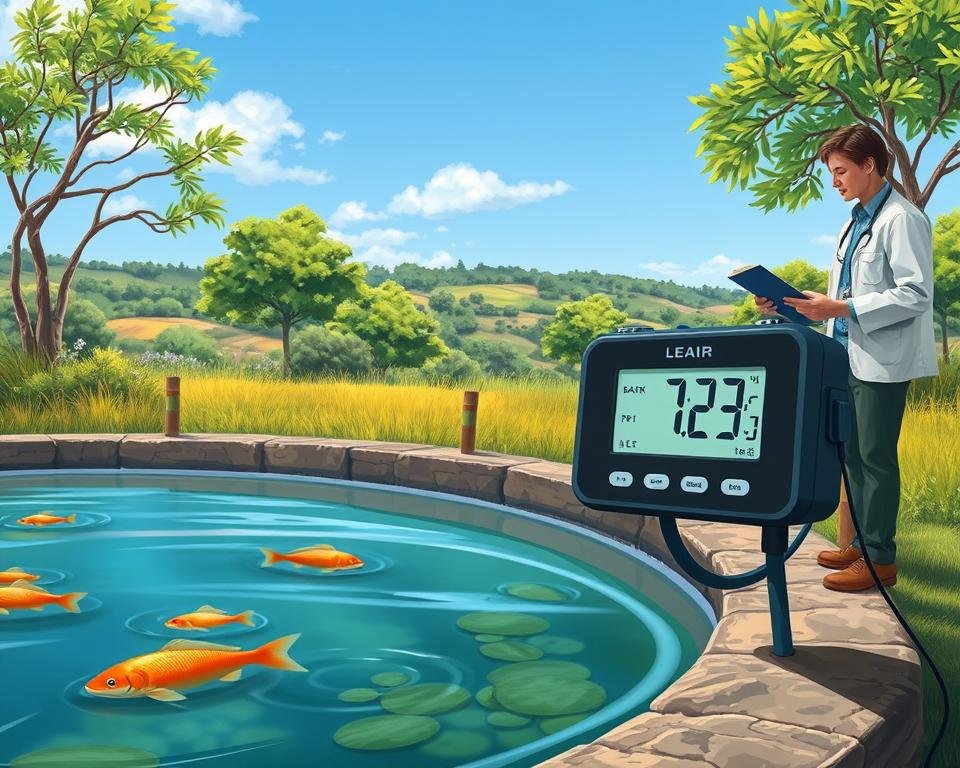
Temperature Sensors and Thermometers
Using temperature sensors and thermometers is a top way to monitor pond temperature. These tools give you accurate, up-to-the-minute readings. This info helps you manage your pond wisely.
Some popular types of temperature sensors include:
- Digital thermometers
- Submersible temperature probes
- Wireless temperature monitoring systems
Manual Observation Techniques
Manual checks are also good for tracking pond temperature. Watching your fish can tell you a lot. Changes in temperature can affect their swimming and eating habits.
Look out for these signs:
- Changes in fish swimming patterns
- Variations in feeding behavior
- Visible signs of stress or lethargy
Seasonal Benchmarking
Seasonal benchmarking is also vital. It helps you understand normal temperature changes in your pond. This way, you can spot any unusual shifts.
To do seasonal benchmarking, consider:
- Recording temperature readings over time to set a baseline
- Comparing current readings to past data
- Adjusting your management strategies as needed
By mixing these methods, you get a full picture of your pond’s temperature. This knowledge helps you keep your pond healthy and thriving.
Effective Strategies for Temperature Regulation
Keeping your fish pond at the right temperature is key. It’s important for your fish’s health. There are many ways to do this.
Using Shade Structures
Shade structures are a great way to control pond temperature. They block sunlight, which lowers the water temperature. Floating shade cloths or a pergola with plants are good and look nice too.
Experts say shade cuts down temperature and fights algae. It’s an easy and effective way to manage your pond’s temperature.
Water Aeration Techniques
Water aeration is also vital for temperature control. It circulates water, spreading heat evenly. Use fountains, aerators, or diffusers for this.
Aeration boosts oxygen levels, which is good for fish. “A well-oxygenated pond is a happy pond.” Good aeration is essential for keeping temperatures right and your pond healthy.
Adding or Reducing Vegetation
Controlling vegetation around your pond helps with temperature. Trees or shrubs provide shade, while water lilies cool the water. Less vegetation lets more sunlight in, warming the water in cold months.
- Planting native vegetation around the pond
- Using aquatic plants to shade the water surface
- Pruning or removing excessive vegetation as needed
These strategies help keep your fish pond at the right temperature. This ensures your fish stay healthy. Good temperature control is essential for a thriving pond.
Emergency Measures for Extreme Temperature Fluctuations
Keeping the pond temperature right for fish is key when temperatures swing wildly. Sudden changes can be deadly for fish. So, it’s important to have a plan ready.
When temperatures jump or drop fast, fish get stressed. This stress can lead to sickness or even death. Knowing how to control the temperature quickly is a must for pond owners.
Rapid Cooling Techniques
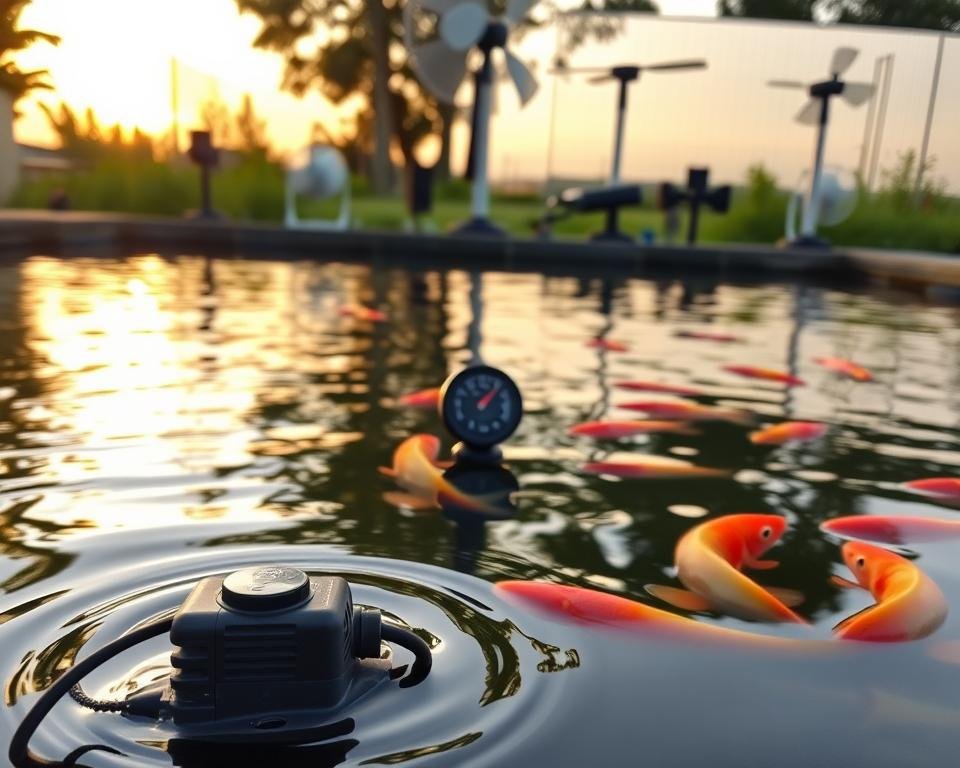
When it gets too hot, fast cooling methods are needed. One good way is to boost water aeration. This moves the water and cools it down.
- Using shade structures or floating shade cloths can cut down on sun exposure.
- Adding ice packs or cooling elements to the pond can cool it down a bit.
- More water movement from pumps or aerators spreads out the heat.
| Cooling Method | Effectiveness | Implementation Speed |
|---|---|---|
| Shade Structures | High | Moderate |
| Ice Packs | Moderate | Fast |
| Increased Aeration | High | Fast |
Gradual Heating Solutions
In cold areas, sudden cold snaps can harm fish too. Slow heating is needed to keep the water stable.
Insulated pond covers or thermal blankets help keep the heat in. Also, adding warmer water or using pond heaters can slowly warm it up.
- Keep an eye on the weather to know when it’s going to get cold.
- Use pond heaters or thermo-regulated heaters to keep the temperature steady.
- Use insulated covers to stop heat from escaping.
With these emergency steps, pond owners can keep their fish safe from extreme temperatures. This makes the pond a healthier place for them.
Long-Term Temperature Management Plans
Creating a long-term plan for managing your fish pond’s temperature is key. Temperature greatly affects fish health and the pond’s ecosystem.
To keep your pond healthy for the long haul, you need to regularly check and adjust things. Watch how the pond reacts to weather changes and tweak settings to keep it just right. This helps protect your fish from harm caused by temperature swings.
Assessments and Adjustments
Regular checks can spot problems early. This way, you can tweak your plan to keep your pond in top shape. It’s a smart move to stay ahead of issues and keep your pond thriving.
Integrating Temperature Control
It’s important to mix temperature control into your pond care routine. Use shade, aeration, and manage plants to control the water’s temperature. A well-rounded approach helps create a healthy environment for your fish.

 Ammonia and Nitrite Control in Aquaculture
  TSS Removal: Keeping Your Water Clean and Clear
  Boost Aquaculture Yields with Effective Water Exchange
  Achieve Ideal Water pH for Aquaculture Farming
  Optimize Your Biofiltration System with the Right Media
  Water Recirculation Best Practices in Aquaculture