


Did you know that freshwater ecosystems cover less than 1% of the Earth’s surface? Yet, they are home to over 10% of all known species?
I will show you the unique traits of various freshwater organisms. This includes fish, amphibians, invertebrates, and microorganisms.
These diverse organisms have adapted to survive in different aquatic environments. They live in rivers, lakes, wetlands, and even groundwater.
Key Takeaways
- Freshwater ecosystems support a disproportionate number of species.
- Adaptations enable freshwater organisms to thrive in varied environments.
- Understanding freshwater biodiversity is key for conservation efforts.
- Freshwater species exhibit a wide range of characteristics.
- Conservation of freshwater biodiversity is essential for ecosystem health.
Introduction to Freshwater Ecosystems
Exploring freshwater ecosystems reveals their complexity. These habitats are more than just water; they are home to a variety of life. They support both plants and animals.
Freshwater habitats include rivers, lakes, wetlands, and groundwater. Each has its own special traits that support different kinds of life. Knowing what freshwater is is key to understanding these ecosystems.
Definition of Freshwater
Freshwater has low salinity, usually less than 1%. This makes it different from brackish or saltwater. It’s vital for humans, providing drinking water and supporting agriculture. It also offers homes for many species.
Each freshwater habitat is unique. Rivers flow constantly, while lakes are calm. Wetlands are areas where water and land meet, full of life.
Importance of Freshwater Habitats
Freshwater habitats are essential for many reasons. They filter water, control floods, and help fight climate change. They also support a wide range of aquatic life, some found only here.
These habitats are key for biodiversity. Many fish and amphibians need them to survive. They provide critical habitats for their early stages.
“Freshwater ecosystems are among the most biologically diverse on the planet, yet they are also among the most threatened.”
Let’s look at some important facts about freshwater ecosystems:
| Ecosystem Service | Description | Benefit |
|---|---|---|
| Water Filtration | Natural process that cleans water | Provides clean drinking water |
| Flood Control | Wetlands and rivers absorb excess water | Prevents damage to human settlements |
| Carbon Sequestration | Wetlands store carbon dioxide | Helps mitigate climate change |
It’s vital to understand and protect freshwater ecosystems. They are essential for biodiversity and our planet’s health.
Key Characteristics of Freshwater Species
Freshwater species have evolved remarkable traits. These traits help them thrive in diverse aquatic environments. They are key for their survival and shape their ecosystems.
Body Shape and Structure
The body shape of freshwater species is adapted to their environments. Fish in fast-flowing rivers have streamlined bodies for navigating strong currents. On the other hand, species in calm waters have flattened or rounded bodies for better maneuverability or stability.
Coloration and Camouflage
Coloration and camouflage are vital for freshwater species. They help avoid predators, sneak up on prey, or blend into their surroundings. Many species have color patterns that match their habitat, like the mottled brown color of some fish that blends into the riverbed.
Some species can change color in response to environmental cues or as a form of communication. Their ability to change color or texture is a testament to their incredible diversity. It shows how well they can thrive in various ecosystems.
Types of Freshwater Species
Freshwater ecosystems are home to a wide variety of life. They are filled with fish, amphibians, reptiles, and invertebrates. Each group has its own special features.
Fish Species
Fish are incredibly diverse in freshwater habitats. They have developed different adaptations to live in various places. Some fish swim fast in rivers, while others prefer the calm of lakes and ponds.
Freshwater fish also have different ways of reproducing. Some lay eggs in nests, while others give birth to live young.
| Fish Species | Habitat | Adaptation |
|---|---|---|
| Trout | Cold, fast-flowing rivers | Strong swimming capabilities |
| Catfish | Slow-moving rivers and lakes | Whisker-like barbels for sensing prey |
| Bass | Lakes and slow-moving rivers | Agile swimming for catching prey |
Amphibians and Reptiles
Amphibians, like frogs and salamanders, are key in freshwater ecosystems. They change from water babies to land creatures. Reptiles, like turtles and crocodiles, also live in water. They have special features to help them survive.
Turtles have shells to keep them safe. Crocodiles use their strong tails to swim well.
Invertebrates
Invertebrates, such as crustaceans and mollusks, are also diverse in freshwater. They have unique features to live in these places. For example, crayfish use claws for defense, and snails have shells to protect themselves.
Adaptations of Freshwater Species
Adaptations are key for freshwater species to survive and thrive. They help these creatures adapt to different aquatic environments. The traits of freshwater fauna are vital for their survival in changing conditions.
Physiological Adaptations
Freshwater species have unique traits to live in their environment. For example, fish have special ways to keep salt and water balanced in their bodies. This is important because freshwater has less salt than saltwater.
Fish use osmoregulatory strategies to get rid of extra water and keep salts. They have special cells in their gills and kidneys to control this balance.
Behavioral Adaptations
Freshwater species also have behavioral adaptations to survive. Some migrate to different places at different times or to avoid predators. This helps them stay safe and find food.
They also have different ways of eating. Some fish eat specific prey, while others eat whatever they can find. This changes based on what’s available.
| Adaptation Type | Description | Example |
|---|---|---|
| Physiological | Osmoregulation | Freshwater fish maintaining salt balance |
| Behavioral | Migration | Species migrating to breeding grounds |
| Behavioral | Feeding Strategies | Fish adjusting diet based on prey availability |
Understanding these freshwater fish traits and other adaptations is key. It helps us see the diversity and strength of freshwater species. By studying these, we can work better to protect and manage freshwater ecosystems.
Freshwater Fish Characteristics
Freshwater fish have unique traits that set them apart from other water creatures. These features help them live well in their homes.
Respiratory Adaptations
Freshwater fish have gills and special ways to breathe. Gills pull oxygen from the water, which is key for their survival. Some fish also have extra breathing parts, like labyrinthine organs, to get more oxygen.
The way gills work is very important for fish. This is because water can have different amounts of oxygen. Fish have big gills to catch as much oxygen as they can.
Reproductive Strategies
Freshwater fish have different ways to make more fish. Some, like salmon, swim up rivers to lay eggs. Others, like guppies, have live babies.
| Reproductive Strategy | Description | Examples |
|---|---|---|
| Migration | Fish migrate to specific spawning grounds | Salmon, Eels |
| Live Birth | Fish give birth to live young | Guppies, Mollies |
| Broadcast Spawning | Fish release eggs and sperm into the water column | Many species of minnows and darters |
These ways of making more fish are very important. They help fish survive and grow in tough places.
Importance of Freshwater Biodiversity
Freshwater ecosystems are key to our environment’s health. They support a variety of life, from fish to amphibians. This variety makes these ecosystems strong and functional.
These habitats are not just homes for species. They also give us many benefits. Good water quality and plants are vital for supporting life in these areas.
Ecosystem Services Provided
Freshwater ecosystems give us many important services. These services help both our environment and society. Here are a few:
- Water Purification: They clean our water, making it safe for us to drink and use.
- Food Source: They provide food, like fish, which is essential for many people’s lives.
- Flood Control: Wetlands and other habitats help control floods by soaking up extra water.
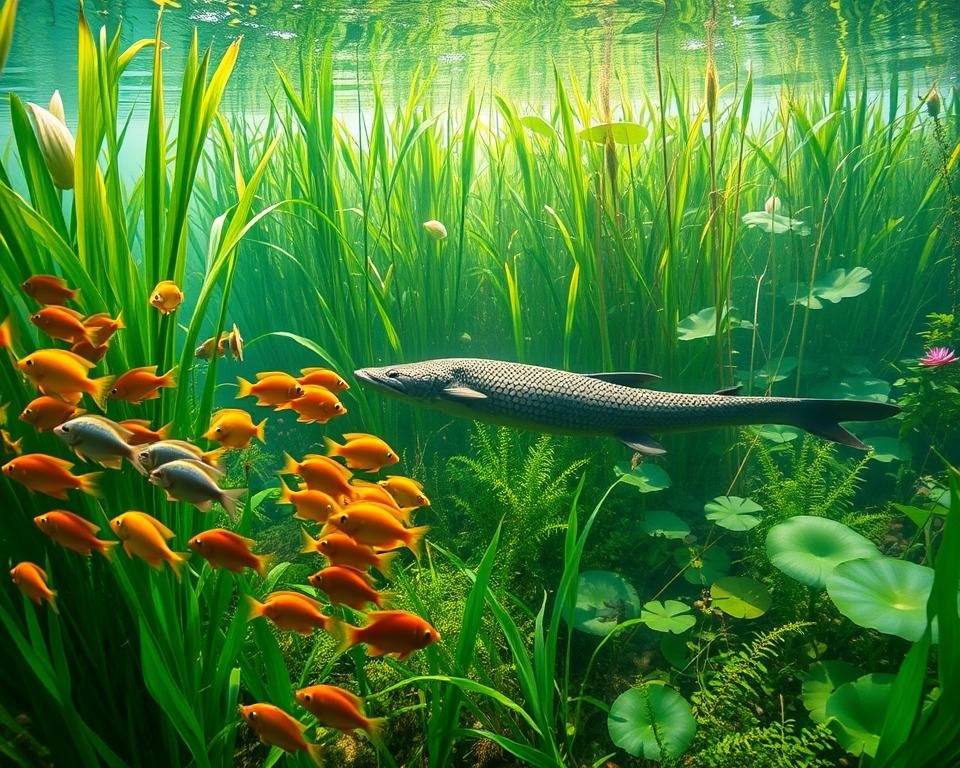
Experts say saving freshwater biodiversity is vital. It keeps our planet healthy and ensures we keep getting these important services. This shows why we must protect these areas for the future.
Threats to Freshwater Species
Freshwater species and their homes face many dangers. Some big challenges include:
- Habitat Destruction: Human actions like cutting down forests, building dams, and polluting harm their homes.
- Invasive Species: Non-native species can take over, competing with native ones for space and food.
- Climate Change: Changes in the weather can mess with water levels and flow, affecting where and how many species live.
We need to work together to save these ecosystems. Governments, groups, and local people must join forces to protect and fix freshwater habitats.
Unique Traits of Freshwater Crustaceans
Freshwater crustaceans are truly fascinating. They have special features that help them live in different water places. They play a big role in keeping their ecosystems healthy and full of life.
Anatomical Features
These creatures have a hard shell, many legs, and a complex body. For example, crayfish have strong shells that keep them safe. Their legs help them move, grab things, and even dig into the ground. Their body shape shows how well they can adapt to life in water.
A famous water expert said, “Crustaceans have amazing body parts that let them rule over many water places.” They come in all shapes and sizes, from tiny copepods to big crayfish and crabs.
Life Cycle and Development
The life journey of freshwater crustaceans is complex and varies by species. It includes stages from egg to larva to adult. For instance, some freshwater crabs have a larval stage that looks very different from their adult form. They need special conditions to survive.
- Eggs are laid in water or damp places.
- Larvae grow by shedding their skin several times.
- Adults may move long distances or burrow underground.
Their life cycle shows how tough and flexible they are. Knowing about their growth stages is key for protecting them and managing their numbers.
Exploring the world of freshwater crustaceans reveals their unique qualities. These traits are not just interesting but also essential for their ecosystems. Their ability to adapt, grow, and interact with their surroundings makes them a vital part of freshwater life.
Freshwater Invertebrates and Their Roles
In freshwater ecosystems, invertebrates are key for nutrient cycling and energy transfer. They include insects, crustaceans, and mollusks. These organisms are vital for the health and balance of freshwater habitats.
Types of Freshwater Invertebrates
Freshwater invertebrates are diverse, covering many taxonomic groups. Insects like mayflies and dragonflies live in these environments. Crustaceans, including crayfish and freshwater shrimp, are also common. Mollusks like freshwater mussels and snails play a big role too.
Each group has special traits and adaptations for living in freshwater. For example, many insects have aquatic larvae that show changes in water quality. This makes them good indicators of environmental health.
Ecological Importance
The role of freshwater invertebrates is huge. They are key for nutrient cycling, breaking down organic matter and recycling nutrients. This supports algae and aquatic plants, which feed higher levels of life.
Also, they are a main food source for many fish and other vertebrates. They help in decomposition, keeping the ecosystem healthy. By understanding their roles, we see the complexity and connection of freshwater biodiversity.
The Impact of Pollution on Freshwater Species
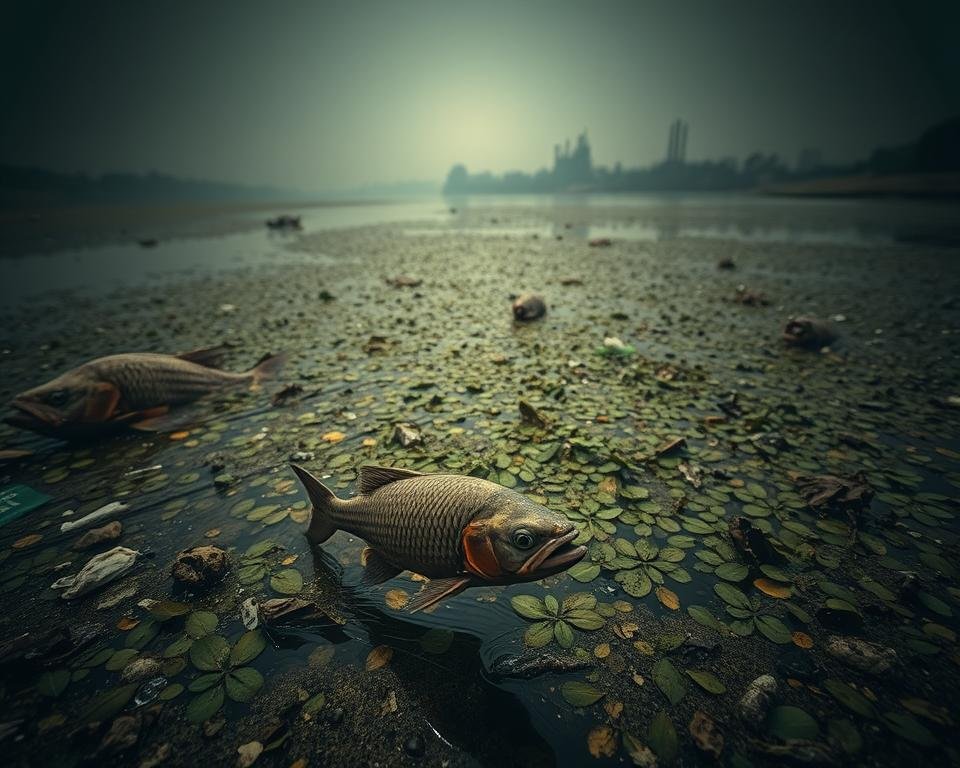
Freshwater habitats are full of life but face threats from pollution. Pollutants harm the species living in these areas.
Common Pollutants
Industrial waste, agricultural runoff, and sewage are common pollutants. They bring harmful chemicals and excess nutrients. This degrades water quality and harms biodiversity.
Agricultural runoff, for example, carries fertilizers and pesticides. These can cause too much algae growth. This depletes oxygen and kills aquatic life.
Effects on Biodiversity
Pollution affects freshwater biodiversity in many ways. It can harm aquatic life or change their homes. For instance, microplastics can mess with the eating and breeding of many species.
Pollution also changes which species can survive. It helps the hardier ones but harms the more sensitive ones. This can upset the delicate balance of the ecosystem and affect the food chain.
It’s vital to tackle pollution in freshwater habitats to save their biodiversity. By knowing where pollution comes from and how it affects us, we can find ways to reduce it. This will help protect the freshwater species.
Conservation Efforts for Freshwater Species
As we face environmental challenges, saving freshwater species is key. Freshwater ecosystems are full of life and vital for our planet. They offer many services that help both wildlife and people.
Protecting freshwater species needs a broad approach. One important strategy is setting up protected areas and reserves. These places give freshwater species a safe space to live, away from harm.
Protected Areas and Reserves
Protected areas are essential for saving freshwater life. They keep ecosystems balanced by protecting habitats. For example, freshwater reserves are vital for fish and other water creatures.
- Habitat restoration projects help rejuvenate degraded ecosystems.
- Regulatory measures, such as fishing quotas, protect vulnerable species.
- Research and monitoring programs inform conservation efforts.
The World Wildlife Fund says, “Protected areas are a cornerstone of conservation, providing refuge for threatened species and ecosystems.” This shows why we must keep supporting these efforts.
Community Involvement and Education
Getting communities involved is also vital for saving freshwater. Teaching locals about the value of freshwater life can inspire them to care for it.
Projects led by communities have been successful. For instance, efforts to clean up pollution and fix habitats have helped many freshwater species recover.
- Community education programs raise awareness about freshwater conservation.
- Collaborative management plans involve local stakeholders in decision-making.
- Sustainable practices, such as eco-friendly fishing methods, are promoted.
By working together on protected areas, community projects, and education, we can protect freshwater species. This helps keep our planet’s freshwater biodiversity healthy.
Freshwater Species in Different Regions
Freshwater ecosystems around the world are home to many species. From North America’s rivers to tropical wetlands, each place has its own set of species. These species have different traits based on their environment.
North America’s Diverse Freshwater Life
North America has a wide range of freshwater species. This includes fish, amphibians, and invertebrates. The Great Lakes and the Mississippi River are just a few of the diverse habitats.
For example, the freshwater fish traits in this region are quite varied. They have different ways of eating and breeding.
| Species | Habitat | Notable Traits |
|---|---|---|
| Largemouth Bass | Warm, slow-moving waters | Aggressive feeding behavior |
| Brook Trout | Cold, well-oxygenated streams | Sensitive to water quality changes |
| American Bullfrog | Ponds, lakes, and slow-moving streams | Voracious appetite, large size |
The aquatic organism features in North America’s freshwater ecosystems are shaped by many factors. These include water temperature, flow rate, and vegetation. These factors help species thrive in their habitats.
Tropical Freshwater Ecosystems
Tropical regions are known for their rich biodiversity. Freshwater ecosystems in these areas host a vast array of species. The warm waters and high rainfall support complex food webs and diverse aquatic organism features.
The Amazon River Basin is famous for its variety of fish species. Many of these fish have evolved unique freshwater fish traits to survive in this dynamic environment.
But it’s not just fish that are diverse in tropical ecosystems. Amphibians, reptiles, and invertebrates also play important roles. Their adaptations, like specialized feeding mechanisms and breeding behaviors, show the complex relationships within these ecosystems.
Future of Freshwater Species
The future of freshwater species is closely tied to the health of their habitats. These habitats face big threats from climate change and other environmental issues. Understanding freshwater biodiversity characteristics is key to fighting these threats.
Changing Environmental Conditions
Water temperatures are rising, and rain patterns are changing. This is upsetting the balance of freshwater ecosystems. About 4% of river fish species might not survive with just 1.5°C of warming. This number jumps to 36% with 3.2°C warming.
These changes will affect where and how freshwater species live and survive.
Sustainable Management Strategies
To tackle these issues, we need to create and use sustainable management plans. These plans should protect freshwater habitats. This means setting up protected areas, getting communities involved in conservation, and cutting down pollution and habitat loss.
By working together, we can protect freshwater species and their homes for the long term.

 Hatchery Requirements for Aquaculture by Species
  Species Stocking Density in Aquaculture: Achieving the Right Balance
  Top High-Value Aquaculture Species to Grow
  Catfish Production Systems: Strategies for Profitable Aquaculture
  Aquaculture Water Temps: Ideal for Fish Farming
  Trout Culture Methods: A Comprehensive Guide