


Aquaculture is growing fast, with the global market expected to hit $245 billion by 2027. But, it’s all about finding the right balance in stocking density. This ensures the health and productivity of aquatic life.
As an aquaculture pro, I’ve learned how optimal stocking density affects a farm’s success. Too many fish can cause stress, disease, and slow growth. But, not enough fish means wasted resources.
Finding the perfect balance is key. In this article, we’ll look at what affects stocking density and how to manage it well.
Key Takeaways
- Understanding the importance of optimal stocking density in aquaculture.
- Factors that influence stocking density and their impact on aquatic life.
- Best practices for managing stocking density.
- The role of stocking density in maintaining healthy aquatic ecosystems.
- Strategies for optimizing stocking density in different aquaculture systems.
Understanding Species Stocking Density
Stocking density is key in aquaculture. It’s about how many fish you have in a certain amount of water or space. It affects the health and growth of fish and the success of aquaculture.
What is Stocking Density?
Stocking density is how many fish you have in a certain amount of water or space. It’s measured in fish per cubic meter or pounds per acre. Managing it well keeps water quality good and fish healthy.
The Aquaculture Stewardship Council says stocking density is important for fish welfare. It affects how well fish live in farms.
Importance in Aquaculture
Stocking density is very important in aquaculture. It affects fish health, growth, and welfare. Too many fish can stress them out and make them sick. But the right number can help them grow better and stay healthy.
Stocking density matters in several ways:
- Water Quality: Too many fish can make water quality worse because of more waste.
- Fish Health: Too crowded fish get stressed and are more likely to get sick.
- Farm Productivity: The right number of fish can make them grow faster and use less food, making the farm more productive.
Factors Influencing Stocking Density
Several things affect how many fish you can have in an aquaculture operation. These include:
- Species: Different fish can handle being crowded differently.
- Water Quality: How well you keep the water clean affects how many fish you can have.
- System Design: The type of system you use, like RAS or ponds, changes how many fish you can have.
- Management Practices: Keeping a close eye on things can let you have more fish.
Knowing these factors helps aquaculture operators decide on stocking density. They can find a balance between making more fish and keeping them healthy.
The Impact of Density on Fish Health
Stocking density is key to fish health in aquaculture. High densities can cause many problems. These issues affect fish well-being.
Stress Levels in Crowded Environments
Crowded spaces in aquaculture raise stress levels in fish. Stress comes from many sources. These include fighting for food, poor water, and aggression.
High stress weakens fish immunity. This makes them more likely to get sick.
Stress in crowded areas comes from:
- Too little water per fish
- Lack of hiding spots or barriers
- Poor water quality
Disease Spread and Prevention
Disease is a big worry in dense aquaculture. Too many fish together increases disease risk. Disease prevention is vital.
Preventing disease spread involves:
- Watching fish health closely
- Quarantining new or sick fish
- Keeping water quality high
Growth Rates and Feed Conversion
Growth rates and feed conversion ratios are affected by density. More fish means less food and stress. This slows growth and hurts profits.
To improve growth and feed use:
- Match feeding to density
- Check fish growth and adjust feed
- Keep water quality good
Understanding stocking density’s effects helps aquaculture succeed. It ensures fish health and business sustainability.
Species-Specific Stocking Guidelines
For a thriving aquaculture operation, it’s key to follow species-specific stocking guidelines. Different fish have unique needs for stocking density. Knowing these needs is vital for their health and productivity.
Tilapia Stocking Density Recommendations
Tilapia are widely farmed around the world. The right stocking density for tilapia depends on the farming system and growth stage. A general recommendation is 1-3 kg/m³ for grow-out systems.
In intensive tilapia farming, higher densities are possible with good water quality management. For example, in RAS, tilapia can reach up to 10 kg/m³ or more. This is only possible if water quality is closely monitored.
Salmon and Trout Density Parameters
Salmon and trout need specific conditions for growth. Their stocking density is lower than tilapia because they need more oxygen.
Salmon can be stocked at 5-20 kg/m³, depending on their life stage and farming system. Trout can be stocked at 10-30 kg/m³ in systems with plenty of oxygen.
| Species | Recommended Stocking Density (kg/m³) | Maximum Stocking Density (kg/m³) |
|---|---|---|
| Tilapia | 1-3 | 10+ |
| Salmon | 5-20 | 25 |
| Trout | 10-30 | 35 |
Shrimp Stocking Considerations
Shrimp farming has its own challenges due to specific water quality and habitat needs. Shrimp stocking density varies a lot, depending on the species and farming method.
In intensive shrimp farming, densities can be 100-500 shrimp/m² in ponds. In RAS, densities can be even higher. But, it’s critical to manage water quality well to avoid diseases.
https://www.youtube.com/watch?v=Ye0aEttVS1A
By following these species-specific guidelines, aquaculture operators can improve their production. They can also ensure the health and welfare of their fish.
Calculating the Optimal Stocking Density
Finding the right stocking density is a detailed task. It needs looking at many factors. Aquaculture operators must balance these elements for their stock’s health and productivity.
Tools and Formulae for Calculations
There are tools and formulae to figure out the best stocking density. These include simple ratios and complex models. The models consider water flow, oxygen, and feed.
A basic formula might divide total biomass by culture system volume. But, more detailed models are needed for different species and systems.
Key factors to consider in stocking density calculations include:
- Species-specific requirements
- Water quality parameters
- System design and capacity
- Desired growth rates and production levels
Role of Water Quality
Water quality is key in finding the best stocking density. It’s important to keep oxygen, ammonia, nitrite, and pH levels right. Regular tests help spot problems early.
Good water quality is not just for fish health. It also boosts aquaculture efficiency.
Adjusting for System Type (RAS vs. Ponds)
The type of aquaculture system affects stocking density. RAS systems control water quality and temperature better, allowing for higher densities. Pond systems, on the other hand, rely on natural processes and need lower densities.
Knowing each system’s strengths and weaknesses is vital for stocking density decisions.
Environmental Factors Affecting Stocking Density
Environmental conditions play a big role in choosing the right stocking density for aquaculture. They affect fish health and how well they grow. It’s important for aquaculture operators to think about these factors to improve their stocking plans.
Water Temperature and Quality
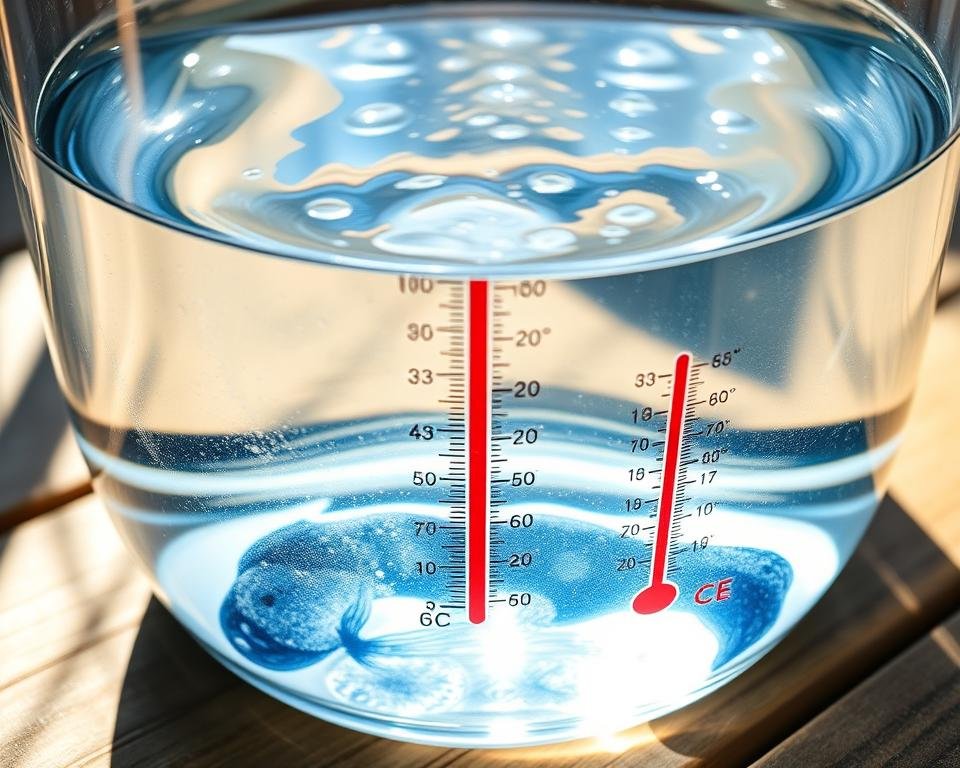
Water temperature is key for fish health and growth. Each fish species likes a certain temperature range. If it’s too hot or cold, they can get stressed and grow less.
Tilapia do best in warm water, between 75°F to 86°F (24°C to 30°C). Trout, on the other hand, prefer cooler water, below 68°F (20°C).
Water quality is also very important. Bad water can cause diseases and slow down growth. It’s important to check and keep the water quality right for healthy fish.
Key water quality parameters to monitor:
- pH levels
- Ammonia concentration
- Nitrite and nitrate levels
- Dissolved oxygen levels
Oxygen Levels in Stocking Density Decisions
Oxygen levels are very important when deciding how many fish to stock. Fish need enough oxygen to live well. Too many fish can use up all the oxygen in the water.
To keep oxygen levels good, aquaculture operators can:
- Use more aeration and oxygen systems
- Improve water circulation and change rates
- Watch the water temperature, as it affects how much oxygen is in the water
By managing water temperature, quality, and oxygen, aquaculture operators can find the best stocking density. This leads to healthier fish and more successful operations.
Economic Considerations in Stocking Density
Economic factors are key in setting stocking density in aquaculture. They affect both fish health and farm profits.
Farmers must do a cost-benefit analysis for higher stocking densities. Higher densities can mean more production and profits. But, they also raise disease risks and stress on fish, harming growth and survival.
Cost-Benefit Analysis of Higher Density
When looking at higher stocking densities, farmers weigh benefits against costs. Benefits include more production and lower costs per unit. But, costs include more feed, higher mortality, and disease losses.
| Factor | Lower Density | Higher Density |
|---|---|---|
| Production Volume | Lower | Higher |
| Disease Transmission Risk | Lower | Higher |
| Feed Conversion Ratio | Better | Poorer |
| Initial Investment | Lower | Higher |
Market Demand and Species Popularity
Market demand and species popularity shape stocking density choices. Farmers focus on species in high demand for better prices. Knowing market trends and consumer likes is key.
For example, high demand for a species might lead to higher stocking. But, this must be weighed against the risks and costs of such densities.

By studying market demand, species popularity, and cost-benefit analysis, farmers can make better choices. They balance economic needs with sustainable and responsible farming.
Best Practices for Managing Stocking Density
To get the best results, aquaculture operators need to follow key practices. These practices focus on keeping fish healthy and the environment sustainable. Managing stocking density well is key to a successful aquaculture operation.
Monitoring Fish Behavior and Growth
It’s important to watch how fish behave and grow to check if stocking density is right. By looking at how fish eat and swim, operators can spot problems early. Keeping an eye on growth helps adjust stocking levels for better production.
Key indicators to monitor include:
- Feeding behavior and appetite
- Growth rates and size distribution
- Signs of stress or disease
Regular Water Quality Testing
Testing water quality often is essential for a healthy fish environment. It’s important to check things like oxygen, ammonia, nitrite, and pH levels. These must stay within safe ranges for the fish being farmed.
| Parameter | Acceptable Range | Frequency of Testing |
|---|---|---|
| Dissolved Oxygen | 5-8 mg/L | Daily |
| Ammonia | <0.5 mg/L | Weekly |
| pH | 6.5-8.5 | Daily |
Implementing Adaptive Management Strategies
Adaptive management strategies help aquaculture operators deal with changes. This might mean adjusting how many fish are stocked, changing how they feed, or using new tech to improve water quality.
By following these best practices, aquaculture operators can improve stocking density. This leads to healthier fish and a more sustainable operation.
Stocking Density and Feed Management
As aquaculture grows, it’s key to match stocking density with good feed management. This keeps fish healthy and productive in crowded systems.
Feed Strategies for High Density
In crowded aquaculture, how you feed fish is very important. Optimized feeding practices help fish grow better and reduce waste and harm to the environment.
Feeding in crowded systems often means:
- Frequent, small meals to reduce competition and stress
- Tailored feed that meets the specific needs of the species
- Automated feeding systems for consistent and efficient feeding
A study on salmon farming showed that precision feeding can greatly improve how well feed is used. This makes the operation more sustainable.
Nutritional Needs of Densely Stocked Species
Fish in crowded areas need special nutrients because of the stress and extra energy use. Nutritional needs must be carefully looked at to support their health and immune system.
| Nutrient | Role in Fish Health | Consideration in High-Density Stocking |
|---|---|---|
| Protein | Essential for growth and repair | Higher protein requirements may be necessary |
| Omega-3 Fatty Acids | Supports immune function and stress resilience | Supplementation can be beneficial in high-density systems |
| Vitamin C | Important for immune response and stress management | Ensuring adequate levels is critical in dense stocking |
A leading aquaculture nutritionist said, “The nutritional profile of feed in high-density systems is not just about promoting growth. It’s also about keeping fish healthy and well.”
“The key to successful aquaculture lies in understanding the delicate balance between stocking density, feed management, and fish health.”
By knowing and meeting the nutritional needs of crowded fish, aquaculture can improve fish welfare. It can also reduce disease and increase productivity.
Case Studies on Optimal Stocking Density
Case studies from around the world offer insights into optimal stocking density in aquaculture. They show us best practices and challenges. This helps us learn from real-world examples.
Successful Aquaculture Operations
Many aquaculture operations have found success with optimal stocking densities. For example, a tilapia farm in Asia saw a 30% increase in production. A salmon farm in Europe cut mortality rates by 25% with careful density management.
- A tilapia farm in Asia increased production by 30% through optimal stocking density.
- A salmon farm in Europe reduced mortality rates by 25%.
- A shrimp farm in Latin America improved feed conversion ratios by 20%.
Lessons Learned from Density Challenges
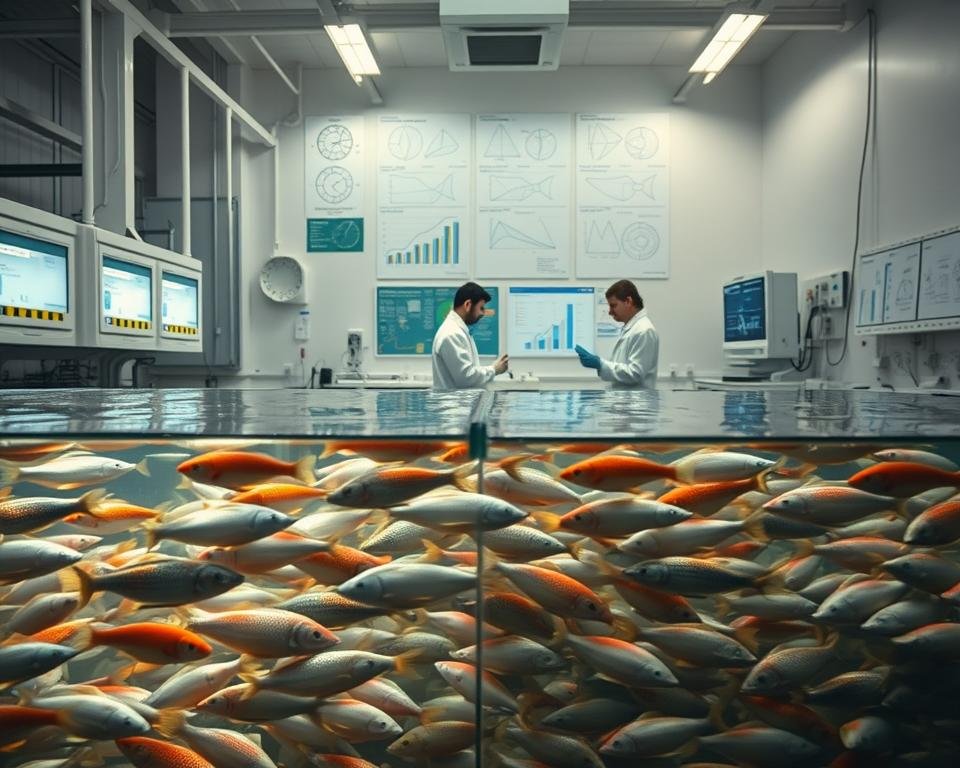
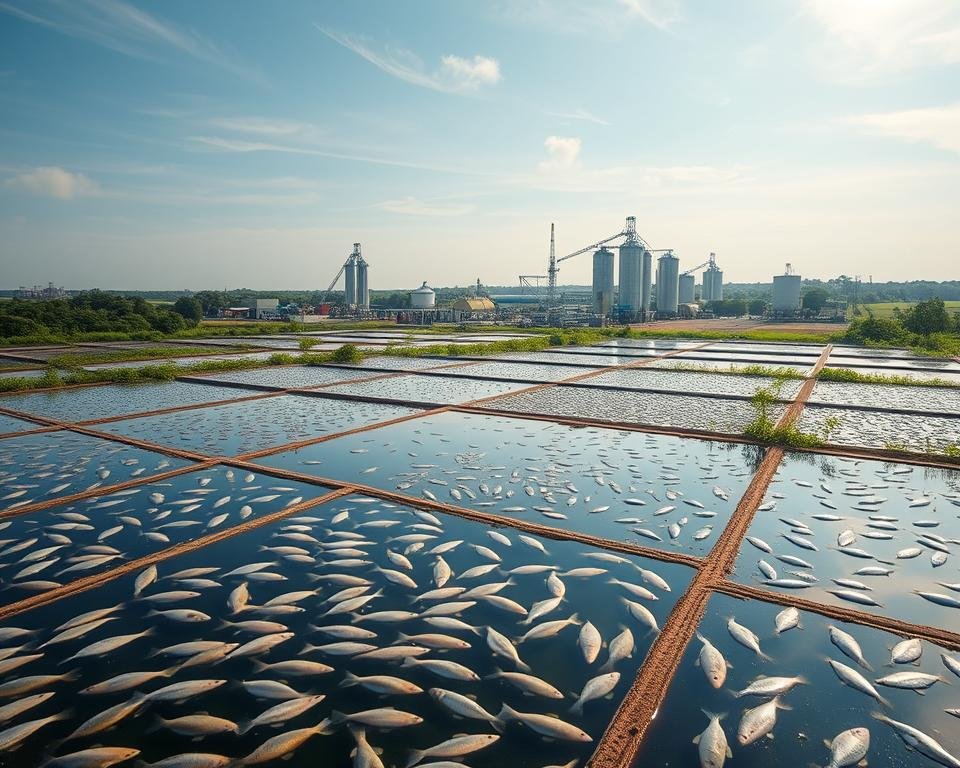
Not all operations have been successful. Some faced challenges with suboptimal stocking densities. For instance, a catfish farm in the United States had big disease outbreaks. This led to big economic losses.
These case studies teach us important lessons. They show the need for careful planning and monitoring.
The key lessons are:
- Monitoring water quality and adjusting stocking densities is key.
- Regular health checks and disease monitoring are essential.
- Adaptive management strategies help respond to changes in stocking density.
By learning from these lessons, aquaculture operators can manage their stocking densities better. This leads to optimal results.
Policy and Regulation in Aquaculture
Exploring aquaculture shows policy and regulation’s big impact on stocking density. The industry faces many guidelines and rules, changing by region and country.
The rules for aquaculture are complex, mixing local and federal laws. These laws aim to keep practices sustainable, protect the environment, and care for aquatic life.
Local and Federal Guidelines
Local and federal rules shape aquaculture practices. In the U.S., the USDA and NOAA are key in regulating it.
Local rules might demand certain water quality, waste handling, and species choices. Following these rules is key to avoid fines and damage to reputation.
Impact of Regulations on Stocking Density
Regulations directly affect stocking density choices in aquaculture. For example, some rules set max densities for species or require water and fish health checks.
The table below shows some stocking density rules in different areas:
| Region | Species | Maximum Stocking Density |
|---|---|---|
| United States | Catfish | 1.2 kg/m3 |
| Europe | Salmon | 15 kg/m3 |
| Asia | Tilapia | 2.5 kg/m3 |
By following these rules, aquaculture can be both sustainable and responsible.
In summary, policy and regulation are key in the aquaculture world, affecting stocking density. Knowing local and federal rules helps operators make choices that balance economy, environment, and society.
Future Trends in Aqua Farming Density
The aquaculture industry is on the verge of a new era. This is thanks to better stocking techniques and sustainable practices. It’s key to know the trends that will shape aqua farming density’s future.
Innovations in Stocking Techniques
New stocking techniques are emerging in aqua farming. Recirculating Aquaculture Systems (RAS) and Integrated Multi-Trophic Aquaculture (IMTA) are becoming popular. They help optimize stocking density and reduce environmental impact.
These systems improve water quality and lower disease risks. This lets farmers keep fish healthier at higher densities. I think these technologies are vital for meeting seafood demand sustainably.
Sustainable Practices for Future Aquaculture
Sustainability will keep driving aquaculture’s future. Integrated pest management and eco-friendly feed are becoming common. These practices keep the environment healthy and improve farmed species’ welfare.
There’s also a push for traceability and transparency in aquaculture. This trend will affect stocking density as consumers want sustainably and responsibly sourced products.
By embracing these sustainable practices and innovations, aquaculture can have a resilient and productive future. It will be able to meet global seafood demand responsibly.
Conclusion: Finding the Right Balance
Finding the right balance in stocking density is key for successful aquaculture. We’ve seen how density affects fish health, growth, and the environment. This is very important.
Key Takeaways
To find the best stocking density, know your species’ needs. Keep an eye on water quality and adjust for your system. These steps help keep your aquatic life healthy and productive.
Future Directions
Effective density management is an ongoing task. It needs constant monitoring and adjustments. As aquaculture grows, using new techniques and sustainable practices is vital. This keeps your operations competitive and sustainable for the future.

 Hatchery Requirements for Aquaculture by Species
  Top High-Value Aquaculture Species to Grow
  Catfish Production Systems: Strategies for Profitable Aquaculture
  Aquaculture Water Temps: Ideal for Fish Farming
  Trout Culture Methods: A Comprehensive Guide
  The Pangasius Grow-out Cycle: What You Need to Know