


Did you know that tilapia is one of the most eaten fish globally? The market is expected to hit $13.4 billion by 2025. As an aquaculture pro, I’m thrilled to share my guide. It’s packed with tips to boost your yields and make your farm run smoothly.
In this article, we’ll dive into the key parts of tilapia farming. We’ll cover everything from the basics to selling your catch. This guide is for both new and experienced farmers. It’s here to give you the tools and know-how to thrive.
Key Takeaways
- Understand the basics of tilapia farming and its huge market
- Learn effective techniques for maximizing yields
- Discover how to streamline your aquaculture venture
- Get insights into harvesting and marketing your crop
- Gain the knowledge and expertise needed to succeed in tilapia farming
Understanding Tilapia: An Overview
Tilapia is a widely farmed fish worldwide. Knowing its characteristics is key for successful farming. Let’s dive into the basics of tilapia farming.
What is Tilapia?
Tilapia is a freshwater fish from the Cichlid family. It’s known for its mild taste and nutritional value. This makes it a favorite among many.
It’s packed with proteins, low in fats, and rich in vitamins and minerals.
Nutritional Benefits of Tilapia
Tilapia is great for those who care about their health. It’s full of protein, vitamins, and minerals. It’s also low in calories and saturated fats.
Here are some key nutrients in tilapia:
- Protein: Essential for muscle growth and repair
- Vitamin D: Important for bone health
- Niacin: Helps in converting food into energy
- Selenium: Acts as an antioxidant to protect cells from damage
Popular Tilapia Species for Farming
Not all tilapia species are good for farming. The most farmed include Nile Tilapia, Blue Tilapia, and Mozambique Tilapia. Each has its own benefits.
Nile Tilapia grows fast and can handle many water conditions. This makes it a top choice for farmers. Knowing the different species is important for farming success.
While tilapia farming has many benefits, it also faces challenges. These include managing diseases and keeping water quality good. Overcoming these challenges is key for sustainable and profitable farming.
Setting Up Your Tilapia Farm
To make your tilapia farm a success, getting the setup right is key. You’ll need to make important decisions that affect your farm’s productivity and sustainability.
Choosing the Right Location
The location of your tilapia farm is very important. Look for a place with a good climate, water, and market access. Tilapia do best in temperatures between 64°F and 90°F (18°C to 32°C).
- Proximity to a reliable water source
- Accessibility to markets for the sale of your tilapia
- Land topography suitable for pond construction
For more detailed guidance on raising tilapia, you can visit this resource for additional tips and techniques.
Water Source Considerations
The quality and quantity of water are vital for your tilapia farm. Make sure your water source is free from pollutants and has a consistent supply. Consider the following:
- Water quality testing to ensure it’s safe for tilapia
- Adequate water volume to maintain pond levels
- Reliability of the water source throughout the year
Constructing the Ideal Pond
The design and construction of your tilapia ponds are critical. Think about:
- Pond size and depth suitable for the number of tilapia you’re raising
- Efficient water circulation and aeration systems
- Effective drainage systems to manage water quality
By focusing on these key aspects, you can create a productive and sustainable tilapia farm. Proper planning and execution are essential for success.
Tilapia Farming Methods
Tilapia farming is becoming more popular, and knowing the different methods is key. The method you choose can affect your farm’s success, from how much you produce to how much you make.
Pond Culture
Pond culture is a traditional and common way to farm tilapia. It uses earthen ponds, either natural or made. This method is simple and costs less to start than others.
Advantages of Pond Culture:
- Lower initial investment
- Simpler to manage
- Can be integrated with other agricultural practices
But, pond culture has its downsides. It needs a lot of land and can have water quality problems if not managed well.
Cage Farming
Cage farming raises tilapia in cages in a larger body of water. This method uses water that’s not good for ponds. It’s a good choice for using water that’s hard to farm with.
Benefits of Cage Farming:
- Utilization of existing water bodies
- Flexibility in scaling production
- Potential for improved water quality management
But, cage farming needs careful planning and management. It’s important for the fish’s health and the ecosystem.
Recirculating Aquaculture Systems
Recirculating Aquaculture Systems (RAS) are a modern and advanced way to farm tilapia. RAS uses water over and over, saving a lot of water and reducing waste.
Key Features of RAS:
| Feature | Description | Benefit |
|---|---|---|
| Water Reuse | Water is treated and reused within the system | Reduced water consumption |
| Biosecurity | Closed system reduces disease introduction | Improved fish health |
| Environmental Control | Temperature, pH, and other parameters are controlled | Optimal growth conditions |
RAS has many benefits, like better biosecurity and less environmental harm. It also lets you control water quality. But, it costs a lot to start and needs a lot of energy.
In conclusion, picking the right tilapia farming method depends on many things. These include what resources you have, how big you want to be, and your environmental goals. Knowing the good and bad of each method helps farmers make smart choices for their farms.
Essential Equipment for Tilapia Farming
Successful tilapia farming needs the right equipment for fish growth. As a farmer, you must invest in key items for your farm’s health and productivity.
Aeration Systems
Aeration systems are vital for tilapia farming. They keep water oxygen levels high. This is essential for tilapia to thrive.
Paddlewheel aerators are often used because they’re efficient. They mix the water surface to increase oxygen. Diffused aeration systems release bubbles to boost oxygen transfer.
Feeding Equipment
Feeding equipment is critical for tilapia farming. The choice depends on your farm’s size and fish needs. Automatic feeders are popular for their ease and cost savings.
Some farms use demand feeders. These feeders release food when fish activate them. This reduces waste and improves feed efficiency.
Water Quality Testing Tools
Water quality monitoring is key in tilapia farming. Testing kits measure pH, ammonia, nitrite, and oxygen levels. Regular tests help spot issues early and keep the water healthy for your fish.
| Equipment | Purpose | Benefits |
|---|---|---|
| Aeration Systems | Maintain oxygen levels | Improved fish health, increased productivity |
| Feeding Equipment | Dispense feed efficiently | Reduced labor costs, improved feed conversion |
| Water Quality Testing Tools | Monitor water parameters | Early issue detection, maintained water quality |
Breeding Tilapia
Tilapia breeding is a complex process. It involves choosing the right breeding stock and using effective spawning methods. As a tilapia farmer, it’s key to understand breeding well for your farm’s success.
Selecting Breeding Stock
Choosing the right breeding stock is the first step. I look for tilapia with traits like fast growth, disease resistance, and high fertility. The quality of your breeding stock affects your farm’s health and productivity.
Key Considerations:
- Genetic diversity to avoid inbreeding
- Growth rates and market size
- Disease resistance
Spawning Methods
There are several spawning methods in tilapia farming. These include natural, semi-artificial, and artificial spawning. I find mixing these methods works best, depending on your farm’s needs and resources.
Rearing Fry and Fingerlings
After spawning, rearing fry and fingerlings is key. This means providing the right water conditions, nutrition, and care for high survival rates. I keep a close eye on water quality and feed them well.
Best Practices:
- Maintain optimal water temperature and pH levels
- Provide high-quality feed
- Monitor for signs of disease or stress
Feeding and Nutrition
Feeding and nutrition are key in tilapia farming. They affect the health and growth of the fish. Knowing what your fish need is vital for success.
Tilapia Dietary Requirements
Tilapia need a mix of protein, carbs, and fats. Their diet changes as they grow. Young fish need more protein for growth.
A good diet for tilapia includes:
- Protein: 25-30% for juveniles, 20-25% for adults
- Carbohydrates: 20-30%
- Fats: 5-10%
Types of Fish Feed
There are many fish feeds for tilapia farming. These include:
| Feed Type | Description | Advantages |
|---|---|---|
| Commercial Pellets | Formulated feed that is nutritionally balanced | Convenient, easy to store |
| Farm-made Feed | Feed made on the farm using locally available ingredients | Cost-effective, customizable |
| Live Feed | Live organisms such as brine shrimp or plankton | High nutritional value, stimulates natural feeding behavior |
Feeding Strategies for Optimal Growth
To get the best growth, use smart feeding strategies. This means:
- Feeding frequency: 2-3 times a day for juveniles, 1-2 times a day for adults
- Feeding rate: 3-5% of body weight per day
- Monitoring feed consumption and adjusting as necessary
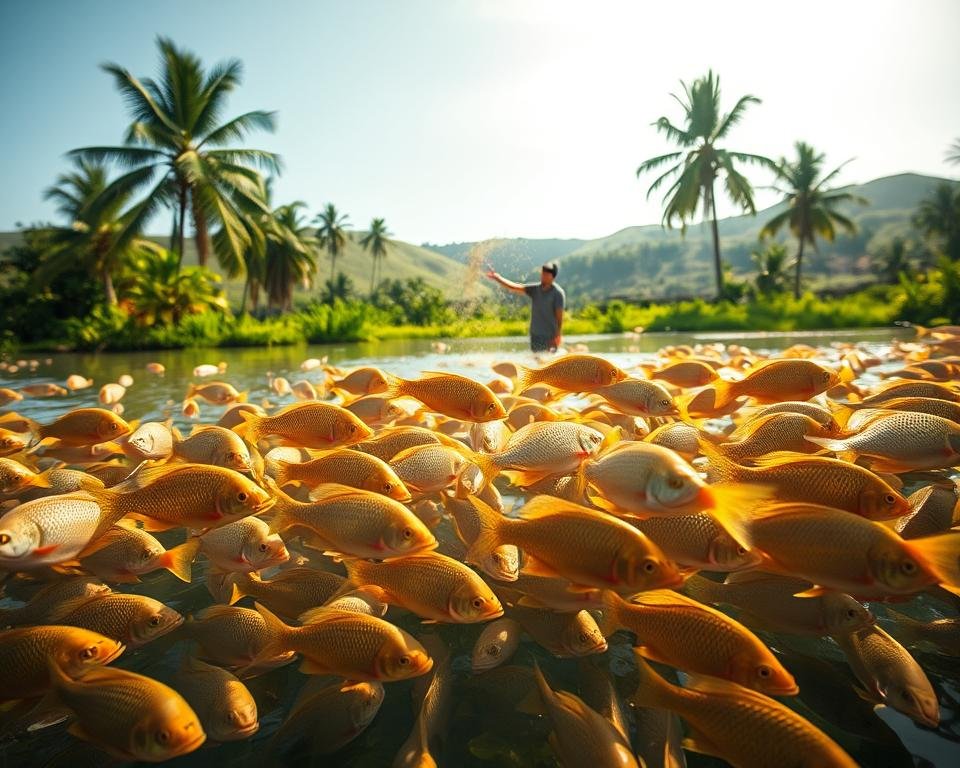
By knowing what tilapia need and using smart feeding, farmers can boost fish health and growth. This leads to a more successful farm.
Managing Water Quality
Keeping water quality right is key for tilapia farming success. Water quality impacts tilapia health, growth, and survival. As a farmer, knowing the important water quality factors is vital.
Key Water Quality Parameters
Checking water quality means looking at pH, ammonia, nitrite, and oxygen levels. Each is important for tilapia health.
- pH levels affect tilapia health and comfort.
- Ammonia and nitrite can harm fish if not controlled.
- Dissolved oxygen is vital for tilapia to breathe.
Maintaining pH Levels
The pH of your pond or tank is very important. Tilapia do best in slightly alkaline water, with pH between 7 and 9. You need to check and adjust pH often.
To keep pH right, try these steps:
- Test the pH of your water regularly.
- Use pH adjusters to get the pH in the right range.
- Make sure water moves well to stop pH from getting stuck.
Controlling Algae Growth
Algae grow naturally in tilapia farms. Some algae are good, but too much is bad. It’s important to keep algae under control for your tilapia’s health.
| Method | Description | Effectiveness |
|---|---|---|
| Shading | Less sunlight helps stop algae growth. | Moderate |
| Circulation | Better water flow stops algae in its tracks. | High |
| Algaecides | Chemicals control algae growth. | High |
Understanding and managing water quality is essential for a successful tilapia farm. Regular checks and quick action are key to keeping your tilapia healthy and thriving.
Disease Prevention and Management
Preventing and managing disease is a big challenge in tilapia farming. It’s key to keep the fish healthy and the farm profitable.
Common Diseases in Tilapia
Tilapia face many diseases, like bacterial, viral, and parasitic infections. Some common ones include:
- Bacterial infections such as Streptococcus and Aeromonas
- Viral diseases like Tilapia Lake Virus (TiLV)
- Parasitic infestations caused by protozoa and worms
Signs of Health Issues
Spotting disease early is vital. Farmers should watch for signs like:
- Changes in behavior, such as lethargy or erratic swimming
- Visible symptoms like lesions, ulcers, or abnormal growths
- Changes in appetite or feeding behavior
Keeping a close eye on the fish and acting fast can help stop disease from spreading.
Biosecurity Measures
Strong biosecurity is key to avoiding disease. Important steps include:
- Disinfection protocols for equipment and facilities
- Quarantine procedures for new or sick fish
- Water management practices that reduce disease risk
Using these methods, along with regular health checks and quick treatment, can greatly reduce disease impact.
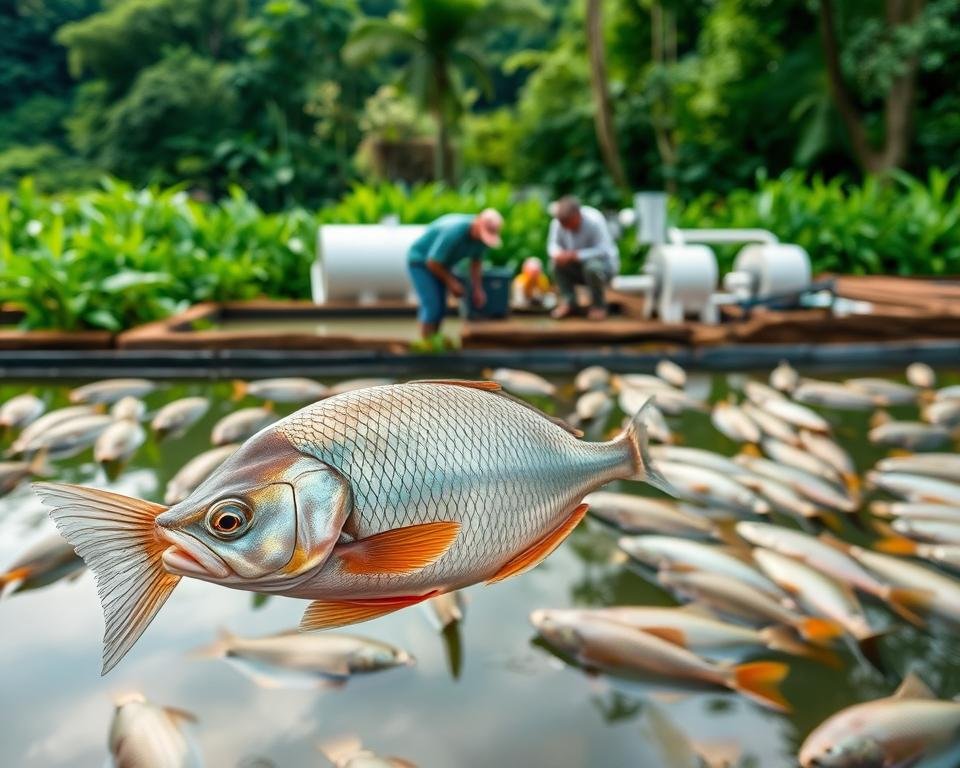
Harvesting and Marketing Your Tilapia
The final stage of tilapia farming is harvesting and marketing your crop. It’s important to know when to harvest your fish. This ensures you get the best quality and returns.
Optimal Harvest Time
Tilapia is usually ready to harvest in 6-8 months. This depends on water temperature, feed quality, and farming methods. Keeping an eye on the fish’s growth and water quality helps find the best time to harvest.
Handling Techniques
Proper handling is key to avoid losses and keep your tilapia quality high. Use the right gear, handle fish gently, and store them in a cool, well-oxygenated place.
Effective Marketing Strategies
To make more money, tilapia farmers can try different marketing strategies. Sell directly to consumers, partner with local restaurants, or join a cooperative for better prices. By following this guide, farmers can have a successful harvest and a profitable business.

 Hatchery Requirements for Aquaculture by Species
  Species Stocking Density in Aquaculture: Achieving the Right Balance
  Top High-Value Aquaculture Species to Grow
  Catfish Production Systems: Strategies for Profitable Aquaculture
  Aquaculture Water Temps: Ideal for Fish Farming
  Trout Culture Methods: A Comprehensive Guide