


Did you know a small change in water temperature can greatly affect fish health in aquaculture? As someone in the field, knowing the optimal conditions for fish farming is key. The right temperature is essential for fish metabolism and overall health.
I’ve seen how aquaculture water temperature guidelines can be the difference between success and failure in fish farming. Keeping the ideal water temperature ensures a healthy environment for fish. This leads to healthier fish and better harvests.
Key Takeaways
- Understanding the importance of water temperature in aquaculture.
- Guidelines for achieving optimal water temperature.
- The impact of temperature on fish health and growth.
- Best practices for maintaining ideal conditions in fish farming.
Understanding the Importance of Water Temperature
Keeping the water temperature right is key for fish farming success. It affects how fish grow and stay healthy. Water temperature is a big deal for fish, so it’s important for those who farm them.
Why Water Temperature Matters in Aquaculture
Water temperature changes how fast fish metabolize. Some fish do best in warm water, while others like it cooler. Knowing this helps create the best environment for fish farming.
The Global Seafood Alliance says controlling water temperature is important. It helps fish grow well and stay stress-free. This is even more true in places where fish are kept closely together.
Effects on Fish Metabolism and Growth
The rate at which fish metabolize is tied to water temperature. This affects their growth, how well they use food, and their health. Optimal temperature ranges differ by species. But, temperatures that are too extreme can cause stress, slow growth, and make fish more likely to get sick.
| Fish Species | Optimal Temperature Range (°C) | Effects of Temperature on Metabolism |
|---|---|---|
| Tilapia | 25-30 | Increased metabolic rate, enhanced growth |
| Salmon | 10-15 | Optimal growth, improved feed conversion |
| Catfish | 20-25 | Active metabolism, healthy growth rates |
As the table shows, each fish species needs a specific temperature for best growth. By keeping these temperatures right, fish farmers can make their operations healthier and more productive.
Ideal Water Temperature Ranges for Popular Fish Species
Different fish species have their own best temperature ranges. Keeping these temperatures right can really help them grow and stay healthy. It’s key to know these ranges to make your fish farm the best it can be.
Catfish Temperature Preferences
Catfish love warmer water. They do best when the water is between 75°F and 85°F (24°C to 30°C). Water too cold, below 70°F (21°C), slows them down. Water too hot, above 90°F (32°C), stresses them out.
Tilapia Temperature Needs
Tilapia also like warmer water. They grow best in temperatures from 77°F to 86°F (25°C to 30°C). Keeping these temperatures right is key to their growth and health.
Salmon Optimal Conditions
Salmon, though, prefer cooler water. They do best in temperatures between 50°F and 60°F (10°C to 15.5°C). Temperatures outside this range can harm their growth and make them sick.
It’s very important to keep the ideal temperature range for your fish. By managing water temperature well, you can make your fish farm very successful.
The Role of Temperature in Aquaculture Health Management
Water temperature is key in keeping fish healthy in aquaculture. It affects how likely fish are to get sick and how stressed they feel. Keeping the water at the right temperature is vital for the fish’s health.
Temperature Impact on Fish Diseases
The water’s temperature can greatly affect fish diseases. Some diseases thrive in certain temperatures. It’s important to keep the water at a temperature that doesn’t help these diseases grow.
Optimal water temperature for aquaculture varies by species. But, temperatures that are too high or too low stress fish. This makes them more likely to get sick. Keeping the optimal water temperature helps prevent disease outbreaks.
Stress Levels Related to Water Temperature
Stress in fish often comes from water temperatures that are not right for them. Stress weakens their immune system. This makes them more likely to get sick and grow slower. Water temperature control in aquaculture is key to reducing stress and keeping fish healthy.
Knowing the aquaculture species temperature needs and using good temperature management can greatly improve fish health. It’s not just about keeping the temperature right. It’s also about noticing and acting on any changes in water temperature.
Adjusting Water Temperature in Aquaculture Systems
Keeping the water temperature right is key for fish health in aquaculture. It’s important to know that each fish species needs a specific temperature.
Heating Techniques for Cold Water Environments
In cold places, warming the water is vital for fish farming. Here are some effective ways to do it:
- Using heat pumps is more energy-efficient than old methods.
- Submersible heaters can quickly warm the water.
- Insulation techniques help keep the heat in and the cold out.
These methods can be used alone or together to get the right water temperature for fish.
Cooling Methods for Warm Water Fish
In warm areas, cooling the water is key for some fish. Here are some ways to do it:
- Shade structures block sunlight to cool the water.
- Water circulation systems spread cooler water around.
- Evaporative cooling systems cool water by evaporation.
These cooling methods help create a better home for warm water fish.
In summary, changing the water temperature is a big deal in aquaculture. Knowing how to heat and cool the water is essential. This ensures fish are healthy and farming is successful.
Seasonal Changes and Their Impact on Aquaculture
Seasonal changes affect water temperature, which is key for fish farms. These changes can impact fish health and farm productivity. It’s important to adjust management strategies with the seasons.
Keeping water temperatures right is hard with the seasons changing. Most fish do best in water between 65°F and 85°F. This temperature range is ideal for many species.
Summer Temperature Challenges
Summer brings high water temperatures, causing problems for fish farms. High temperatures increase fish metabolism and oxygen needs. They also raise the risk of diseases.
Key summer challenges include:
- Increased risk of algal blooms
- Higher water temperature variability
- Increased fish stress due to high temperatures
To tackle these issues, farmers use shade, improve water flow, and watch water quality closely.
Winter Temperature Management Strategies
Winter brings cold water challenges. Many fish grow slower and get sick easier in cold water.
Effective winter management strategies include:
| Strategy | Description | Benefits |
|---|---|---|
| Heating Systems | Using heaters or heat pumps to warm the water | Maintains optimal temperature for fish growth |
| Insulation | Insulating ponds or tanks to retain heat | Reduces heat loss, saving energy |
| Water Circulation | Circulating water to prevent stratification | Ensures uniform water temperature |
By adapting to seasonal changes, aquaculture can keep water temperatures right. This ensures fish health and farm productivity.
Monitoring Water Temperature: Best Practices
In aquaculture, checking water temperature is key for fish health. Keeping the right temperature is vital for fish well-being and growth. I’ll share the best ways to monitor water temperature, including tools and how often to check.
Effective Tools and Technology
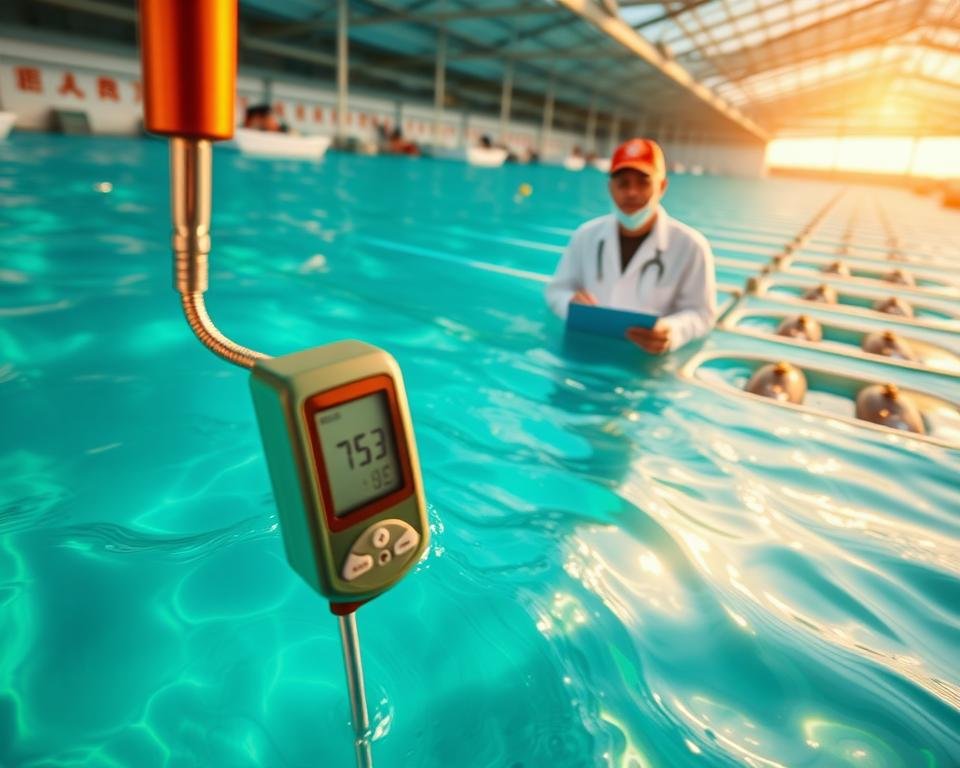
Aquaculture farmers use many tools to check water temperature. Digital thermometers are a must, giving accurate and up-to-date readings. They can be set up at various depths and spots in the system for full monitoring.
Temperature sensors linked to automated systems are also great. These systems watch water temperature all the time and warn farmers of big changes, so they can act fast.
Frequency of Temperature Checks
How often to check water temperature varies. It depends on the fish species, system size, and weather. Usually, checking twice a day is good. But, during big weather changes or when fish are stressed, you might need to check more often.
Having a set schedule for checks helps spot temperature changes early. This lets farmers fix any issues quickly to keep fish healthy.
Temperature Gradients in Aquaculture Systems
Temperature gradients are key in aquaculture, bringing many benefits to fish farming. By setting up different temperature zones, farmers can meet the needs of various fish species.
Benefits of Creating Temperature Zones
Setting up temperature zones in aquaculture systems boosts fish health and growth. Each fish species thrives best in its own temperature range. This way, farmers can keep each species in the best possible conditions.
Improved Health: Fish can choose their ideal temperature, reducing stress and improving health. This makes them less likely to get sick, as they are stronger against diseases.
- Enhanced growth rates due to optimal temperature conditions
- Reduced stress among fish populations
- Better adaptation to changing environmental conditions
Maintaining Stability Across the System
While temperature gradients are good, keeping the system stable is also vital. It’s important to avoid sudden or extreme temperature changes that could harm the fish.
| Temperature Range | Fish Species | Benefits |
|---|---|---|
| 65-75°F | Tilapia | Optimal growth, reduced stress |
| 50-60°F | Salmon | Improved health, enhanced reproduction |
| 75-85°F | Catfish | Increased feeding activity, better growth rates |
Understanding and using temperature gradients well helps aquaculture operators create better farming systems. This benefits the fish and makes farming more efficient and eco-friendly.
Temperature’s Influence on Breeding and Spawning
Temperature is key in fish reproduction, making it vital for aquaculture experts to grasp its role. The breeding and spawning processes are very sensitive to water temperature. This can greatly affect the success of fish farming.
“Water temperature is one of the most critical environmental factors affecting fish reproduction,” experts say. It affects not just when and how well fish spawn but also how eggs and larvae develop.
Optimal Conditions for Fish Spawning
Different fish species need specific temperatures to spawn. For example, salmon need colder temperatures, between 4°C to 8°C (39°F to 46°F). On the other hand, tilapia do best in warmer waters, between 25°C to 30°C (77°F to 86°F). Knowing these needs is key to creating the best conditions for spawning.
Farmers can adjust water temperatures with heating or cooling systems. But, keeping the temperature stable is critical. Sudden changes can stress fish and harm spawning success.
Effects of Temperature on Egg Development
Egg development in fish also depends on temperature. Warmer temperatures speed up development, while colder slows it down. But, temperatures that are too extreme can harm eggs.
Studies show that temperatures outside the optimal range can lower hatching rates and larval survival. So, precise temperature control is essential during incubation to ensure healthy egg development.
By effectively managing water temperature, aquaculture experts can boost breeding program success. This leads to healthier fish populations and more sustainable aquaculture practices.
Regional Variations in Aquaculture Water Temperatures
Knowing about water temperature variations is key for good aquaculture management. Different areas have their own climate, which affects water temperature. This, in turn, decides which fish are best for farming.
In the United States, for example, farming fish is very different in the Northeast and South. This is because their climates are quite different.
Northeast U.S. Aquaculture Needs
The Northeast U.S. has cold winters and mild summers. So, farming fish here needs to handle colder water. Fish like salmon and trout do well here because they can handle cold.
A study on fish farming in cold places found something important. It said that choosing the right fish species is key for success in cold climates.
| Species | Ideal Temperature Range (°F) | Region |
|---|---|---|
| Salmon | 50-60 | Northeast U.S. |
| Trout | 45-55 | Northeast U.S. |
| Catfish | 75-85 | Southern U.S. |
Southern U.S. Aquaculture Practices
The Southern U.S. has warmer waters, perfect for fish like catfish and tilapia. These fish love warmer water. Farming fish here means managing risks like diseases.
Effective temperature management is key in the South. It helps prevent diseases and ensures fish grow well.
By understanding and adjusting to these water temperature differences, fish farmers can improve their results.
Case Studies: Successful Temperature Management
Case studies offer insights into the role of temperature management in aquaculture success. Keeping the water at the right temperature is key for fish health and growth.
Let’s look at two important case studies. They show how temperature control is vital in different aquaculture settings.
Example from Catfish Farming
Catfish farming is big in the southern United States. A catfish farm there focused on water temperature. They kept it between 75°F and 85°F, perfect for catfish.
- Maintained water temperatures between 75°F and 85°F, ideal for catfish.
- Used pond aeration systems to prevent stratification and ensure uniform temperature distribution.
- Implemented a feeding schedule adjusted to the water temperature to optimize feed conversion ratios.
This strategy boosted catfish production and cut down on diseases. It proved the power of careful temperature control.
Insights from Salmon Farms
Salmon farming faces unique temperature challenges, often in cooler waters. A salmon farm in the northeastern United States managed water temperature well by:
- Utilizing submerged temperature monitoring systems to track water temperature at various depths.
- Adjusting stocking densities based on water temperature to prevent stress on the fish.
- Employing cooling systems during summer months to maintain optimal temperatures for salmon.
The farm saw better growth and fewer deaths among the salmon. This shows the need for specific temperature plans in aquaculture.
These examples show that managing water temperature is essential for aquaculture success. By controlling water temperature, farms can improve their output and sustainability.
Conclusion: Balancing Water Temperature for Optimal Aquaculture
Keeping the water temperature just right is key for aquaculture success. Studies show that the right temperature can greatly help fish grow and stay healthy. For example, Nile tilapia do best in water between 28°C to 30°C. This is true when they eat 25% to 30% protein.
By following aquaculture water temperature guidelines, farmers can make their systems better. They need to know the best water temperature for each fish species. Then, they can adjust their farming to meet those needs.
Best Practices for Aquaculture
To get the best results, farmers should follow some key steps. They need to watch the temperature, create different zones, and keep the water stable. This helps fish grow better, feel less stressed, and stay healthy.
Continued Learning in Aquaculture
The aquaculture world is always changing. It’s important for farmers to keep learning and using new tech. This way, they can keep their farms running well and help feed the world.

 Hatchery Requirements for Aquaculture by Species
  Species Stocking Density in Aquaculture: Achieving the Right Balance
  Top High-Value Aquaculture Species to Grow
  Catfish Production Systems: Strategies for Profitable Aquaculture
  Trout Culture Methods: A Comprehensive Guide
  The Pangasius Grow-out Cycle: What You Need to Know