


The global aquaculture industry is booming. Catfish farming is a big part of it.
I’ve worked in aquaculture and seen the chance for profitable and sustainable catfish farming. The right aquaculture systems are key to success.
Choosing the right production system and managing the environment are important. They help you thrive in this industry.
Key Takeaways
- Understanding different aquaculture systems is vital for profitable catfish farming.
- Effective management of environmental impact is critical for sustainability.
- Selecting the appropriate production system is key to success.
- Strategies for maintaining water quality are essential.
- Monitoring and controlling disease is critical in catfish farming.
Introduction to Catfish Production Systems
As seafood demand grows, catfish farming is becoming a big part of the global aquaculture scene. Catfish are not only tasty but also easy to farm. This makes them a great choice for many farmers.
Overview of Catfish Farming
Catfish farming means raising catfish in places like ponds or tanks. Catfish Farming Techniques have gotten better over time. Now, they use new tech to grow more fish and harm the environment less.
It starts with picking healthy catfish fingerlings. Then, they grow in the right conditions. Farmers keep an eye on water quality, feed them well, and fight off diseases.
Importance of Sustainable Aquaculture
Sustainable Catfish Farming is key for the industry’s future. It keeps the environment healthy and catfish quality high. It means using less waste, cutting carbon, and supporting different species.
By going green, farmers help make food production better for the planet. They use eco-friendly feed, save water, and protect local nature.
In short, catfish farming’s future depends on being sustainable. As people care more about the planet, they’ll want seafood that’s good for it. So, farmers need to meet this growing demand.
Types of Catfish Production Systems
As a catfish farmer, knowing the different production systems is key. These systems vary in intensity and technology used.
Extensive vs. Intensive Systems
Extensive systems have low stocking densities and use natural food. They are often found in pond farming. On the other hand, intensive systems have high stocking densities and use a lot of feed. Indoor Catfish Farming is an example of intensive systems, which need more resources and management.
Intensive systems control the environment better. They use advanced tech, like Recirculating Aquaculture Systems (RAS), to keep water quality and temperature right.
| Characteristics | Extensive Systems | Intensive Systems |
|---|---|---|
| Stocking Density | Low | High |
| External Inputs | Minimal | High |
| Yield | Lower | Higher |
| Environmental Control | Limited | High |
Semi-Intensive Production Approaches
Semi-intensive systems are a mix of extensive and intensive. They have moderate stocking densities and some external inputs. These systems are often used in pond farming and are more sustainable and cost-effective.
In conclusion, choosing a catfish production system depends on many factors. These include resources, market demand, and environmental considerations. By understanding the different systems, farmers can make better decisions and improve their operations.
Site Selection for Catfish Farms
Choosing the right spot for your catfish farm is key to its success. The farm’s location impacts the health and growth of your fish. It also affects how profitable your farm can be.
In catfish farming, water quality is essential. Your water source must be reliable, with enough quantity and quality for your farm. It should have the right pH, temperature, and oxygen levels for healthy fish growth.
Water Quality Considerations
Regular water testing is vital for maintaining quality. You need to check for pollutants, bacteria, and other factors that could harm your fish. Good Catfish Pond Management balances fish health with environmental care.
For more info on managing catfish production, check out this resource from Mississippi State University Extension.
Accessibility and Infrastructure Needs
Accessibility and infrastructure are also important. You need good roads for transport, enough storage for feed and equipment, and reliable energy for your farm.
Good infrastructure makes your farm more efficient and sustainable. For example, using smart feeding systems can cut waste. This reduces your farm’s environmental impact.
In summary, picking the right site is essential for a successful catfish farm. Focus on water quality, accessibility, and infrastructure. This way, you can build a profitable and sustainable farm.
Catfish Species for Aquaculture
Choosing the right catfish species is key to a successful farm. Different species require different farming systems. This affects how well your farm can grow and thrive.
Overview of Popular Species
Many catfish species are used in farming, each with its own strengths. The Channel Catfish is a favorite in the U.S. It grows fast and adapts well to various environments.
The Blue Catfish is sought after for its size and taste. The Hybrid Catfish is a mix of Channel and Blue. It offers the best of both worlds, like faster growth and better health.
Factors Influencing Species Choice
Several factors influence which catfish species to choose. Market demand is a big one. Knowing what your customers want helps you pick a species that’s in demand.
Climate and water conditions are also key. Different species handle temperature, water quality, and more differently. Picking a species that fits your local conditions can prevent disease and boost efficiency.
Other things to think about include feed conversion ratios, growth rates, and disease resistance. By considering these, you can find a species that meets your farm’s needs. This will help your catfish farming succeed.
Feeding Strategies in Catfish Production
Successful catfish farming depends on good feeding strategies. Feeding is key because it affects growth, health, and profit.
Nutritional Requirements
Catfish need a balanced diet for growth and health. They require proteins, carbs, fats, vitamins, and minerals. Protein is very important for their growth.
A good catfish feed has 28% to 32% protein. Young catfish need more protein than older ones. The feed conversion ratio (FCR) also matters, showing how well the feed promotes growth.
Types of Feed and Feeding Methods
There are different feeds for catfish farming, like floating and sinking feeds. The choice depends on the farm system, water, and catfish age.
Feeding methods differ too. Some farms use automated systems, while others feed manually. Automated systems can optimize feeding and cut waste, but they cost a lot.
| Feed Type | Characteristics | Advantages |
|---|---|---|
| Floating Feed | Remains on the surface, easy to monitor consumption | Reduces waste, easier to manage |
| Sinking Feed | Sinks to the bottom, may be more natural feeding behavior | Mimics natural feeding, can be more cost-effective |
Knowing catfish nutritional needs and choosing the right feed and method is key. By improving feeding, farmers can boost growth, cut waste, and make their farms more sustainable.
Health Management in Catfish Farming
The health of catfish is key to a successful aquaculture venture. As a catfish farmer, keeping your stock healthy is essential for profit and sustainability.
Healthy catfish grow faster and are less likely to get sick. This means they convert feed better, making your farm more profitable. We’ll look at common catfish diseases, how to treat them, and ways to keep your fish safe.
Common Diseases and Treatments
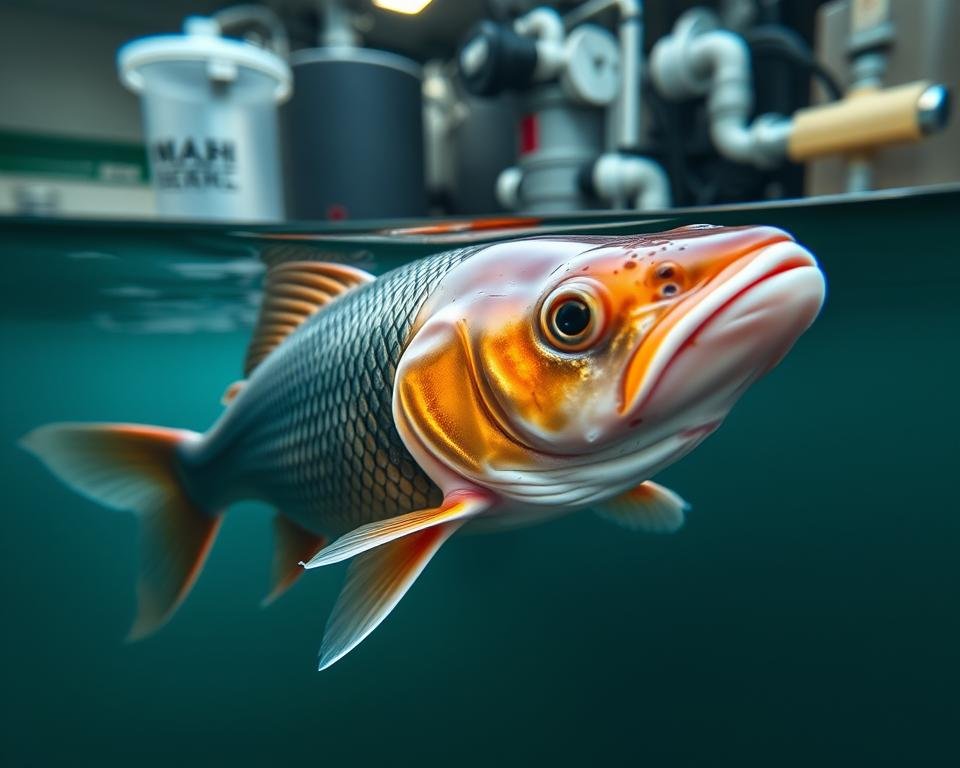
Catfish face many diseases, like bacterial and fungal infections. Edwardsiella ictaluri and Flavobacterium columnare are two major ones. These cause serious health issues.
To treat these, antibiotics and other meds are used. For example, oxytetracycline fights bacterial infections. But, antibiotics should be used carefully to prevent resistance.
Biosecurity Measures
Stopping diseases before they start is cheaper than treating them. Good biosecurity is vital for catfish health. This includes:
- Checking water and fish health often.
- Quarantining new fish before adding them to your main stock.
- Using Recirculating Aquaculture Systems (RAS) to keep water quality high and disease low.
- Providing the right Catfish Feed Formulation to boost their immune system.
By following these steps and being proactive, you can lower disease risks. This ensures your catfish farm stays healthy and productive for years.
Environmental Impact of Catfish Production
Catfish production can harm the environment, but it can be lessened with good management. Looking into catfish farming, we see that water and waste management are key to reducing harm.
Water Management Practices
Good water management is essential in catfish farming. It means keeping water quality right by checking pH, ammonia, and oxygen levels often. In indoor catfish farming, systems that recirculate water help save water and cut down waste.
In catfish ponds, using aeration systems helps water move better and adds oxygen. This keeps fish healthy and lowers disease risks. Also, changing water regularly and using settling ponds helps keep water clean.
Waste Management Solutions
Managing waste is also key to lessening catfish production’s environmental harm. This includes dealing with fish waste and leftover feed. Using waste management solutions like sedimentation ponds or biofilters can greatly reduce harm.
In indoor setups, waste is easier to handle with mechanical and biological filters. For ponds, cleaning them often and using plants to soak up nutrients works well.
By using these water and waste management methods, catfish farmers can lessen their environmental impact. This helps make aquaculture more sustainable.
Technology in Catfish Production
Exploring catfish farming shows how important technology is. It has changed the industry, making it better and more sustainable.
Use of Automation and Monitoring Systems
Automation has made catfish farming more efficient. Automated feeding systems give catfish the right food at the right time. This cuts down waste and boosts growth.
Monitoring systems watch water quality like pH, temperature, and oxygen levels. This lets farmers act fast to keep conditions perfect. It helps stop diseases and keeps fish healthy.
Innovations in Hatchery Processes
New hatchery technologies have improved survival rates and cut costs. Advanced hatchery technologies include better water filters, automated egg incubation, and larval rearing systems.
These advancements make hatchery work more efficient and sustainable. By using them, farmers can produce more while being kinder to the environment.
Economic Considerations for Farmers
Catfish farming needs a good grasp of its economics to be profitable. Looking into catfish production shows that money matters a lot. It’s key to the farm’s success and lasting health.
Cost Analysis of Production Systems
Knowing the costs of different catfish farming systems is key. Costs change a lot between extensive, intensive, and semi-intensive systems.
- Extensive systems cost less to start but might not produce as much.
- Intensive systems need a lot of money for setup and feed but can produce more.
- Semi-intensive systems aim to find a middle ground, balancing cost and yield.
Doing a detailed cost analysis helps pick the best system for your farm. Here’s a quick look at the differences:
| Production System | Initial Investment | Operating Costs | Potential Yield |
|---|---|---|---|
| Extensive | Low | Low | Low |
| Intensive | High | High | High |
| Semi-Intensive | Moderate | Moderate | Moderate to High |
Pricing Strategies for Market Success
Pricing is very important for selling catfish. It’s about knowing what people want to pay, your costs, and what others charge.
Key considerations for pricing strategies include:
- Know your target market and what they’re willing to pay.
- Figure out your costs to set a minimum price you can sell for.
- Look at what others charge to make sure you’re competitive.
With a smart pricing plan, you can stand out in the market and make more money.
In conclusion, money matters a lot in catfish farming. By doing cost analyses and setting good prices, farmers can do better in the tough aquaculture market.
Marketing and Distribution of Catfish
The journey of catfish from farm to table is more than just production. It needs a solid marketing and distribution plan. As I explore catfish farming, I see that marketing and distribution are key to reaching consumers.
Understanding Target Markets
To market catfish well, knowing your target audience is key. Are you selling to wholesalers, restaurants, or consumers directly? Each group has different needs and likes. For example, wholesalers might want big quantities, while consumers might care more about freshness and quality.
Indoor Catfish Farming is popular because it produces high-quality catfish consistently. This method lets farmers control the environment better. This results in a product that can be marketed as premium or sustainably produced.
Creating Effective Branding Strategies
Branding is about making your catfish stand out. You can do this by focusing on what makes your product special. For instance, using Recirculating Aquaculture Systems saves water and reduces environmental harm.
A strong brand can be built through many channels, like social media, packaging, and ads. For example, talking about how eco-friendly your methods are can attract green-conscious buyers.
| Marketing Channel | Target Audience | Key Message |
|---|---|---|
| Social Media | Consumers | Freshness, Sustainability |
| Trade Shows | Wholesalers, Restaurants | Quality, Reliability |
| Packaging | Consumers | Brand Story, Eco-friendliness |
By knowing your target market and creating strong branding, you can market and distribute your catfish well. Whether using Indoor Catfish Farming or traditional methods, showing what makes your product special is vital to success.
Regulatory Aspects of Catfish Farming
Following rules is key for catfish farming. It affects both profits and the environment. As the industry grows, knowing and following federal and state rules is more important.
Federal and State Guidelines
Catfish farming in the U.S. faces many rules at federal and state levels. These rules cover things like Catfish Pond Management and Catfish Feed Formulation. For example, the EPA sets rules for water quality, and the USDA looks after animal health.
State rules can differ a lot. Some states have stricter rules for water, waste, and fish species. In Mississippi, a big catfish producer, farmers must follow rules from the Mississippi Department of Environmental Quality and the Mississippi Department of Agriculture and Commerce.
Importance of Compliance
Following rules is not just a must; it’s also key for farming’s future. Breaking rules can lead to big fines, farm shutdowns, and harm to the farm’s image. Also, following rules keeps the environment safe and the fish healthy.
To follow rules, catfish farmers should:
- Keep up with the latest federal and state rules.
- Use best management practices (BMPs) for Catfish Pond Management.
- Follow Catfish Feed Formulation guidelines to reduce environmental harm.
- Keep detailed records of farm activities, like water quality and feed use.
For more info on meeting U.S. farm-raised fish and seafood regulations, visit https://www.food-safety.com/articles/7814-meeting-regulations-for-us-farm-raised-fish-and-seafood.
Future Trends in Catfish Aquaculture
The catfish aquaculture industry is changing fast. It’s moving towards sustainable practices, new technologies, and shifting consumer tastes. As more people want sustainable seafood, catfish farmers are turning to greener Catfish Production Systems.
Innovations in Sustainability
One big trend in catfish farming is going green. Sustainable Catfish Farming methods like recirculating aquaculture systems (RAS) and integrated multi-trophic aquaculture (IMTA) are gaining traction. These methods cut down on environmental harm, improve water quality, and reduce waste.
Meeting Changing Consumer Demands
Consumer tastes are also influencing catfish farming. There’s a rise in demand for seafood that’s responsibly sourced. Catfish farmers who use sustainable practices are in a good spot to meet this need. By focusing on Sustainable Catfish Farming and being open about their methods, farmers can stand out and get better prices.

 Hatchery Requirements for Aquaculture by Species
  Species Stocking Density in Aquaculture: Achieving the Right Balance
  Top High-Value Aquaculture Species to Grow
  Aquaculture Water Temps: Ideal for Fish Farming
  Trout Culture Methods: A Comprehensive Guide
  The Pangasius Grow-out Cycle: What You Need to Know